THE ADVENTURE COLLECTIVE® · Independent discovery and booking for outdoor travel
Cross the Thu Bồn to explore shipwright workshops, bamboo bridges and Tra Que’s aromatic vegetable gardens. This half-day tour blends short boat rides, light cycling and a hands-on cooking class with a local family.
Cross the Thu Bồn to explore shipwright workshops, bamboo bridges and Tra Que’s aromatic vegetable gardens. This half-day tour blends short boat rides, light cycling and a hands-on cooking class with a local family.
You push off from Hoi An and the river takes the lead: a narrow boat slips through the Thu Bồn’s slow current, reeds brushing the hull as the town’s tiled roofs fall away.
Verified experiences and guided adventures in the surrounding area.
Operated by Asia Travel Links · Hoi An, Quang Nam
You push off from Hoi An and the river takes the lead: a narrow boat slips through the Thu Bồn’s slow current, reeds brushing the hull as the town’s tiled roofs fall away.
The short crossing deposits you in Kim Bong, where wood shavings and the scent of varnish mark the shipbuilding workshops—craftsmen shaping long boats by hand. A quiet ride along the river leads to Tra Nhieu’s mat-making alleys; bamboo bridges arc across water coconut groves, and you’ll watch simple tools transform strips of palm into household mats.
Pedaling or walking into Tra Que, the village breathes with herbs. Farmers in conical hats show rotation planting and natural fertilizing techniques that have kept these plots productive for generations. You join a hands-on mini-workshop: planting, raking, and learning the timing of basil, mint and morning glory. A medicinal foot bath eases stiff legs, then a family kitchen becomes your classroom—making Tam Huu spring rolls and Banh Xeo pancakes from ingredients grown nearby.
Culturally, the tour links Hoi An’s maritime past with its agricultural present: trading port, craft villages, and the smallholdings that fed the city. Geologically, the flat alluvial plain of the Thu Bồn supports the rich vegetable beds you’ll see.
Practical note: the route mixes short boat legs, flat cycling and light walking on uneven village paths—easy on stamina but slow under midday sun. Go early, hydrate, wear closed-toe shoes for narrow bridges, and bring a small packet of cash for souvenirs or a second helping of local tea.
Most tours include pickup from central Hoi An hotels—confirm your pickup point when booking and have your pickup time ready.
Yes—this activity is family-friendly, but infants must sit on an adult’s lap and participants should be able to walk short distances.
The cooking class can usually adapt to common dietary needs if you request restrictions in advance on your booking form.
Not recommended for travelers with spinal or serious heart conditions, and pregnant guests should avoid this tour per operator guidance.
Asia Travel Links operates guided outdoor trips and adventures with an emphasis on safety, stewardship, and memorable experiences.
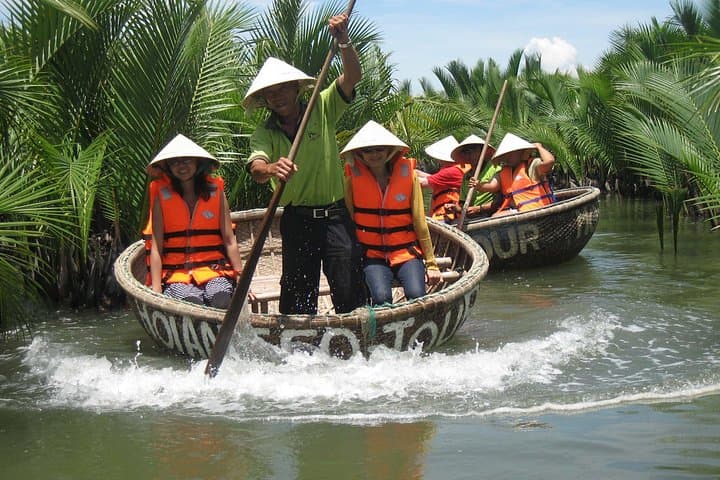
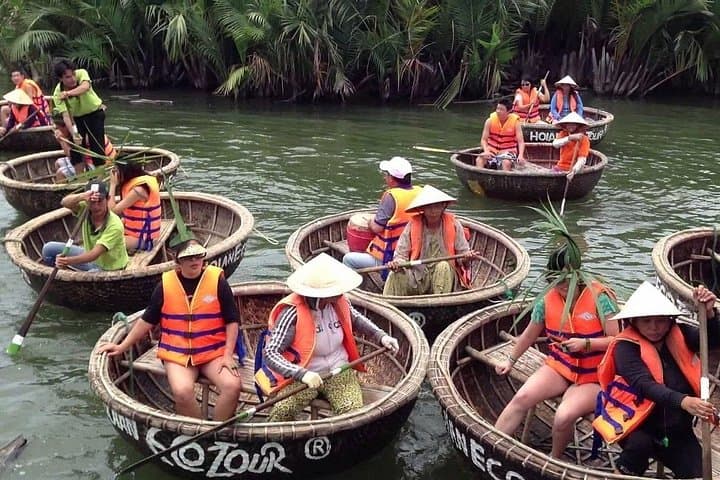
You push off from Hoi An and the river takes the lead: a narrow boat slips through the Thu Bồn’s slow current, reeds brushing the hull as the town’s tiled roofs fall away.
You push off from Hoi An and the river takes the lead: a narrow boat slips through the Thu Bồn’s slow current, reeds brushing the hull as the town’s tiled roofs fall away.
The short crossing deposits you in Kim Bong, where wood shavings and the scent of varnish mark the shipbuilding workshops—craftsmen shaping long boats by hand. A quiet ride along the river leads to Tra Nhieu’s mat-making alleys; bamboo bridges arc across water coconut groves, and you’ll watch simple tools transform strips of palm into household mats.
Pedaling or walking into Tra Que, the village breathes with herbs. Farmers in conical hats show rotation planting and natural fertilizing techniques that have kept these plots productive for generations. You join a hands-on mini-workshop: planting, raking, and learning the timing of basil, mint and morning glory. A medicinal foot bath eases stiff legs, then a family kitchen becomes your classroom—making Tam Huu spring rolls and Banh Xeo pancakes from ingredients grown nearby.
Culturally, the tour links Hoi An’s maritime past with its agricultural present: trading port, craft villages, and the smallholdings that fed the city. Geologically, the flat alluvial plain of the Thu Bồn supports the rich vegetable beds you’ll see.
Practical note: the route mixes short boat legs, flat cycling and light walking on uneven village paths—easy on stamina but slow under midday sun. Go early, hydrate, wear closed-toe shoes for narrow bridges, and bring a small packet of cash for souvenirs or a second helping of local tea.
