THE ADVENTURE COLLECTIVE® · Independent discovery and booking for outdoor travel

Cycle out of Hoi An to Tra Que Village to try your hand at traditional vegetable farming and a hands-on Vietnamese cooking class. Spend the morning planting, receive a 30-minute foot massage, then cook and eat the dishes you helped prepare.
Cycle out of Hoi An to Tra Que Village to try your hand at traditional vegetable farming and a hands-on Vietnamese cooking class. Spend the morning planting, receive a 30-minute foot massage, then cook and eat the dishes you helped prepare.
The morning begins on two wheels, pedals humming along narrow lanes as the city of Hoi An melts behind you and the air tightens around green beds of herbs. At Tra Que Vegetable Village the soil smells of sea salt and compost; mint and lemongrass push against each other, daring you closer. A local farmer greets the group, and the routine of the fields—mounded beds, irrigation furrows, hand tools—unfolds like a practiced choreography.
Verified experiences and guided adventures in the surrounding area.
Operated by Golden Rooster Travel Hoi An · Hoi An, Quang Nam
The morning begins on two wheels, pedals humming along narrow lanes as the city of Hoi An melts behind you and the air tightens around green beds of herbs. At Tra Que Vegetable Village the soil smells of sea salt and compost; mint and lemongrass push against each other, daring you closer. A local farmer greets the group, and the routine of the fields—mounded beds, irrigation furrows, hand tools—unfolds like a practiced choreography.
Tra Que sits on the flat coastal plain that sustained Hoi An’s food systems for centuries. The village is famed not for monumental history but for living practice: families passing seed and soil techniques through generations. Geology here is alluvial—soft, well-draining loam ideal for herbs rather than large crops—so farming methods are gentle and intensive.
Beyond farming, the program folds in culture: a 30-minute traditional foot massage often follows a short cycle, then a hands-on cooking class where you shape spring rolls and pan-crisp banh xeo, finishing with a shared lunch of your own making. The experience balances physical outdoor work with culinary craft, useful both for travelers and anyone curious about Vietnamese home cooking.
Practical notes: expect a 3–5 km round-trip cycle on flat, paved and dirt lanes, roughly 3–6 hours total. Wear closed shoes for the garden, sun protection, and bring a small towel. Mornings are cooler and the best time to visit; the activity is private, English-guided, and suitable for travelers with moderate fitness who can ride a bike and stand for short cooking demonstrations.
The ride is short—typically 1.5–3 km each way along flat village lanes, taking 10–20 minutes depending on pace.
Yes—children can participate, but infants must sit on a lap and young kids should be supervised around tools and water.
No. The cooking component is hands-on and designed for beginners and experienced cooks alike, with guidance from the chef.
The operator may cancel or reschedule in heavy rain; the cancellation policy allows full refunds if changed 24 hours prior or for bad weather.
Golden Rooster Travel Hoi An operates guided outdoor trips and adventures with an emphasis on safety, stewardship, and memorable experiences.
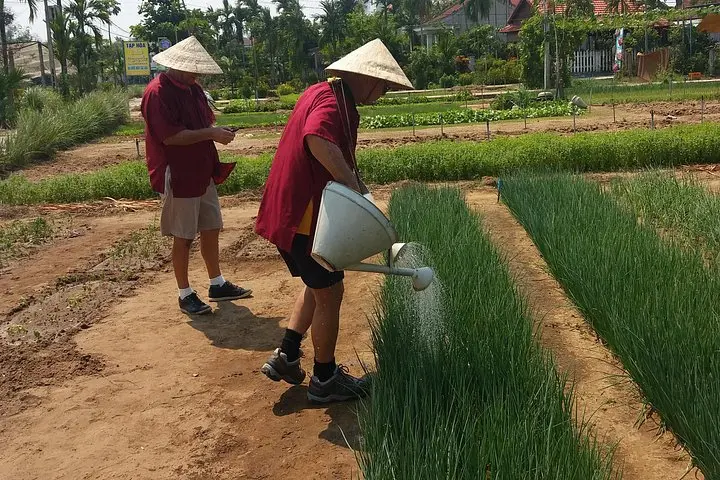
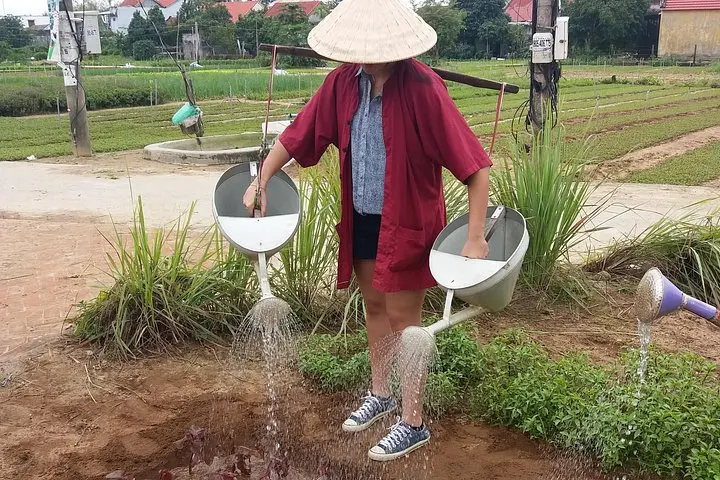
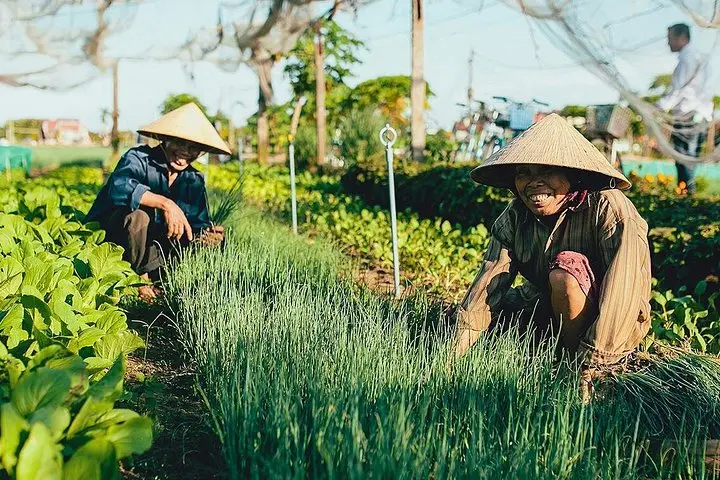
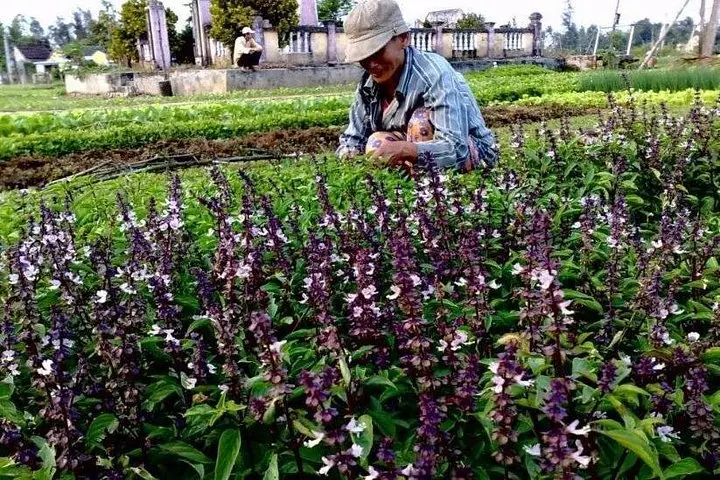
The morning begins on two wheels, pedals humming along narrow lanes as the city of Hoi An melts behind you and the air tightens around green beds of herbs. At Tra Que Vegetable Village the soil smells of sea salt and compost; mint and lemongrass push against each other, daring you closer. A local farmer greets the group, and the routine of the fields—mounded beds, irrigation furrows, hand tools—unfolds like a practiced choreography.
The morning begins on two wheels, pedals humming along narrow lanes as the city of Hoi An melts behind you and the air tightens around green beds of herbs. At Tra Que Vegetable Village the soil smells of sea salt and compost; mint and lemongrass push against each other, daring you closer. A local farmer greets the group, and the routine of the fields—mounded beds, irrigation furrows, hand tools—unfolds like a practiced choreography.
Tra Que sits on the flat coastal plain that sustained Hoi An’s food systems for centuries. The village is famed not for monumental history but for living practice: families passing seed and soil techniques through generations. Geology here is alluvial—soft, well-draining loam ideal for herbs rather than large crops—so farming methods are gentle and intensive.
Beyond farming, the program folds in culture: a 30-minute traditional foot massage often follows a short cycle, then a hands-on cooking class where you shape spring rolls and pan-crisp banh xeo, finishing with a shared lunch of your own making. The experience balances physical outdoor work with culinary craft, useful both for travelers and anyone curious about Vietnamese home cooking.
Practical notes: expect a 3–5 km round-trip cycle on flat, paved and dirt lanes, roughly 3–6 hours total. Wear closed shoes for the garden, sun protection, and bring a small towel. Mornings are cooler and the best time to visit; the activity is private, English-guided, and suitable for travelers with moderate fitness who can ride a bike and stand for short cooking demonstrations.