THE ADVENTURE COLLECTIVE® · Independent discovery and booking for outdoor travel

Cycle from Hoi An to Tra Que village for hands-on vegetable farming, a family cooking class and a restorative herbal foot massage. This half-day experience combines light outdoor work with local culinary culture.
Cycle from Hoi An to Tra Que village for hands-on vegetable farming, a family cooking class and a restorative herbal foot massage. This half-day experience combines light outdoor work with local culinary culture.
You pedal out of Hoi An on a flat ribbon of road, the river’s breeze pushing alongside you as the town’s roofs fall away and the green of Tra Que rises ahead. The village smells of wet earth and cut herbs; farmers move with practiced rhythm, seaweed-streaked hands coaxing beds of mint, basil and coriander. For half a day you become part of that rhythm—turning soil, carrying seaweed, and learning the precise, low-tech methods that keep these beds chemical-free.
Verified experiences and guided adventures in the surrounding area.
Operated by Private Tourguides in Da Nang Hoi An Hue · Hoi An, Quang Nam
You pedal out of Hoi An on a flat ribbon of road, the river’s breeze pushing alongside you as the town’s roofs fall away and the green of Tra Que rises ahead. The village smells of wet earth and cut herbs; farmers move with practiced rhythm, seaweed-streaked hands coaxing beds of mint, basil and coriander. For half a day you become part of that rhythm—turning soil, carrying seaweed, and learning the precise, low-tech methods that keep these beds chemical-free.
Tra Que’s gardens are centuries-old local practice adapted to a coastal plain: villagers historically used seaweed as an eco-fertiliser and crop rotation to maintain soil. The area’s flat alluvial soil and proximity to the Thu Bon River create ideal conditions for high-density herb plots. Cultural life here is intimate—most workshops take place in family homes where recipes and techniques pass down through generations.
Practical guidance: the tour runs about 4.5 hours and includes bicycle transfer, an English-speaking guide, hands-on farming, a family-led cooking class and a 30-minute herbal foot massage. Wear closed-toe shoes you don’t mind getting soil on, bring sun protection and a refillable bottle (bottled water is provided). Expect gentle physical work rather than long hikes; children and less-mobile guests are usually accommodated. Be ready to follow local customs—ask before photographing people or beds—and avoid stepping on planting rows. Timing: mornings are coolest and best for farm demonstrations; afternoons can heat up. The experience blends light outdoor activity, cultural exchange and straightforward, sensory learning—an accessible slice of rural Vietnamese life just outside Hoi An.
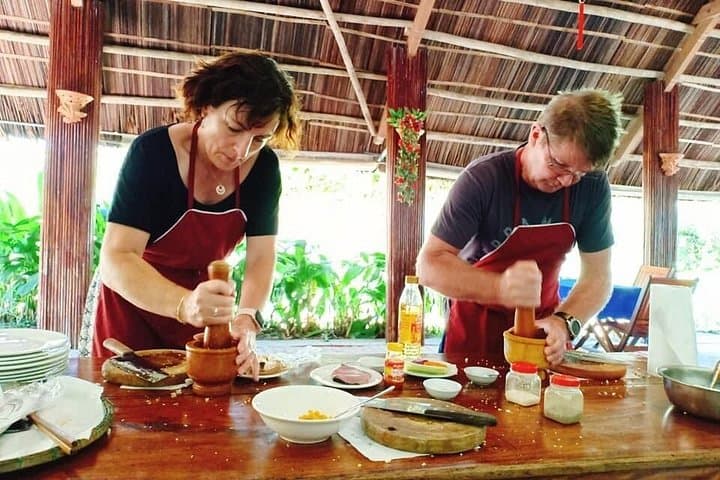
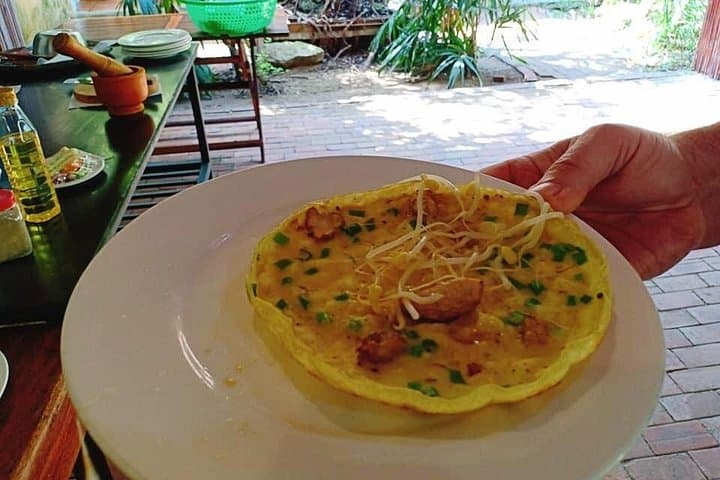
The tour is about 4.5 hours and includes bicycle transfer (helmet), an English-speaking guide, farming activities, a cooking class with lunch you prepare, bottled water and a 30-minute herbal foot massage.
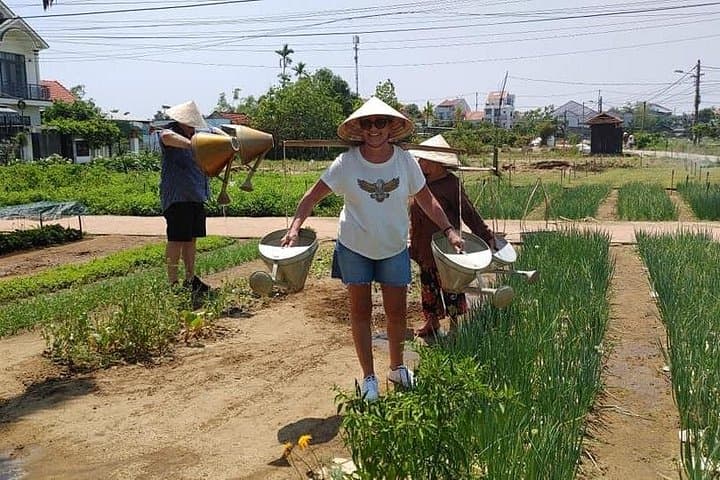
Work is light and suitable for most people—tasks include cultivating soil, carrying seaweed in short loads, planting and watering; staff adapt tasks for different ability levels.
Yes—infants and small children can use strollers and infant seats are available; activities are family-friendly but children should be supervised around garden beds and tools.
No—cycling is on flat, quiet roads; basic comfort on a bicycle is sufficient and helmets are provided.
Private Tourguides in Da Nang Hoi An Hue operates guided outdoor trips and adventures with an emphasis on safety, stewardship, and memorable experiences.
You pedal out of Hoi An on a flat ribbon of road, the river’s breeze pushing alongside you as the town’s roofs fall away and the green of Tra Que rises ahead. The village smells of wet earth and cut herbs; farmers move with practiced rhythm, seaweed-streaked hands coaxing beds of mint, basil and coriander. For half a day you become part of that rhythm—turning soil, carrying seaweed, and learning the precise, low-tech methods that keep these beds chemical-free.
You pedal out of Hoi An on a flat ribbon of road, the river’s breeze pushing alongside you as the town’s roofs fall away and the green of Tra Que rises ahead. The village smells of wet earth and cut herbs; farmers move with practiced rhythm, seaweed-streaked hands coaxing beds of mint, basil and coriander. For half a day you become part of that rhythm—turning soil, carrying seaweed, and learning the precise, low-tech methods that keep these beds chemical-free.
Tra Que’s gardens are centuries-old local practice adapted to a coastal plain: villagers historically used seaweed as an eco-fertiliser and crop rotation to maintain soil. The area’s flat alluvial soil and proximity to the Thu Bon River create ideal conditions for high-density herb plots. Cultural life here is intimate—most workshops take place in family homes where recipes and techniques pass down through generations.
Practical guidance: the tour runs about 4.5 hours and includes bicycle transfer, an English-speaking guide, hands-on farming, a family-led cooking class and a 30-minute herbal foot massage. Wear closed-toe shoes you don’t mind getting soil on, bring sun protection and a refillable bottle (bottled water is provided). Expect gentle physical work rather than long hikes; children and less-mobile guests are usually accommodated. Be ready to follow local customs—ask before photographing people or beds—and avoid stepping on planting rows. Timing: mornings are coolest and best for farm demonstrations; afternoons can heat up. The experience blends light outdoor activity, cultural exchange and straightforward, sensory learning—an accessible slice of rural Vietnamese life just outside Hoi An.