THE ADVENTURE COLLECTIVE® · Independent discovery and booking for outdoor travel

Board a traditional oak ship in Húsavík and search Skjálfandi Bay for humpbacks, minkes, and skuas on this original whale-watching tour. Learn local natural history from experienced guides while keeping an eye on distant blows against a dramatic volcanic coastline.
Board a traditional oak ship in Húsavík and search Skjálfandi Bay for humpbacks, minkes, and skuas on this original whale-watching tour. Learn local natural history from experienced guides while keeping an eye on distant blows against a dramatic volcanic coastline.
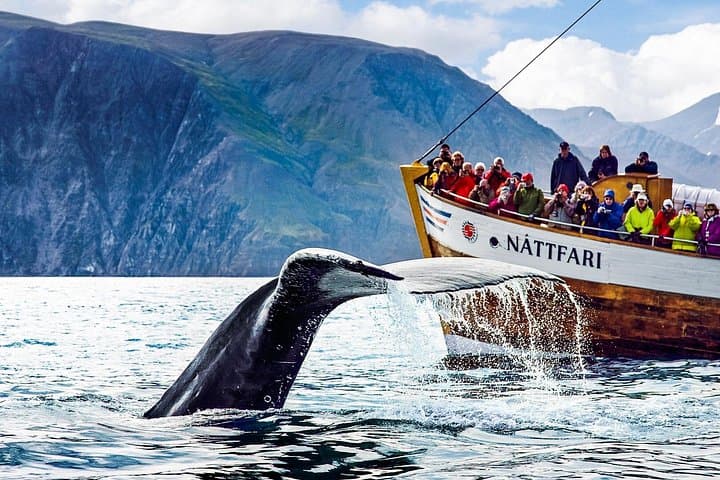
A low, wooden hull cuts through cold, silver water as gulls wheel overhead and the wind tugs at a woolen hat. Boarding the traditional Icelandic oak ship in Húsavík, visitors feel the ocean’s tempo change from harbor calm to the irregular pulse of Skjálfandi Bay, where humpbacks and minke whales feed beneath the surface.
Verified experiences and guided adventures in the surrounding area.
Operated by North Sailing · Húsavík, Northeast
A low, wooden hull cuts through cold, silver water as gulls wheel overhead and the wind tugs at a woolen hat. Boarding the traditional Icelandic oak ship in Húsavík, visitors feel the ocean’s tempo change from harbor calm to the irregular pulse of Skjálfandi Bay, where humpbacks and minke whales feed beneath the surface.
Húsavík’s whale-watching history dates to the town’s long relationship with the sea; local mariners and boat-builders pioneered small-boat observation in Iceland. The bay itself is shaped by volcanic bedrock and glacial sediments, producing nutrient-rich currents that attract krill and the cetaceans that follow. Culturally, whale watching is part wildlife viewing, part coastal livelihood; crews combine decades of local knowledge with modern safety standards.
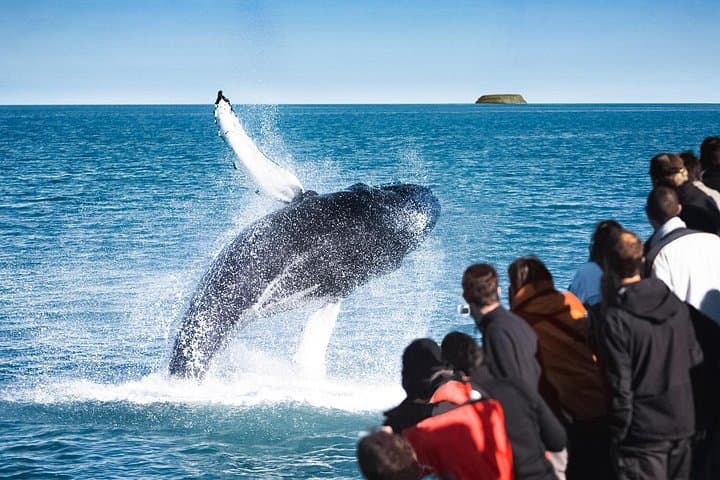
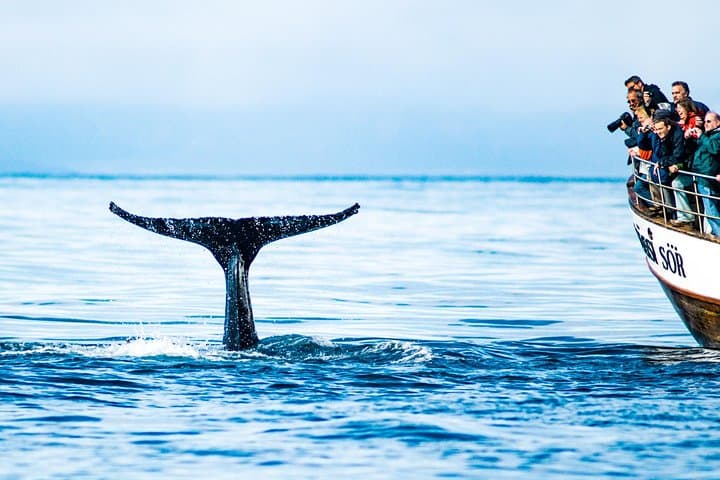
Expect close but non-intrusive encounters: blows, tail slaps, and rolling bodies punctuate long stretches of water and sky. Sea birds—kittiwakes and fulmars—chap alongside the boat, while the crew provides live commentary about species and behavior.
Practical guidance: dress in layers and windproof outerwear, arrive 20–30 minutes early for boarding, and bring motion-sickness prevention if you’re sensitive. Photography benefits from a telephoto lens and fast shutter speeds; binoculars help spot blows before the boat closes in. Tours typically run three hours, aim for morning or late-afternoon light for photography, and operate under strict wildlife approaches to minimize disturbance.
This is an accessible, low-impact marine wildlife experience that pairs traditional craft with responsible viewing—ideal for travelers seeking immersive, well-guided encounters with Iceland’s ocean giants.
The tour runs approximately three hours from boarding to return, including transit time when searching for whales.
No sighting cannot be guaranteed, but Skjálfandi Bay is a productive feeding ground and sightings are frequent; tours operate under flexible cancellation if weather prevents safe operation.
The vessel is wheelchair accessible per operator notes, but boarding may require assistance; contact the operator in advance to arrange help.
Yes, children are welcome but must be accompanied by an adult and infants are required to sit on a lap during the trip.
North Sailing operates guided outdoor trips and adventures with an emphasis on safety, stewardship, and memorable experiences.

A low, wooden hull cuts through cold, silver water as gulls wheel overhead and the wind tugs at a woolen hat. Boarding the traditional Icelandic oak ship in Húsavík, visitors feel the ocean’s tempo change from harbor calm to the irregular pulse of Skjálfandi Bay, where humpbacks and minke whales feed beneath the surface.
A low, wooden hull cuts through cold, silver water as gulls wheel overhead and the wind tugs at a woolen hat. Boarding the traditional Icelandic oak ship in Húsavík, visitors feel the ocean’s tempo change from harbor calm to the irregular pulse of Skjálfandi Bay, where humpbacks and minke whales feed beneath the surface.
Húsavík’s whale-watching history dates to the town’s long relationship with the sea; local mariners and boat-builders pioneered small-boat observation in Iceland. The bay itself is shaped by volcanic bedrock and glacial sediments, producing nutrient-rich currents that attract krill and the cetaceans that follow. Culturally, whale watching is part wildlife viewing, part coastal livelihood; crews combine decades of local knowledge with modern safety standards.
Expect close but non-intrusive encounters: blows, tail slaps, and rolling bodies punctuate long stretches of water and sky. Sea birds—kittiwakes and fulmars—chap alongside the boat, while the crew provides live commentary about species and behavior.
Practical guidance: dress in layers and windproof outerwear, arrive 20–30 minutes early for boarding, and bring motion-sickness prevention if you’re sensitive. Photography benefits from a telephoto lens and fast shutter speeds; binoculars help spot blows before the boat closes in. Tours typically run three hours, aim for morning or late-afternoon light for photography, and operate under strict wildlife approaches to minimize disturbance.
This is an accessible, low-impact marine wildlife experience that pairs traditional craft with responsible viewing—ideal for travelers seeking immersive, well-guided encounters with Iceland’s ocean giants.