THE ADVENTURE COLLECTIVE® · Independent discovery and booking for outdoor travel

Don a keikogi, drink matcha, and practice the deliberate cuts of Iaido under the guidance of Master Matsunaga — all within easy reach of Kumamoto Castle. This 100-minute session blends practical technique with the philosophy of Miyamoto Musashi.
Don a keikogi, drink matcha, and practice the deliberate cuts of Iaido under the guidance of Master Matsunaga — all within easy reach of Kumamoto Castle. This 100-minute session blends practical technique with the philosophy of Miyamoto Musashi.
Step into a tatami-floored dojo a short walk from Kumamoto Castle and the city’s stone walls will feel like a quiet audience. The room smells faintly of polished wood and whisked matcha; Master Matsunaga, 18th headmaster of Niten Ichi-ryu, moves with economy and purpose as he demonstrates a kata that reads like a paragraph of history.
Verified experiences and guided adventures in the surrounding area.
Operated by Attractive JAPAN · Kumamoto, Kumamoto Prefecture
Step into a tatami-floored dojo a short walk from Kumamoto Castle and the city’s stone walls will feel like a quiet audience. The room smells faintly of polished wood and whisked matcha; Master Matsunaga, 18th headmaster of Niten Ichi-ryu, moves with economy and purpose as he demonstrates a kata that reads like a paragraph of history.
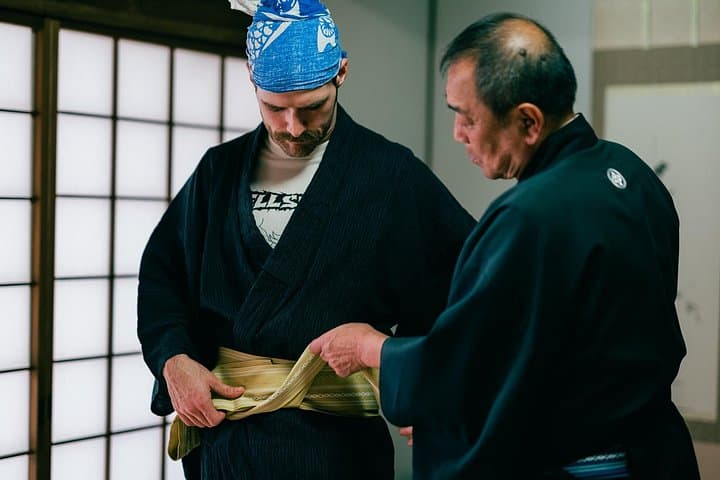
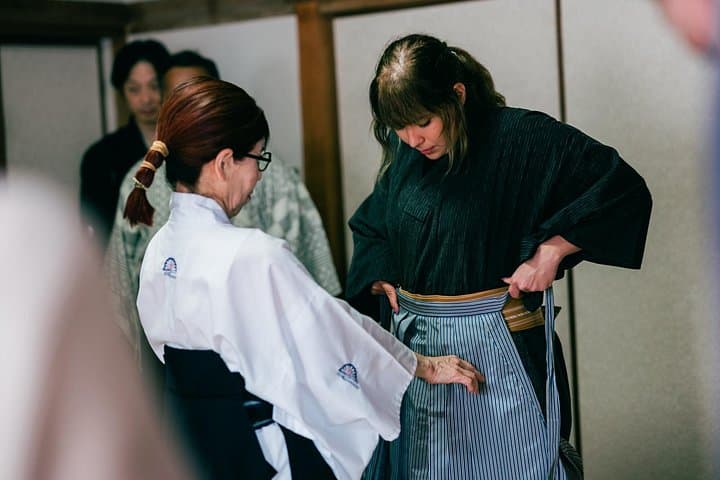
This experience pairs a hands-on Iaido session with a lesson in Bushido. Participants don a keikogi (dōgi), sip matcha and learn why Musashi pursued artistry alongside martial skill—his ink paintings and metal tsuba are preserved locally at the Shimada Museum of Art. Kumamoto itself sits on Kyushu’s wide plain with Mount Aso visible on clearer days; the region’s history shifted from battlefield to disciplined peacetime practice during the Edo era, shaping how sword arts evolved into spiritual training.
Practical details are straightforward: the activity runs about 100 minutes, uses imitation swords, and requires a minimum height of 150 cm. Expect a short demonstration, guided practice of basic draws and cuts, and time for questions and photos; the session ends with a personalized certificate and a tenugui. Travel-wise, public transit stops near the venue and the castle makes an easy companion stop. Respect dojo etiquette—move deliberately, follow safety briefings, and disclose any health or dietary restrictions in advance. For travelers seeking a compact cultural-physical experience in Kumamoto, this Iaido workshop balances historical insight with hands-on practice.
No. The workshop is designed for beginners and focuses on basic Iaido principles and safe handling of imitation swords.
Yes—participants must be at least 150 cm tall to take part in the session.
Absolutely— the dojo is a short distance from Kumamoto Castle and public transit connects both sites easily.
Inform the operator in advance; staff accommodate common allergies and will advise whether the provided sweets are suitable.
Attractive JAPAN operates guided outdoor trips and adventures with an emphasis on safety, stewardship, and memorable experiences.
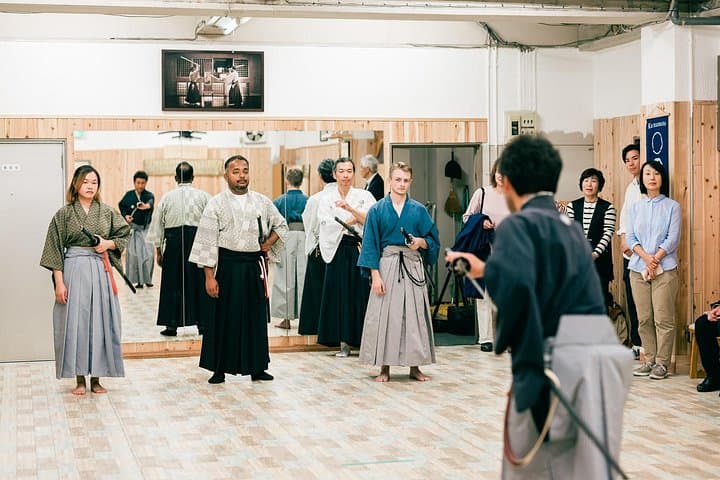

Step into a tatami-floored dojo a short walk from Kumamoto Castle and the city’s stone walls will feel like a quiet audience. The room smells faintly of polished wood and whisked matcha; Master Matsunaga, 18th headmaster of Niten Ichi-ryu, moves with economy and purpose as he demonstrates a kata that reads like a paragraph of history.
Step into a tatami-floored dojo a short walk from Kumamoto Castle and the city’s stone walls will feel like a quiet audience. The room smells faintly of polished wood and whisked matcha; Master Matsunaga, 18th headmaster of Niten Ichi-ryu, moves with economy and purpose as he demonstrates a kata that reads like a paragraph of history.
This experience pairs a hands-on Iaido session with a lesson in Bushido. Participants don a keikogi (dōgi), sip matcha and learn why Musashi pursued artistry alongside martial skill—his ink paintings and metal tsuba are preserved locally at the Shimada Museum of Art. Kumamoto itself sits on Kyushu’s wide plain with Mount Aso visible on clearer days; the region’s history shifted from battlefield to disciplined peacetime practice during the Edo era, shaping how sword arts evolved into spiritual training.
Practical details are straightforward: the activity runs about 100 minutes, uses imitation swords, and requires a minimum height of 150 cm. Expect a short demonstration, guided practice of basic draws and cuts, and time for questions and photos; the session ends with a personalized certificate and a tenugui. Travel-wise, public transit stops near the venue and the castle makes an easy companion stop. Respect dojo etiquette—move deliberately, follow safety briefings, and disclose any health or dietary restrictions in advance. For travelers seeking a compact cultural-physical experience in Kumamoto, this Iaido workshop balances historical insight with hands-on practice.