THE ADVENTURE COLLECTIVE® · Independent discovery and booking for outdoor travel

A half‑day guided loop from the Port of Palma through the southern Serra de Tramuntana, visiting Mirador Ricard Roca, Estellencs, Talaia Ses Ànimes and Banyalbufar. Expect dramatic coastal views, centuries‑old terraces, and short village strolls with a local guide.
A half‑day guided loop from the Port of Palma through the southern Serra de Tramuntana, visiting Mirador Ricard Roca, Estellencs, Talaia Ses Ànimes and Banyalbufar. Expect dramatic coastal views, centuries‑old terraces, and short village strolls with a local guide.
The day begins at the Port of Palma, where a small, air‑conditioned minibus eases away from the harbor and climbs toward the serrated ridge of the Serra de Tramuntana. Sea spray and pine resin mix on the breeze as the road curls above sheer cliffs; the Mediterranean sits like a restless companion daring you to look further.
Verified experiences and guided adventures in the surrounding area.
Operated by Nofrills Excursions · Palma de Mallorca, Balearic Islands
The day begins at the Port of Palma, where a small, air‑conditioned minibus eases away from the harbor and climbs toward the serrated ridge of the Serra de Tramuntana. Sea spray and pine resin mix on the breeze as the road curls above sheer cliffs; the Mediterranean sits like a restless companion daring you to look further.
Geology here is blunt and readable: limestone folded by ancient tectonics, cut by torrents that carve narrow valleys and expose terraces clinging to steep slopes. Human history reads alongside it — medieval watchtowers, dry‑stone terraces that still grow Malvasia grapes, and villages whose stone houses reflect a pragmatic island architecture shaped by wind and sun.
The guide-led route moves through Andratx, pauses at Mirador Ricard Roca for broad coastal panoramas, and drops into small communities such as Estellencs and Banyalbufar. Stops are short but unhurried: photo vantage points, a coffee beneath a shaded square, and explanations about local farming practices and the watchtower network that once guarded these coasts.
Practical notes: the tour is five hours and largely a scenic drive with brief, mostly level walks in village centers and viewpoints at altitude. Roads are winding; motion sensitivity is common on cliffside routes. Expect variable light — morning or late‑day windows make for the best photos — and bring layered clothing because temperatures can differ sharply between sea level and the mirador.
This excursion is ideal for travelers seeking a concise, interpretive introduction to the Tramuntana’s landscapes and culture without long hikes — a guided taste of Mallorca’s western spine.
The tour picks up and returns to the Port of Palma (or arranged hotel pickup in the Palma area).
Walking is minimal—short, mostly flat strolls at viewpoints and through village streets; the tour is described as physically easy.
Yes; infants can ride in strollers and must sit on an adult’s lap during the transfer portion as required by the operator.
There are opportunities to stop at cafés and public restrooms during longer village stops such as Estellencs and Banyalbufar, though food and drinks are typically at your own expense.
Nofrills Excursions operates guided outdoor trips and adventures with an emphasis on safety, stewardship, and memorable experiences.


The day begins at the Port of Palma, where a small, air‑conditioned minibus eases away from the harbor and climbs toward the serrated ridge of the Serra de Tramuntana. Sea spray and pine resin mix on the breeze as the road curls above sheer cliffs; the Mediterranean sits like a restless companion daring you to look further.
The day begins at the Port of Palma, where a small, air‑conditioned minibus eases away from the harbor and climbs toward the serrated ridge of the Serra de Tramuntana. Sea spray and pine resin mix on the breeze as the road curls above sheer cliffs; the Mediterranean sits like a restless companion daring you to look further.
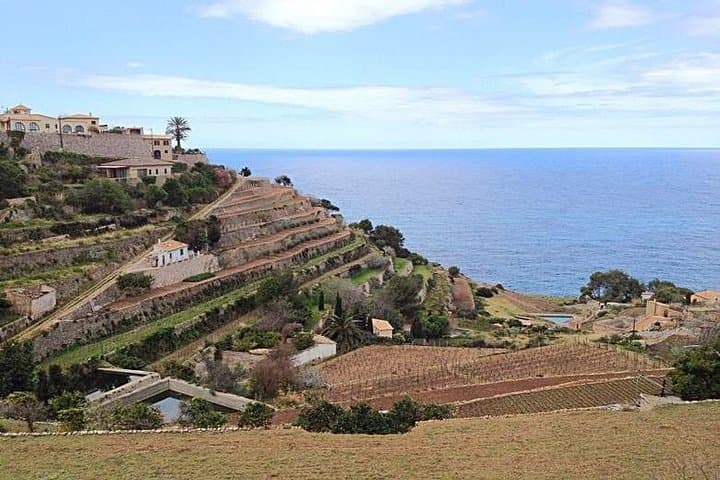
Geology here is blunt and readable: limestone folded by ancient tectonics, cut by torrents that carve narrow valleys and expose terraces clinging to steep slopes. Human history reads alongside it — medieval watchtowers, dry‑stone terraces that still grow Malvasia grapes, and villages whose stone houses reflect a pragmatic island architecture shaped by wind and sun.
The guide-led route moves through Andratx, pauses at Mirador Ricard Roca for broad coastal panoramas, and drops into small communities such as Estellencs and Banyalbufar. Stops are short but unhurried: photo vantage points, a coffee beneath a shaded square, and explanations about local farming practices and the watchtower network that once guarded these coasts.
Practical notes: the tour is five hours and largely a scenic drive with brief, mostly level walks in village centers and viewpoints at altitude. Roads are winding; motion sensitivity is common on cliffside routes. Expect variable light — morning or late‑day windows make for the best photos — and bring layered clothing because temperatures can differ sharply between sea level and the mirador.
This excursion is ideal for travelers seeking a concise, interpretive introduction to the Tramuntana’s landscapes and culture without long hikes — a guided taste of Mallorca’s western spine.