THE ADVENTURE COLLECTIVE® · Independent discovery and booking for outdoor travel

A full-day drive from Bucharest along the Transfăgărășan road links history, high alpine geology and engineered spectacle. Visit Curtea de Argeș, Poienari Castle, Vidraru Dam and Balea Lake on a 12-hour route that alternates brief hikes with panoramic road views.
A full-day drive from Bucharest along the Transfăgărășan road links history, high alpine geology and engineered spectacle. Visit Curtea de Argeș, Poienari Castle, Vidraru Dam and Balea Lake on a 12-hour route that alternates brief hikes with panoramic road views.
You start before dawn in a comfortable minivan, the city lights of Bucharest shrinking as the road pushes you toward the spine of the Southern Carpathians.
Verified experiences and guided adventures in the surrounding area.
Operated by Eastern European Experience · Arefu, Argeș County
You start before dawn in a comfortable minivan, the city lights of Bucharest shrinking as the road pushes you toward the spine of the Southern Carpathians.
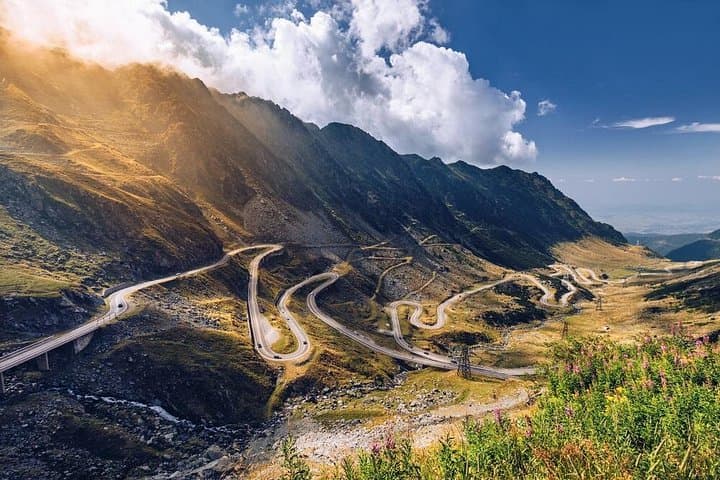
By midmorning you stand where stone remembers its builders: Curtea de Argeș’s carved church and the ruined keep of Poienari, Vlad the Impaler’s cliff-top stronghold, both watching over steep forested gullies. The Transfăgărășan itself arrives like a stage set—hairpins cut into living rock, switchbacks that pull you up from pine-smelling valleys into wind-swept alpine pastures.
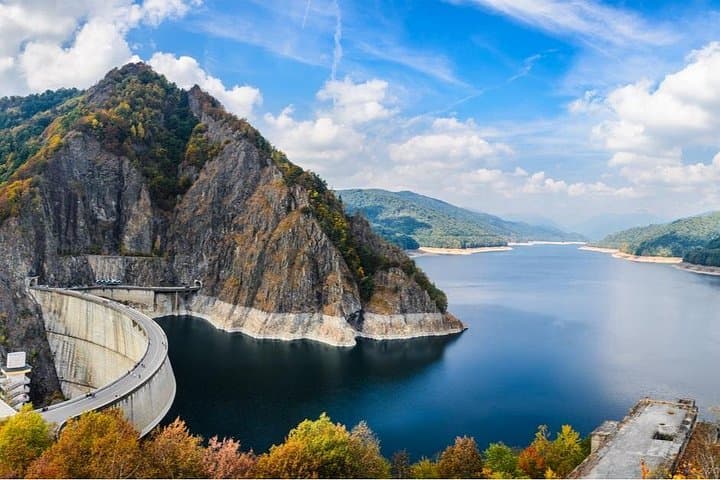
Geology here is raw: folded metamorphic strata and glacial cirques carved during the last Ice Age, now holding Balea Lake, a high glacial basin near the road’s summit. Vidraru Dam, a reinforced concrete arc 166 m high, redirects a river’s force into a lake that flashes like steel below.
Culture and history thread through the route—Wallachian courts, Ceausescu’s army-built highway, shepherding communities that still move flocks across summer meadows. Expect short walks: cobbled churchyards, a steep scramble to Poienari’s towers, and a leveled shore at Balea where the air feels thin and urgent.
Practical guidance: plan for a full 12-hour day, start early for clearer light and to avoid tourist congestion. Layers are essential—temperatures swing from Bucharest warmth to near-freezing at the summit. Bring water, snacks, and sturdy shoes; phone signal is patchy on the high road. Photography rewards patience: fog lifts fast, revealing vast west-facing views toward Făgăraș peaks.
This is a driving-focused excursion with brief hikes—an accessible way to carry you from medieval history into alpine geology on a single, memorable day.
Expect a 12-hour round trip from Bucharest with several hours of driving and short stops for walks and viewpoints.
The itinerary indicates skip-the-line access at some stops and included admissions where specified; confirm the exact inclusions when booking.
The tour includes gentle walks and at least one steep scramble to Poienari; travelers with limited mobility should check specifics and may remain at viewpoints instead.
The high alpine sections are usually open late June through October depending on snow; shoulder-season access can vary due to weather and maintenance.
Eastern European Experience operates guided outdoor trips and adventures with an emphasis on safety, stewardship, and memorable experiences.


You start before dawn in a comfortable minivan, the city lights of Bucharest shrinking as the road pushes you toward the spine of the Southern Carpathians.
You start before dawn in a comfortable minivan, the city lights of Bucharest shrinking as the road pushes you toward the spine of the Southern Carpathians.
By midmorning you stand where stone remembers its builders: Curtea de Argeș’s carved church and the ruined keep of Poienari, Vlad the Impaler’s cliff-top stronghold, both watching over steep forested gullies. The Transfăgărășan itself arrives like a stage set—hairpins cut into living rock, switchbacks that pull you up from pine-smelling valleys into wind-swept alpine pastures.
Geology here is raw: folded metamorphic strata and glacial cirques carved during the last Ice Age, now holding Balea Lake, a high glacial basin near the road’s summit. Vidraru Dam, a reinforced concrete arc 166 m high, redirects a river’s force into a lake that flashes like steel below.
Culture and history thread through the route—Wallachian courts, Ceausescu’s army-built highway, shepherding communities that still move flocks across summer meadows. Expect short walks: cobbled churchyards, a steep scramble to Poienari’s towers, and a leveled shore at Balea where the air feels thin and urgent.
Practical guidance: plan for a full 12-hour day, start early for clearer light and to avoid tourist congestion. Layers are essential—temperatures swing from Bucharest warmth to near-freezing at the summit. Bring water, snacks, and sturdy shoes; phone signal is patchy on the high road. Photography rewards patience: fog lifts fast, revealing vast west-facing views toward Făgăraș peaks.
This is a driving-focused excursion with brief hikes—an accessible way to carry you from medieval history into alpine geology on a single, memorable day.