THE ADVENTURE COLLECTIVE® · Independent discovery and booking for outdoor travel

A full-day loop from Brasov that links UNESCO-listed fortified churches, an inhabited medieval citadel, and a hilltop fortress. Expect cobbled streets, short steep climbs, and authentic village life across Viscri, Sighisoara, Biertan, and Rupea.
A full-day loop from Brasov that links UNESCO-listed fortified churches, an inhabited medieval citadel, and a hilltop fortress. Expect cobbled streets, short steep climbs, and authentic village life across Viscri, Sighisoara, Biertan, and Rupea.
You roll out of Brasov before dawn and the road east opens into patchwork fields and low, forested ridges. Villages appear as clusters of steep-roofed houses and fortified churches, their bell towers puncturing the cold air; smoke from wood stoves lingers in the lanes like a promise of slow, deliberate history.
Verified experiences and guided adventures in the surrounding area.
Operated by Rolandia · Brasov, Brasov County
You roll out of Brasov before dawn and the road east opens into patchwork fields and low, forested ridges. Villages appear as clusters of steep-roofed houses and fortified churches, their bell towers puncturing the cold air; smoke from wood stoves lingers in the lanes like a promise of slow, deliberate history.
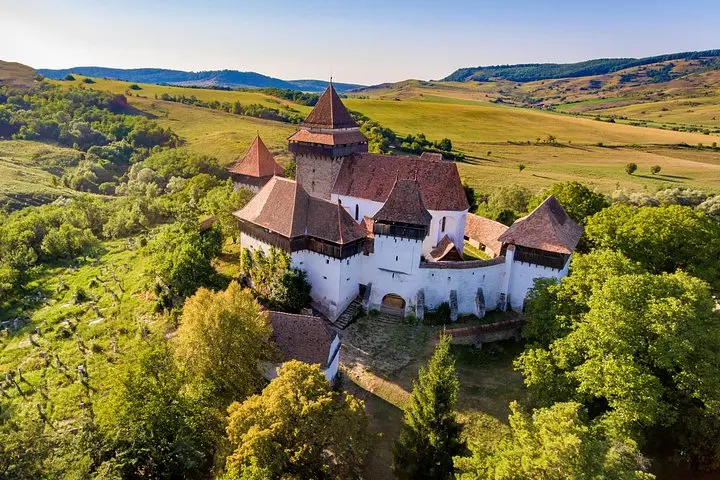
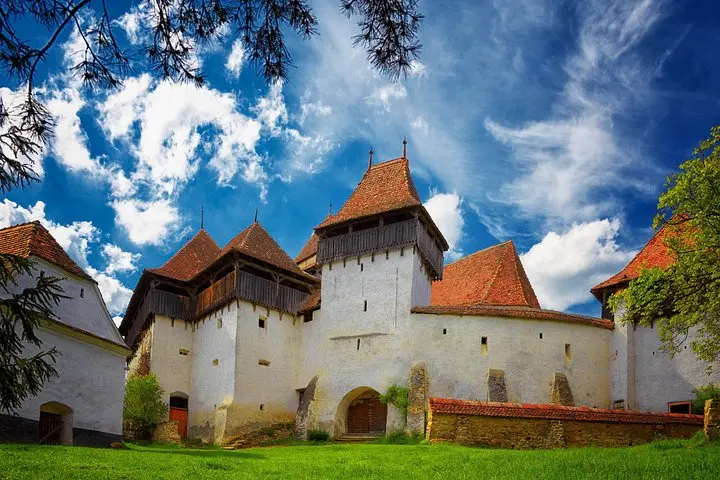
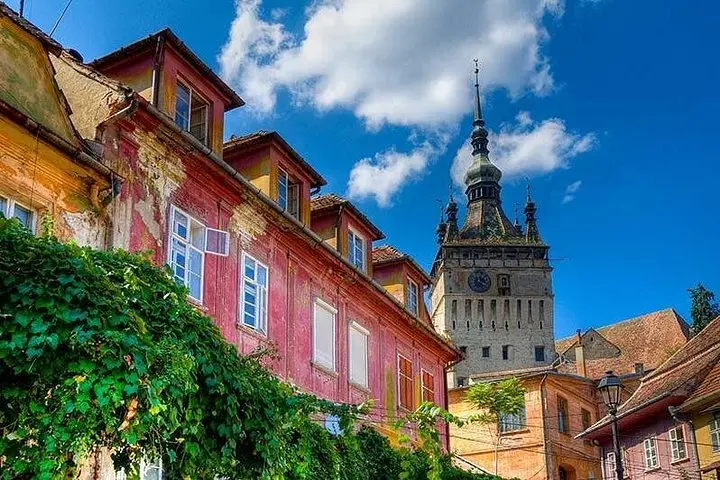
This single-day route threads together Transylvania’s Saxon legacy: Viscri’s Romanesque fortified church reinforced in the 1500s, Sighisoara’s inhabited medieval citadel crowned by its Clock Tower, Biertan’s uniquely defended bishopric, and the Rupea Citadel clinging to Cohalmului Hill. Geologically the area is a gentle mix of Cretaceous limestone outcrops and rolling loess soils, which shaped settlement patterns and defensive siting over centuries. Culturally you’ll see Germanic building techniques, carved wooden gates, and traces of Dacian–Roman continuity at sites like Rupea.
Expect cobbled streets, wooden staircases, and short steep climbs to viewpoints; the landscape itself pushes you to slow down and look up. Local life is informal—sheep pass through market squares, and small workshops sell smoked cheese and embroidered textiles.
Practical guidance: this is a long, mostly vehicle-based day (about 11 hours) with multiple 45–60 minute walking stops. Wear sturdy walking shoes for cobbles and church steps, bring a refillable water bottle, and carry cash for small village purchases. Photography is straightforward but respectful—many churches remain active. Hotel pickup and entrance fees are included; plan for brief, timed visits rather than in-depth exploration at each stop.
Yes—this private day trip includes hotel pickup and drop-off in Brasov as part of the tour.
Entrance fees to the scheduled sites on the itinerary are included in the tour price.
Generally yes—walking segments are short, but participants should be comfortable on uneven surfaces and stairs.
Yes—there are small cafes and vendors in towns; bringing snacks is also a good plan for transfer times.
Rolandia operates guided outdoor trips and adventures with an emphasis on safety, stewardship, and memorable experiences.
You roll out of Brasov before dawn and the road east opens into patchwork fields and low, forested ridges. Villages appear as clusters of steep-roofed houses and fortified churches, their bell towers puncturing the cold air; smoke from wood stoves lingers in the lanes like a promise of slow, deliberate history.
You roll out of Brasov before dawn and the road east opens into patchwork fields and low, forested ridges. Villages appear as clusters of steep-roofed houses and fortified churches, their bell towers puncturing the cold air; smoke from wood stoves lingers in the lanes like a promise of slow, deliberate history.
This single-day route threads together Transylvania’s Saxon legacy: Viscri’s Romanesque fortified church reinforced in the 1500s, Sighisoara’s inhabited medieval citadel crowned by its Clock Tower, Biertan’s uniquely defended bishopric, and the Rupea Citadel clinging to Cohalmului Hill. Geologically the area is a gentle mix of Cretaceous limestone outcrops and rolling loess soils, which shaped settlement patterns and defensive siting over centuries. Culturally you’ll see Germanic building techniques, carved wooden gates, and traces of Dacian–Roman continuity at sites like Rupea.
Expect cobbled streets, wooden staircases, and short steep climbs to viewpoints; the landscape itself pushes you to slow down and look up. Local life is informal—sheep pass through market squares, and small workshops sell smoked cheese and embroidered textiles.
Practical guidance: this is a long, mostly vehicle-based day (about 11 hours) with multiple 45–60 minute walking stops. Wear sturdy walking shoes for cobbles and church steps, bring a refillable water bottle, and carry cash for small village purchases. Photography is straightforward but respectful—many churches remain active. Hotel pickup and entrance fees are included; plan for brief, timed visits rather than in-depth exploration at each stop.