THE ADVENTURE COLLECTIVE® · Independent discovery and booking for outdoor travel

Spend a full day from Sarajevo exploring Travnik’s medieval fortress, the colorful Suleimaniya mosque, Jajce’s fortified citadel and the Pliva Waterfall and lakes. This private tour mixes easy walks, geology, and Ottoman and Bosnian history with flexible pacing.
Spend a full day from Sarajevo exploring Travnik’s medieval fortress, the colorful Suleimaniya mosque, Jajce’s fortified citadel and the Pliva Waterfall and lakes. This private tour mixes easy walks, geology, and Ottoman and Bosnian history with flexible pacing.
Morning light hits the Pliva River as an air‑conditioned van threads the low karst ridges between Sarajevo, Travnik and Jajce. You step out first at Travnik’s hilltop fortress — stone walls that watched Bosnian medieval kings and later Ottoman garrisons — then move through a town where Ottoman-era mosques punctuate narrow streets.
Verified experiences and guided adventures in the surrounding area.
Operated by Royal Bear Tour · Jajce, Central Bosnia
Morning light hits the Pliva River as an air‑conditioned van threads the low karst ridges between Sarajevo, Travnik and Jajce. You step out first at Travnik’s hilltop fortress — stone walls that watched Bosnian medieval kings and later Ottoman garrisons — then move through a town where Ottoman-era mosques punctuate narrow streets.
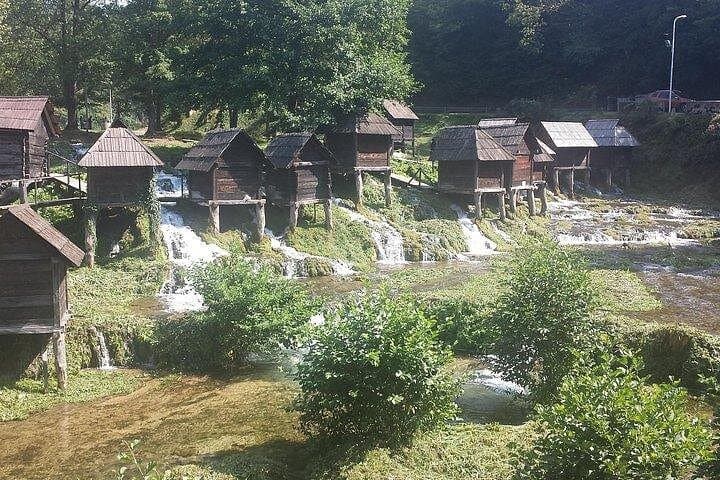
History here is tangible: Travnik Castle dates to the 14th–15th centuries; the colorful Suleimaniya mosque reflects 16th‑century Ottoman patronage; Ivan Andrić’s reflections on Bosnian life echo in local cafés. Jajce’s walled city, the last stronghold of the Bosnian Kingdom, crowns a steep hill above a town shaped by rivers and mills.
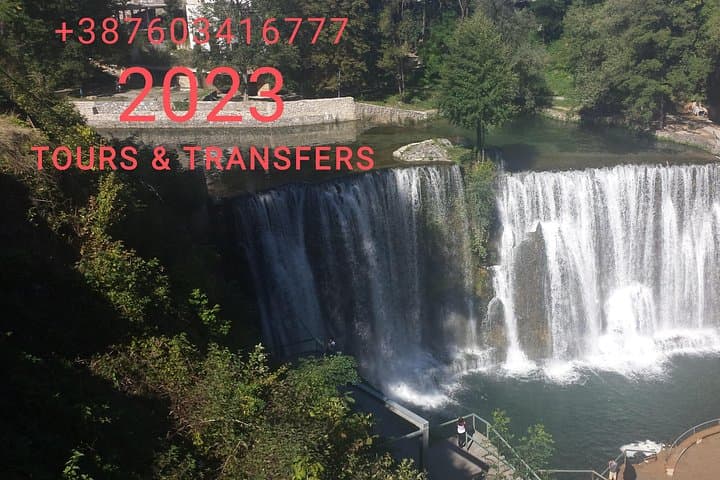
Geology gives the area its drama. The Pliva River builds travertine barriers that formed the Pliva lakes and the tiered Pliva Waterfall — now about 22 meters high after war‑era changes upstream. The lakes sit in a shallow karst basin, their clear arms a draw in summer and a quiet mirror in cooler months.
Expect short walks on cobbled streets, a climb to a citadel viewpoint, and boardwalks near the waterfall; most stops are easy but include uneven stone steps and wet surfaces. The private full‑day tour runs 7–10 hours with transport and flexible pacing — ideal for a single‑day outing from Sarajevo.
Practical tips: wear grippy shoes, bring a refillable bottle and local cash (BAM) for small purchases, charge your camera, and plan an early start to maximize light at the waterfall and lakes. Respect marked paths and local heritage sites to help preserve fragile travertine formations.
The tour runs about 7–10 hours and is private, so pacing is flexible—expect several short walks, viewpoints and time for photos.
Transport is included but admissions and meals are usually not—bring local cash for smaller sites and food stops.
Yes; the operator notes stroller access and infant seats are available, though some stops involve stairs and cobbles.
Pickup is typically arranged from Sarajevo (hotel or agreed point); specify pickup details when booking.
Royal Bear Tour operates guided outdoor trips and adventures with an emphasis on safety, stewardship, and memorable experiences.
Morning light hits the Pliva River as an air‑conditioned van threads the low karst ridges between Sarajevo, Travnik and Jajce. You step out first at Travnik’s hilltop fortress — stone walls that watched Bosnian medieval kings and later Ottoman garrisons — then move through a town where Ottoman-era mosques punctuate narrow streets.
Morning light hits the Pliva River as an air‑conditioned van threads the low karst ridges between Sarajevo, Travnik and Jajce. You step out first at Travnik’s hilltop fortress — stone walls that watched Bosnian medieval kings and later Ottoman garrisons — then move through a town where Ottoman-era mosques punctuate narrow streets.
History here is tangible: Travnik Castle dates to the 14th–15th centuries; the colorful Suleimaniya mosque reflects 16th‑century Ottoman patronage; Ivan Andrić’s reflections on Bosnian life echo in local cafés. Jajce’s walled city, the last stronghold of the Bosnian Kingdom, crowns a steep hill above a town shaped by rivers and mills.
Geology gives the area its drama. The Pliva River builds travertine barriers that formed the Pliva lakes and the tiered Pliva Waterfall — now about 22 meters high after war‑era changes upstream. The lakes sit in a shallow karst basin, their clear arms a draw in summer and a quiet mirror in cooler months.
Expect short walks on cobbled streets, a climb to a citadel viewpoint, and boardwalks near the waterfall; most stops are easy but include uneven stone steps and wet surfaces. The private full‑day tour runs 7–10 hours with transport and flexible pacing — ideal for a single‑day outing from Sarajevo.
Practical tips: wear grippy shoes, bring a refillable bottle and local cash (BAM) for small purchases, charge your camera, and plan an early start to maximize light at the waterfall and lakes. Respect marked paths and local heritage sites to help preserve fragile travertine formations.