THE ADVENTURE COLLECTIVE® · Independent discovery and booking for outdoor travel

Four days of jungle trails, river crossings and indigenous hospitality bring you to Ciudad Perdida, a pre‑Columbian site high in the Sierra Nevada. This guided trek blends strenuous hiking with cultural encounters and primitive camp nights.
Four days of jungle trails, river crossings and indigenous hospitality bring you to Ciudad Perdida, a pre‑Columbian site high in the Sierra Nevada. This guided trek blends strenuous hiking with cultural encounters and primitive camp nights.
You step out of the humid canopy and into a living ruin: terraces of carved stone appear through a wash of orchids, ferns and dripping vines. The jungle presses close—rivers dare you to cross, trails slope and push, and the Sierra Nevada’s humid air carries the steady percussion of insects and distant howler monkeys.
Verified experiences and guided adventures in the surrounding area.
Operated by Tierra Nativa · Santa Marta, Magdalena
You step out of the humid canopy and into a living ruin: terraces of carved stone appear through a wash of orchids, ferns and dripping vines. The jungle presses close—rivers dare you to cross, trails slope and push, and the Sierra Nevada’s humid air carries the steady percussion of insects and distant howler monkeys.
The Lost City (Ciudad Perdida or Teyuna) predates many Andean civilizations and sits in the heart of Kogui, Wiwa and Arhuaco territory. Archaeologists place its construction around 800 CE; its stone plazas and steps trace the mountain’s geology of steep, crystalline slopes carved by fast tropical rivers. Local indigenous cultures remain active custodians, and recent tourism models include contributions to communities and the national archaeological authority (ICANH).
Expect full days: 6–8 hours of walking through muddy, root-strewn trails, river crossings and steep climbs each day, then simple camp life in hammocks, tents or beds with mosquito netting. Guides lead the route, translate with indigenous hosts, and explain the archaeology and ethnography on-site.
Practical notes: train your legs and pack for heat plus heavy rain—quick-dry layers, waterproof cover, and sturdy boots that grip wet roots matter more than luxury. Hydrate frequently; treat river water or carry purification. Timing matters: the dry season shortens muddy sections but the forest remains humid year-round.
This trek balances cultural encounter, physical challenge and close-up nature: you’ll leave with photos, aching calves, and a clearer sense of how human history and tropical geology entwine in the Sierra Nevada.
You should be in good physical condition, able to hike 6–8 hours on consecutive days with steep, muddy climbs and several river crossings.
Guides and archaeological site admission are included; the route is managed in coordination with indigenous communities and ICANH.
Overnight stays are in basic camps—hammocks or simple beds with mosquito nets; some groups offer tents as alternatives.
The trek stays at moderate elevations in the Sierra Nevada and altitude sickness is uncommon, but be cautious if traveling from lowland sea level and consult a doctor if you have health concerns.
Tierra Nativa operates guided outdoor trips and adventures with an emphasis on safety, stewardship, and memorable experiences.
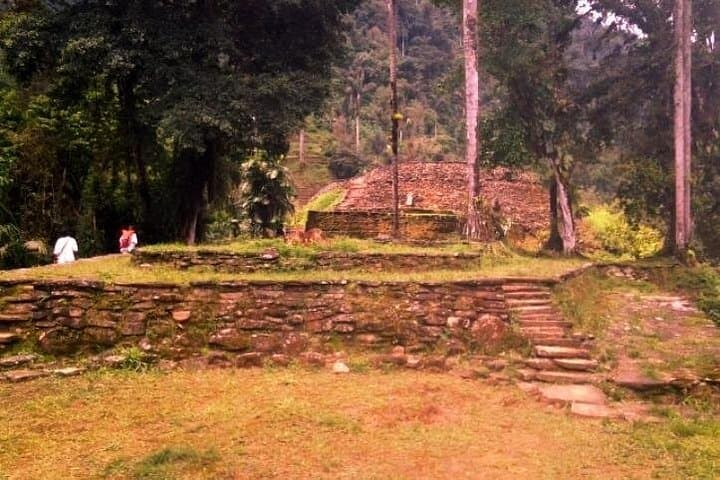


You step out of the humid canopy and into a living ruin: terraces of carved stone appear through a wash of orchids, ferns and dripping vines. The jungle presses close—rivers dare you to cross, trails slope and push, and the Sierra Nevada’s humid air carries the steady percussion of insects and distant howler monkeys.
You step out of the humid canopy and into a living ruin: terraces of carved stone appear through a wash of orchids, ferns and dripping vines. The jungle presses close—rivers dare you to cross, trails slope and push, and the Sierra Nevada’s humid air carries the steady percussion of insects and distant howler monkeys.
The Lost City (Ciudad Perdida or Teyuna) predates many Andean civilizations and sits in the heart of Kogui, Wiwa and Arhuaco territory. Archaeologists place its construction around 800 CE; its stone plazas and steps trace the mountain’s geology of steep, crystalline slopes carved by fast tropical rivers. Local indigenous cultures remain active custodians, and recent tourism models include contributions to communities and the national archaeological authority (ICANH).
Expect full days: 6–8 hours of walking through muddy, root-strewn trails, river crossings and steep climbs each day, then simple camp life in hammocks, tents or beds with mosquito netting. Guides lead the route, translate with indigenous hosts, and explain the archaeology and ethnography on-site.
Practical notes: train your legs and pack for heat plus heavy rain—quick-dry layers, waterproof cover, and sturdy boots that grip wet roots matter more than luxury. Hydrate frequently; treat river water or carry purification. Timing matters: the dry season shortens muddy sections but the forest remains humid year-round.
This trek balances cultural encounter, physical challenge and close-up nature: you’ll leave with photos, aching calves, and a clearer sense of how human history and tropical geology entwine in the Sierra Nevada.