THE ADVENTURE COLLECTIVE® · Independent discovery and booking for outdoor travel

Follow 19th-century charcoal-burners’ tracks into a karst sinkhole and discover the hidden Nuragic village of Tiscali. This full-day trek pairs rugged limestone ridges with rare plants, steep fissures and guided local history.
Follow 19th-century charcoal-burners’ tracks into a karst sinkhole and discover the hidden Nuragic village of Tiscali. This full-day trek pairs rugged limestone ridges with rare plants, steep fissures and guided local history.
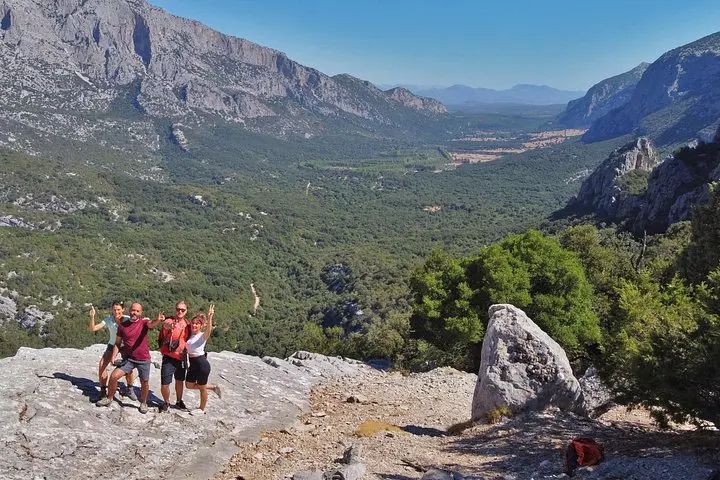
You push through a narrow slit of limestone—Sa Curtigia—and the forest exhales. The path drops into a bowl of stone where sunlight pools and the ruined Nuragic huts of Tiscali sit like a secret held for millennia. This trek follows charcoal-burners’ tracks through holm oak and Mediterranean scrub, climbing and descending karst ridgelines until the sinkhole opens beneath your feet.
Verified experiences and guided adventures in the surrounding area.
Operated by Orosei Adventours · Dorgali, Sardinia
You push through a narrow slit of limestone—Sa Curtigia—and the forest exhales. The path drops into a bowl of stone where sunlight pools and the ruined Nuragic huts of Tiscali sit like a secret held for millennia. This trek follows charcoal-burners’ tracks through holm oak and Mediterranean scrub, climbing and descending karst ridgelines until the sinkhole opens beneath your feet.
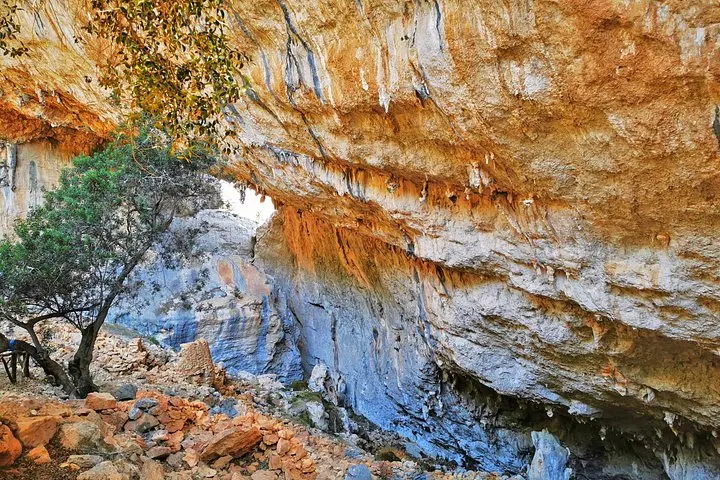
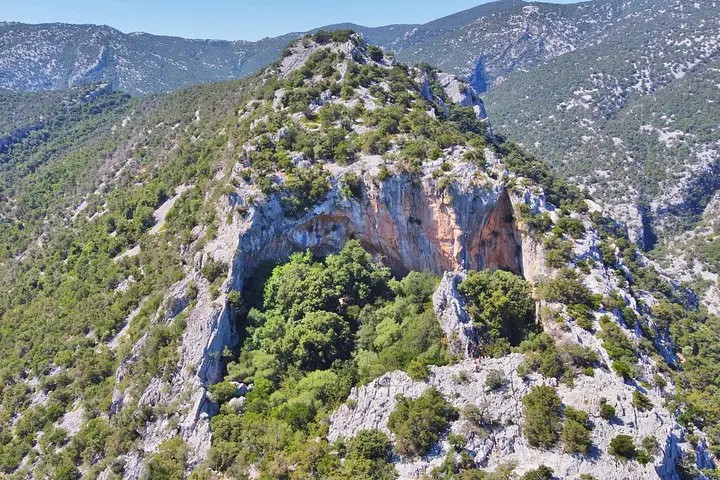
Geology here is honest and visible: limestone sculpted by water over hundreds of thousands of years, a collapsed cave system that formed the natural amphitheater containing the archaeological site. The nuragic ruins date to the Bronze and Iron Ages and speak to a pastoral, fortified life carved into rock. Botanically the microclimate in the sinkhole supports rare species — trilobed maple, terebinth, and ash — while wildlife such as martens, mouflon and soaring raptors are frequently seen along ridges.
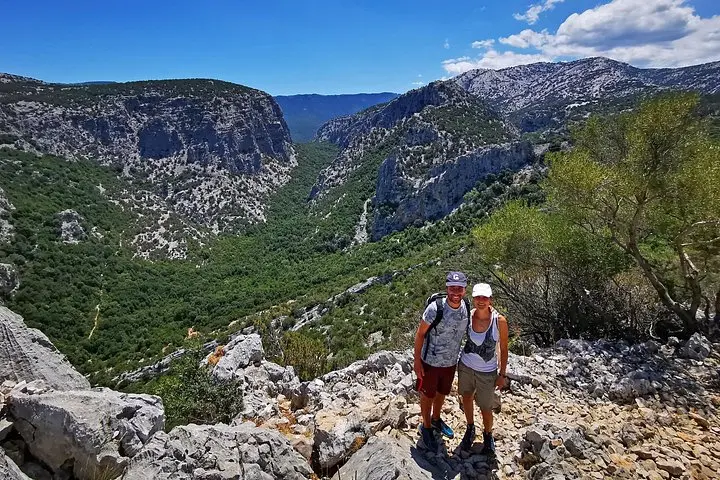
Practically, expect uneven limestone trails, some short scrambles through narrow rock fissures, and a full-day outing of roughly 6–8 hours. Guides typically provide local history, route-finding, and transport from towns like Dorgali, Oliena or Orosei. Water is limited on the route; summer heat can be intense and sections are exposed.
Plan for sturdy, grippy footwear, a midday break inside the cooler sinkhole, and an early start to avoid the hottest hours. The reward is both a tangible connection to Sardinia’s ancient past and a landscape that keeps moving—rock, wind, trees—inviting careful, curious travel.
The organized excursion is a full-day outing of roughly 6–8 hours and is rated moderate: expect uneven terrain, some short scrambles and sustained walking.
Guides are not strictly required but recommended—local guides provide reliable route-finding through narrow fissures, historical context and transport logistics.
Families with older children who are steady on uneven ground can do this hike; it’s not suitable for infants or those with serious mobility issues.
Spring and fall offer milder temperatures and flowering plants; summer is hot and requires early starts, while winter can be wetter and cooler inside the sinkhole.
Orosei Adventours operates guided outdoor trips and adventures with an emphasis on safety, stewardship, and memorable experiences.
You push through a narrow slit of limestone—Sa Curtigia—and the forest exhales. The path drops into a bowl of stone where sunlight pools and the ruined Nuragic huts of Tiscali sit like a secret held for millennia. This trek follows charcoal-burners’ tracks through holm oak and Mediterranean scrub, climbing and descending karst ridgelines until the sinkhole opens beneath your feet.
You push through a narrow slit of limestone—Sa Curtigia—and the forest exhales. The path drops into a bowl of stone where sunlight pools and the ruined Nuragic huts of Tiscali sit like a secret held for millennia. This trek follows charcoal-burners’ tracks through holm oak and Mediterranean scrub, climbing and descending karst ridgelines until the sinkhole opens beneath your feet.
Geology here is honest and visible: limestone sculpted by water over hundreds of thousands of years, a collapsed cave system that formed the natural amphitheater containing the archaeological site. The nuragic ruins date to the Bronze and Iron Ages and speak to a pastoral, fortified life carved into rock. Botanically the microclimate in the sinkhole supports rare species — trilobed maple, terebinth, and ash — while wildlife such as martens, mouflon and soaring raptors are frequently seen along ridges.
Practically, expect uneven limestone trails, some short scrambles through narrow rock fissures, and a full-day outing of roughly 6–8 hours. Guides typically provide local history, route-finding, and transport from towns like Dorgali, Oliena or Orosei. Water is limited on the route; summer heat can be intense and sections are exposed.
Plan for sturdy, grippy footwear, a midday break inside the cooler sinkhole, and an early start to avoid the hottest hours. The reward is both a tangible connection to Sardinia’s ancient past and a landscape that keeps moving—rock, wind, trees—inviting careful, curious travel.