THE ADVENTURE COLLECTIVE® · Independent discovery and booking for outdoor travel

Follow the Emerald River through peat bogs and sub-Antarctic forest to a glacier-fed lagoon that turns teal with suspended sediments. This moderate 4–5 hour trek from Ushuaia is a classic Fuegian day hike—accessible, wild, and revealing of the region’s glacial geology.
Follow the Emerald River through peat bogs and sub-Antarctic forest to a glacier-fed lagoon that turns teal with suspended sediments. This moderate 4–5 hour trek from Ushuaia is a classic Fuegian day hike—accessible, wild, and revealing of the region’s glacial geology.
You step off the van onto a low, chill wind that seems to push the forest open like a curtain. The trail starts by the Lasifashaj Valley, following a river that insists on staying visible—sometimes whispering, sometimes surging—guiding each footstep toward a blue you haven’t seen before.
Verified experiences and guided adventures in the surrounding area.
Operated by Patagonia Dreams · Ushuaia, Tierra del Fuego
You step off the van onto a low, chill wind that seems to push the forest open like a curtain. The trail starts by the Lasifashaj Valley, following a river that insists on staying visible—sometimes whispering, sometimes surging—guiding each footstep toward a blue you haven’t seen before.
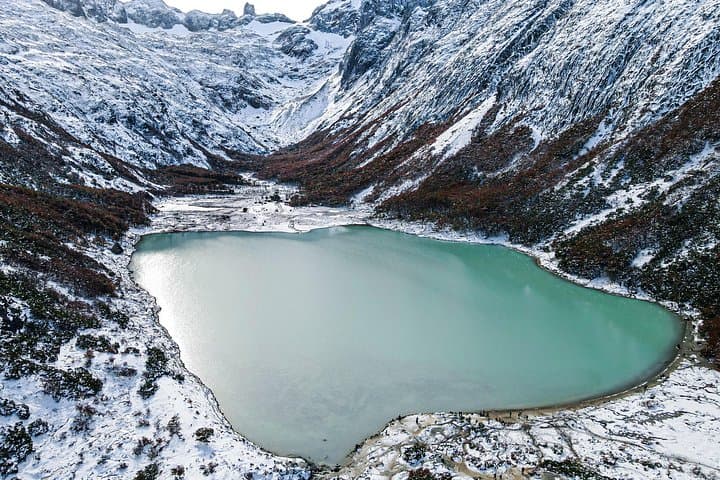
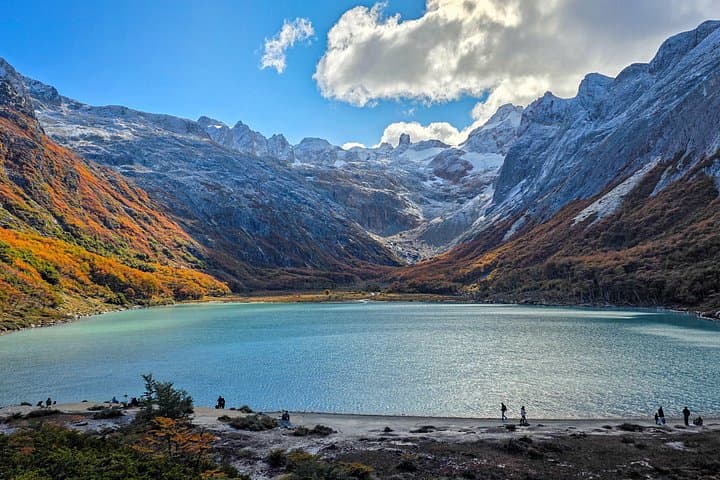
This is Laguna Esmeralda: a glacier-fed basin that flashes turquoise in summer and sits wrapped in white in winter. The route threads sphagnum peat bogs, stunted lenga and coihue trees, and rock fields hewn by repeated freeze–thaw. The ground changes underfoot like mood shifts—boardwalks give way to slippery roots, then to scree—so the pace becomes part of the place.
Geologically, the lagoon is a child of the last ice age. Meltwater from the Ojo del Albino Glacier feeds suspended glacial flour into the basin, scattering light and producing the vivid green-blue that defines the spot. Culturally, the area sits on the edge of the ancestral lands of the Yámana and Selk’nam peoples; modern Ushuaia grew from a penal colony into a gateway town, and daytrips like this stitch visitors to landscapes that shaped local livelihoods for centuries.
Guides from Patagonia Dreams (Vianda) add much more than route-finding: they point out carnation-like lichen on trunks, explain peat formation and the role of beaver activity upriver, and interpret mountain silhouettes that change with the hour. On a clear day the lagoon’s rim reads like a natural amphitheater—rocky shoulders and glacial teeth framing still water. In winter, the surface freezes and the world compresses to white and silence.
Practicalities are straightforward. Expect a 20-minute transfer from Ushuaia and roughly 4–5 hours total for the round trip, with about two hours of walking each way on a moderately difficult trail (roughly 8–10 km round-trip, ~200–300 m elevation gain depending on exact path). The route is well marked but can be muddy and uneven; in winter the operator supplies poles and crampons.
Bring waterproof boots, breathable layers, and a compact lunch—the trip includes a boxed lunch at the lagoon—and plan for quick weather swings: Patagonia’s microclimates often bring sun, wind, and rain in a single afternoon. Hydrate and give yourself time to pause; the best views require stillness as much as ascent.
For photographers the jewel is the lagoon’s color and foreground of moss and glacier pebbles; arrive mid-morning or late afternoon for the cleanest light. Whether you go for the color or the quiet, Laguna Esmeralda delivers a clear, elemental Patagonian experience.
The full experience including transfers is about 4–5 hours; the trail is roughly 8–10 km round-trip with approximately 200–300 m of elevation gain depending on where you start.
Minors under 9 are not permitted on this tour; older children with good stamina can manage the route with frequent rests.
No technical skills are required, but hikers should have a moderate fitness level and be comfortable on uneven, sometimes muddy terrain.
The lagoon often freezes and the operator includes poles and crampons; weather can close the trail and tours may be canceled for safety.
A boxed lunch is included; bring water (at least 1–1.5 L) and any snacks you prefer.
Transport is included with a roughly 20-minute transfer from most hotels; for private accommodations you’ll be given a nearby meeting point.
Patagonia Dreams operates guided outdoor trips and adventures with an emphasis on safety, stewardship, and memorable experiences.


You step off the van onto a low, chill wind that seems to push the forest open like a curtain. The trail starts by the Lasifashaj Valley, following a river that insists on staying visible—sometimes whispering, sometimes surging—guiding each footstep toward a blue you haven’t seen before.
You step off the van onto a low, chill wind that seems to push the forest open like a curtain. The trail starts by the Lasifashaj Valley, following a river that insists on staying visible—sometimes whispering, sometimes surging—guiding each footstep toward a blue you haven’t seen before.
This is Laguna Esmeralda: a glacier-fed basin that flashes turquoise in summer and sits wrapped in white in winter. The route threads sphagnum peat bogs, stunted lenga and coihue trees, and rock fields hewn by repeated freeze–thaw. The ground changes underfoot like mood shifts—boardwalks give way to slippery roots, then to scree—so the pace becomes part of the place.
Geologically, the lagoon is a child of the last ice age. Meltwater from the Ojo del Albino Glacier feeds suspended glacial flour into the basin, scattering light and producing the vivid green-blue that defines the spot. Culturally, the area sits on the edge of the ancestral lands of the Yámana and Selk’nam peoples; modern Ushuaia grew from a penal colony into a gateway town, and daytrips like this stitch visitors to landscapes that shaped local livelihoods for centuries.
Guides from Patagonia Dreams (Vianda) add much more than route-finding: they point out carnation-like lichen on trunks, explain peat formation and the role of beaver activity upriver, and interpret mountain silhouettes that change with the hour. On a clear day the lagoon’s rim reads like a natural amphitheater—rocky shoulders and glacial teeth framing still water. In winter, the surface freezes and the world compresses to white and silence.
Practicalities are straightforward. Expect a 20-minute transfer from Ushuaia and roughly 4–5 hours total for the round trip, with about two hours of walking each way on a moderately difficult trail (roughly 8–10 km round-trip, ~200–300 m elevation gain depending on exact path). The route is well marked but can be muddy and uneven; in winter the operator supplies poles and crampons.
Bring waterproof boots, breathable layers, and a compact lunch—the trip includes a boxed lunch at the lagoon—and plan for quick weather swings: Patagonia’s microclimates often bring sun, wind, and rain in a single afternoon. Hydrate and give yourself time to pause; the best views require stillness as much as ascent.
For photographers the jewel is the lagoon’s color and foreground of moss and glacier pebbles; arrive mid-morning or late afternoon for the cleanest light. Whether you go for the color or the quiet, Laguna Esmeralda delivers a clear, elemental Patagonian experience.