THE ADVENTURE COLLECTIVE® · Independent discovery and booking for outdoor travel

A six-day high-altitude trek across the Greater Caucasus, crossing Atsunta Pass (≈3,400 m) and linking the stone villages of Tusheti and Khevsureti. Expect remote camps, medieval towers, steep ascents and rapidly changing weather.
A six-day high-altitude trek across the Greater Caucasus, crossing Atsunta Pass (≈3,400 m) and linking the stone villages of Tusheti and Khevsureti. Expect remote camps, medieval towers, steep ascents and rapidly changing weather.
A cold wind threads through tall grass as you step out of Omalo at dawn, the ridges of the Greater Caucasus pushing the sky higher. For six days you move between stone villages and open alpine meadows, following shepherd trails where the only other tracks are those of grazing horses. The Atsunta Pass—crowning the route near 3,400 m—dominates the middle of the trip, a final knife-edge that opens into Khevsureti’s stony gorges.
Verified experiences and guided adventures in the surrounding area.
Operated by TrekGeorgia · Omalo, Kakheti
A cold wind threads through tall grass as you step out of Omalo at dawn, the ridges of the Greater Caucasus pushing the sky higher. For six days you move between stone villages and open alpine meadows, following shepherd trails where the only other tracks are those of grazing horses. The Atsunta Pass—crowning the route near 3,400 m—dominates the middle of the trip, a final knife-edge that opens into Khevsureti’s stony gorges.
This route traces centuries of human resilience: medieval defensive towers in Dartlo, Mutso and Shatili recall a past of clan boundaries and mountain watchposts. Geologically the range is young and rugged, carved by glacial action and marked by limestone outcrops and steep river-cut gorges; alpine soils give way to subalpine scrub as you climb. Culturally, Tusheti’s mountain villages still practice transhumance—seasonal grazing—and local hospitality centers on simple stews, fresh bread and strong tea.
Expect mixed terrain: dirt roads, narrow shepherd tracks, rocky scree and grassy campsites. Weather shifts quickly—sunlit meadows can turn to sleet within an hour—and rivers will challenge footing in spring melt. Guides typically handle logistics: 4WD transfers from Tbilisi, guesthouse nights in Omalo and Dartlo, and tent camping on the high route with horses for luggage.
Practical edge: train for long days with elevation gain, bring layered insulation, and practice using crampons or gaiters if conditions look snowy. Hydrate early, carry a personal water filter, and allow gradual pacing for altitude. With proper preparation this is an immersive, high-country trek that rewards with remote panoramas and fortified villages that seem to watch you pass.
You should be in strong cardiovascular shape with experience hiking multiple consecutive days and comfortable with sustained daily elevation gain; the itinerary includes long days and a 3,400 m pass.
Yes—horses are provided for luggage transport between camps, but each hiker should carry a daypack with personal items, water and extra layers.
No special national park permit is typically required, but passport details are collected at booking and guides manage local access; always carry your passport when traveling between regions.
Guides monitor conditions and will reroute or delay crossing if unsafe; flexible scheduling and contingency days help manage closures due to snow or storms.
TrekGeorgia operates guided outdoor trips and adventures with an emphasis on safety, stewardship, and memorable experiences.
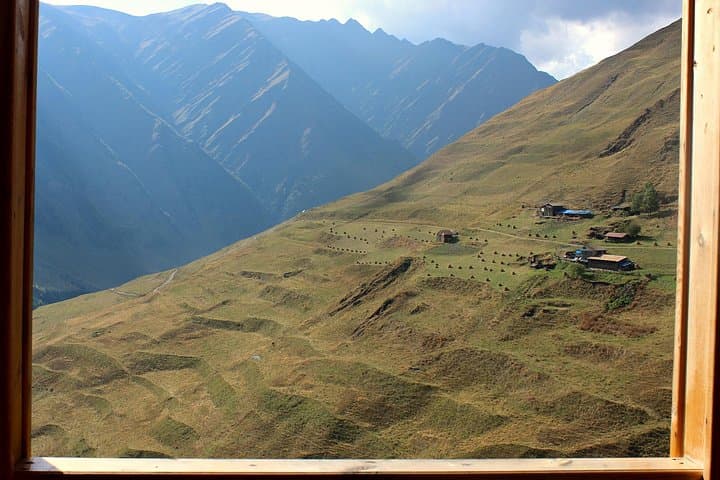
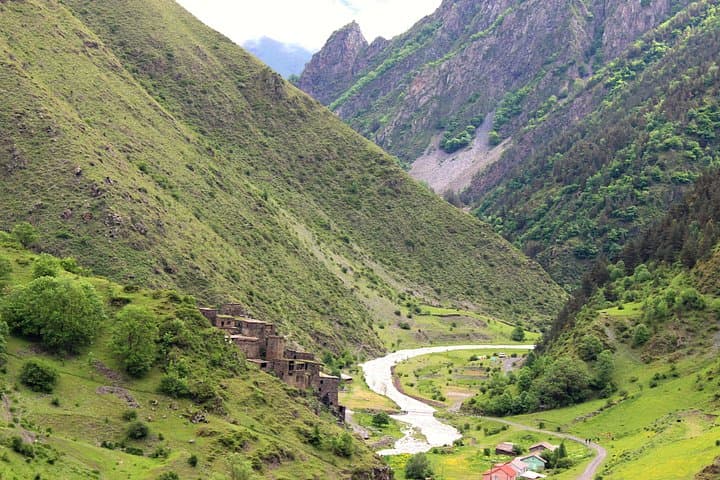


A cold wind threads through tall grass as you step out of Omalo at dawn, the ridges of the Greater Caucasus pushing the sky higher. For six days you move between stone villages and open alpine meadows, following shepherd trails where the only other tracks are those of grazing horses. The Atsunta Pass—crowning the route near 3,400 m—dominates the middle of the trip, a final knife-edge that opens into Khevsureti’s stony gorges.
A cold wind threads through tall grass as you step out of Omalo at dawn, the ridges of the Greater Caucasus pushing the sky higher. For six days you move between stone villages and open alpine meadows, following shepherd trails where the only other tracks are those of grazing horses. The Atsunta Pass—crowning the route near 3,400 m—dominates the middle of the trip, a final knife-edge that opens into Khevsureti’s stony gorges.
This route traces centuries of human resilience: medieval defensive towers in Dartlo, Mutso and Shatili recall a past of clan boundaries and mountain watchposts. Geologically the range is young and rugged, carved by glacial action and marked by limestone outcrops and steep river-cut gorges; alpine soils give way to subalpine scrub as you climb. Culturally, Tusheti’s mountain villages still practice transhumance—seasonal grazing—and local hospitality centers on simple stews, fresh bread and strong tea.
Expect mixed terrain: dirt roads, narrow shepherd tracks, rocky scree and grassy campsites. Weather shifts quickly—sunlit meadows can turn to sleet within an hour—and rivers will challenge footing in spring melt. Guides typically handle logistics: 4WD transfers from Tbilisi, guesthouse nights in Omalo and Dartlo, and tent camping on the high route with horses for luggage.
Practical edge: train for long days with elevation gain, bring layered insulation, and practice using crampons or gaiters if conditions look snowy. Hydrate early, carry a personal water filter, and allow gradual pacing for altitude. With proper preparation this is an immersive, high-country trek that rewards with remote panoramas and fortified villages that seem to watch you pass.