THE ADVENTURE COLLECTIVE® · Independent discovery and booking for outdoor travel

A full-day small-group trek from Ushuaia takes hikers through peat bogs and Fuegian forest to the Témpanos lagoon and a close approach to Vinciguerra Glacier. Expect 600 m of climbing, variable mountain weather, and the chance to circumnavigate an iceberg-strewn lagoon.
A full-day small-group trek from Ushuaia takes hikers through peat bogs and Fuegian forest to the Témpanos lagoon and a close approach to Vinciguerra Glacier. Expect 600 m of climbing, variable mountain weather, and the chance to circumnavigate an iceberg-strewn lagoon.
A cold wind from the Beagle Channel cuts through the open valleys as the minibus climbs away from Ushuaia. Trees thin, the peat bog widens, and the trailhead appears—a tangle of hoofprints, tussock, and boot paths that lead into the Fuegian forest. The group shoulders packs, checks crampon fit, and steps into a landscape that feels impatient: rivers daring you to cross, creeks pushing the route higher.
Verified experiences and guided adventures in the surrounding area.
Operated by Arpon Trekking · Ushuaia, Tierra del Fuego
A cold wind from the Beagle Channel cuts through the open valleys as the minibus climbs away from Ushuaia. Trees thin, the peat bog widens, and the trailhead appears—a tangle of hoofprints, tussock, and boot paths that lead into the Fuegian forest. The group shoulders packs, checks crampon fit, and steps into a landscape that feels impatient: rivers daring you to cross, creeks pushing the route higher.
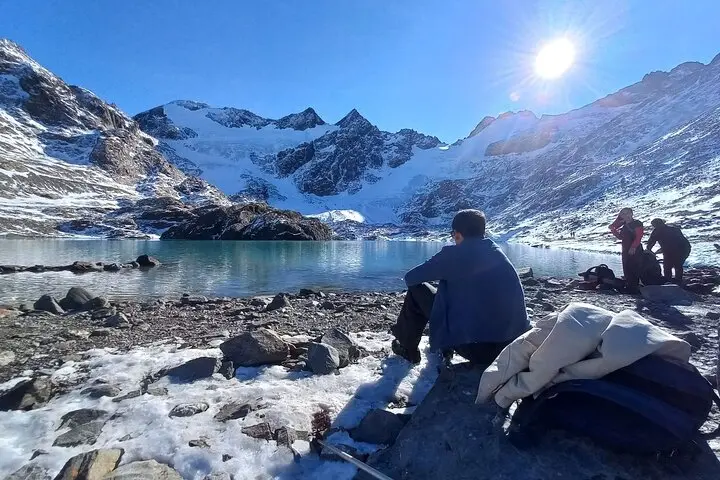
The first hours move through dense lenga and guindo stands where trunks are rubbed and scarred by wind and snow. Moss cushions the trail and drainage channels force zig-zags; the ground is often peat and root, then steeper rock underfoot. After approximately 7–8 kilometers round trip and a sustained 600-meter ascent, the forest gives way to alpine moraine. The Témpanos lagoon appears like a sudden, quiet basin—icebergs calved from Vinciguerra Glacier drifting against wind-driven ripples.
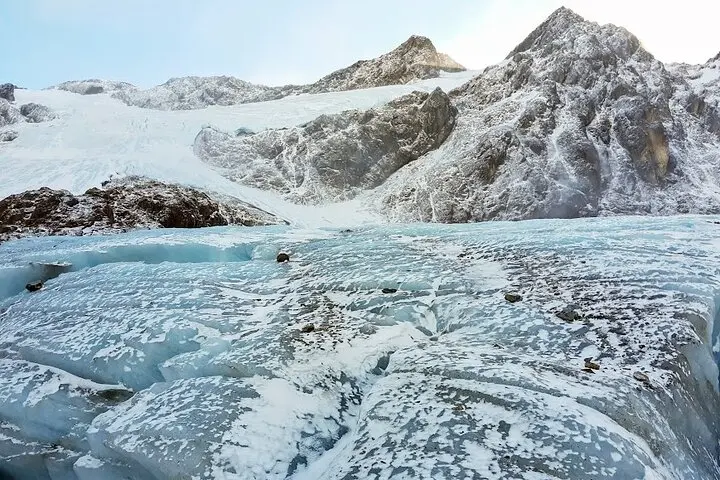
Geology here reads like a recent history book: Patagonian glaciers sculpted the valleys during the last ice advance, leaving moraines, meltwater channels, and the blue-white faces of Vinciguerra. The glacier’s cracks and moulins are visible from a safe distance; guides brief the group on crevasse behavior and why crampons and poles matter when conditions turn.
This route threads cultural memory into its map. Indigenous Yaghan people once hunted the coastal edges nearby, and later European explorers used these valleys as access routes into the mountains. Today, small guiding teams emphasize low-impact travel—packing out waste, avoiding fragile peat, and keeping to steeper tread to prevent new trails.
Practical notes: the outing is a full-day, roughly 8 hours door-to-door, with about 3 hours uphill to the lagoon and glacier approach. Expect variable weather; conditions change rapidly and visibility can drop. The operator supplies private transport, snacks, sandwich lunch and a hot infusion, plus sticks and crampons if needed. Maximum group size is 14 and guides will assess glacier access on the day—if wind or group condition is poor, the route stops at the lagoon rim.
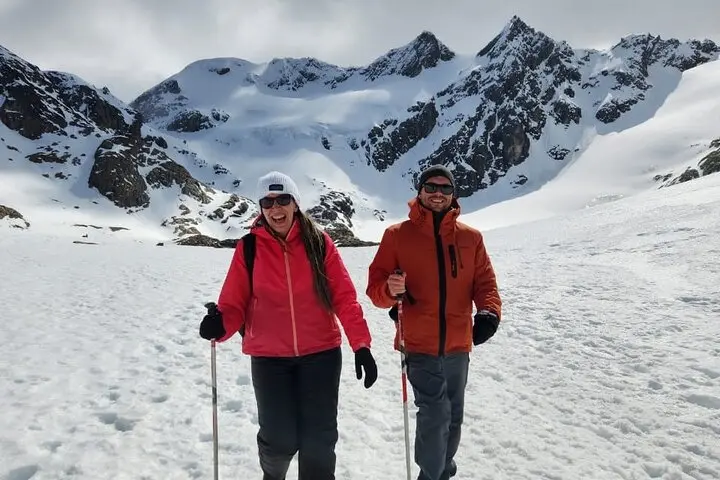
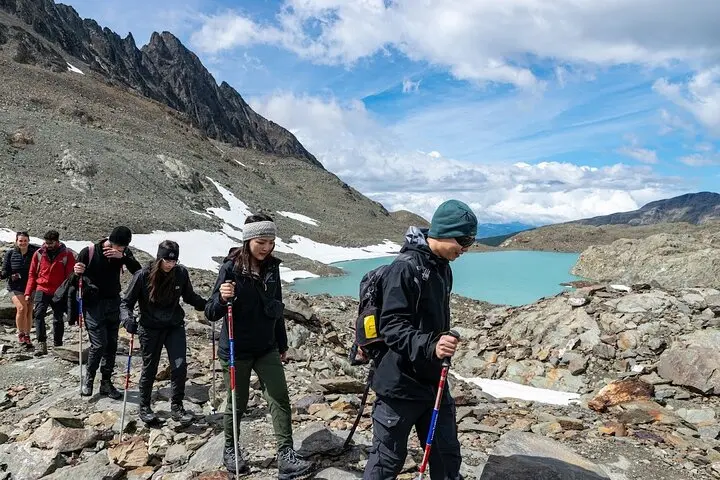
For travelers: wear waterproof, stiff-soled hiking boots, bring layers, a windproof shell, and extra warm gloves. Hydration matters—the peat soils and wind can be deceptively dehydrating—and poles make river crossings and loose scree more manageable. If you’re fit and comfortable with long ascents and some high-mountain terrain, this trail rewards you with close glacier views without technical roped travel.
The return is the same trail, but with a different light: the wind calms, the lagoon glints, and the forest reclaims the silence. By the time the bus collects you back near Ushuaia, the glacier has left its fingerprints on your boots and your memory—sharp, cold, and improbably vast.
The outing is about 8 hours total with roughly 600 meters of elevation gain; expect 3 hours uphill to the lagoon and glacier approach.
Crampons are provided if needed; the guide assesses conditions and will require them on icy sections near the glacier.
No technical climbing skills are required, but participants should be in excellent physical shape and comfortable on steep, uneven ground.
Private transport from Ushuaia, snacks, sandwich lunch, hot infusion, sticks and crampons if necessary, and guiding services.
Yes—mountain clothing rentals are available through the operator; advise arranging this in advance if you lack a waterproof shell or insulated layers.
The guide can turn back if conditions are unsafe; the operator cancels for bad weather with full refunds if done at least 24 hours prior or on the day for safety reasons.
Arpon Trekking operates guided outdoor trips and adventures with an emphasis on safety, stewardship, and memorable experiences.
A cold wind from the Beagle Channel cuts through the open valleys as the minibus climbs away from Ushuaia. Trees thin, the peat bog widens, and the trailhead appears—a tangle of hoofprints, tussock, and boot paths that lead into the Fuegian forest. The group shoulders packs, checks crampon fit, and steps into a landscape that feels impatient: rivers daring you to cross, creeks pushing the route higher.
A cold wind from the Beagle Channel cuts through the open valleys as the minibus climbs away from Ushuaia. Trees thin, the peat bog widens, and the trailhead appears—a tangle of hoofprints, tussock, and boot paths that lead into the Fuegian forest. The group shoulders packs, checks crampon fit, and steps into a landscape that feels impatient: rivers daring you to cross, creeks pushing the route higher.
The first hours move through dense lenga and guindo stands where trunks are rubbed and scarred by wind and snow. Moss cushions the trail and drainage channels force zig-zags; the ground is often peat and root, then steeper rock underfoot. After approximately 7–8 kilometers round trip and a sustained 600-meter ascent, the forest gives way to alpine moraine. The Témpanos lagoon appears like a sudden, quiet basin—icebergs calved from Vinciguerra Glacier drifting against wind-driven ripples.
Geology here reads like a recent history book: Patagonian glaciers sculpted the valleys during the last ice advance, leaving moraines, meltwater channels, and the blue-white faces of Vinciguerra. The glacier’s cracks and moulins are visible from a safe distance; guides brief the group on crevasse behavior and why crampons and poles matter when conditions turn.
This route threads cultural memory into its map. Indigenous Yaghan people once hunted the coastal edges nearby, and later European explorers used these valleys as access routes into the mountains. Today, small guiding teams emphasize low-impact travel—packing out waste, avoiding fragile peat, and keeping to steeper tread to prevent new trails.
Practical notes: the outing is a full-day, roughly 8 hours door-to-door, with about 3 hours uphill to the lagoon and glacier approach. Expect variable weather; conditions change rapidly and visibility can drop. The operator supplies private transport, snacks, sandwich lunch and a hot infusion, plus sticks and crampons if needed. Maximum group size is 14 and guides will assess glacier access on the day—if wind or group condition is poor, the route stops at the lagoon rim.
For travelers: wear waterproof, stiff-soled hiking boots, bring layers, a windproof shell, and extra warm gloves. Hydration matters—the peat soils and wind can be deceptively dehydrating—and poles make river crossings and loose scree more manageable. If you’re fit and comfortable with long ascents and some high-mountain terrain, this trail rewards you with close glacier views without technical roped travel.
The return is the same trail, but with a different light: the wind calms, the lagoon glints, and the forest reclaims the silence. By the time the bus collects you back near Ushuaia, the glacier has left its fingerprints on your boots and your memory—sharp, cold, and improbably vast.