THE ADVENTURE COLLECTIVE® · Independent discovery and booking for outdoor travel

Clip in and climb a limestone amphitheater minutes from the Adriatic. This guided via ferrata in Val Rosandra pairs karst geology with exposed steel rungs and expert UIAGM guides—ideal for hikers ready to move into guided vertical terrain.
Clip in and climb a limestone amphitheater minutes from the Adriatic. This guided via ferrata in Val Rosandra pairs karst geology with exposed steel rungs and expert UIAGM guides—ideal for hikers ready to move into guided vertical terrain.
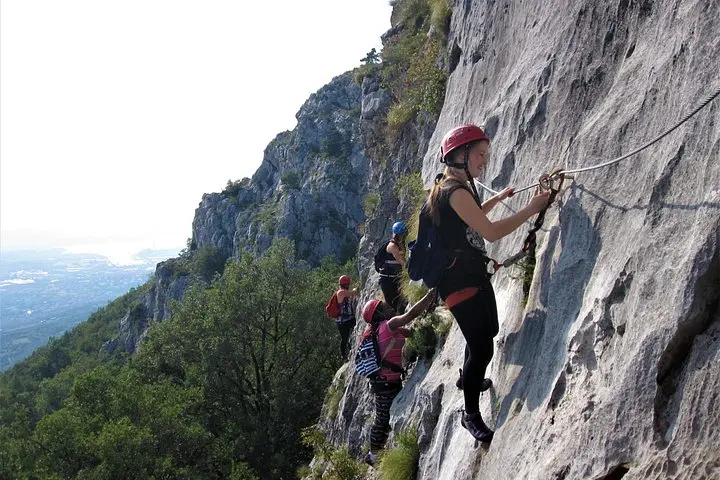
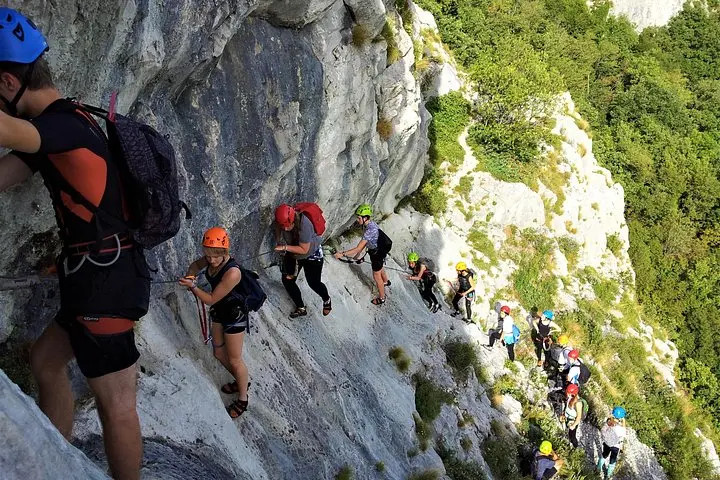
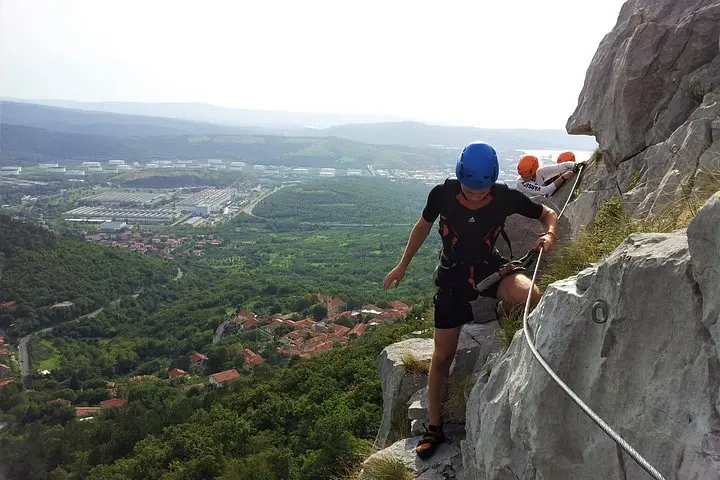
You clip into the steel cable and the limestone face narrows into a ledge: the sea sits low on the horizon, and the gorge of Val Rosandra rises around you like a carved amphitheater. Wind tugs at your jacket and the stream below dares you to look down; the rock is warm where sun hits it, cool where a cave mouth throws shade.
Verified experiences and guided adventures in the surrounding area.
Operated by UIAGM/IFMGA Mountain Guide · Trieste, Friuli-Venezia Giulia
You clip into the steel cable and the limestone face narrows into a ledge: the sea sits low on the horizon, and the gorge of Val Rosandra rises around you like a carved amphitheater. Wind tugs at your jacket and the stream below dares you to look down; the rock is warm where sun hits it, cool where a cave mouth throws shade.
Val Rosandra is the southern edge of the Karst highland—limestone folded and hollowed by millennia of water. The region gave its name to karst geology, and here you'll see the features up close: vertical faces, small caves and sharp ridgelines formed by chemical weathering. Trieste’s borderland history—Austro‑Hungarian trade, Italian and Slovene traditions—still colors the valleys and villages you pass on the short drive out of town.
Practically, expect a 3–4 hour outing: a brief approach on foot, a safety briefing and instruction in rope maneuvers, then one of several ferrata lines chosen to match your group. Routes use metal rungs, cables and exposed traverses; an IFMGA/UIAGM guide leads groups of up to four. The activity rewards steady footing and a head for exposure rather than raw strength.
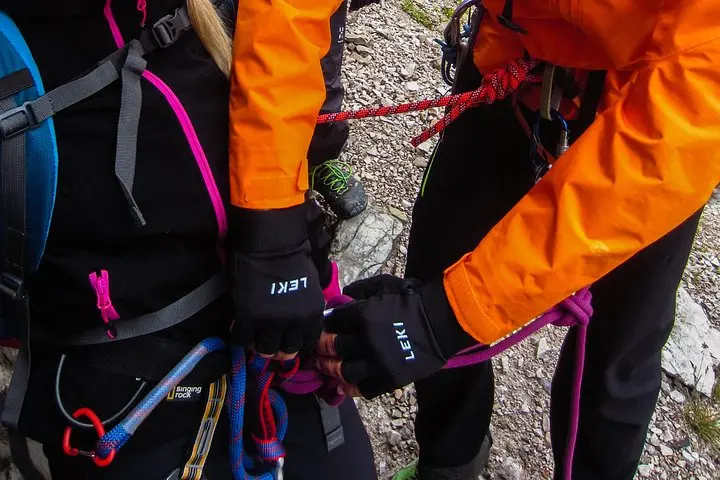
Wear sturdy approach shoes, bring 1–2 liters of water, sun protection and a lightweight shell; gloves for the rungs help on longer pitches. The guides supply helmets, harnesses and via ferrata lanyards, and will cancel in heavy rain. This is an accessible, adrenaline‑tinged way to connect Trieste’s seaside character with raw karst rock—intense, immediate, and very much of this landscape.
No technical climbing background is required; guides provide instruction on via ferrata technique. You should be comfortable on exposed terrain and able to walk on uneven rock.
UIAGM/IFMGA guides supply helmets, harnesses and via ferrata lanyards; bring your own gloves and shoes for best comfort.
Routes vary and guides choose lines to match the group; expect sustained exposure and moderate physical effort over the 3–4 hour outing.
Tours are cancelled in heavy rain or unsafe conditions and the provider’s policy states all sales are final, so verify weather and travel plans before booking.
UIAGM/IFMGA Mountain Guide operates guided outdoor trips and adventures with an emphasis on safety, stewardship, and memorable experiences.
You clip into the steel cable and the limestone face narrows into a ledge: the sea sits low on the horizon, and the gorge of Val Rosandra rises around you like a carved amphitheater. Wind tugs at your jacket and the stream below dares you to look down; the rock is warm where sun hits it, cool where a cave mouth throws shade.
You clip into the steel cable and the limestone face narrows into a ledge: the sea sits low on the horizon, and the gorge of Val Rosandra rises around you like a carved amphitheater. Wind tugs at your jacket and the stream below dares you to look down; the rock is warm where sun hits it, cool where a cave mouth throws shade.
Val Rosandra is the southern edge of the Karst highland—limestone folded and hollowed by millennia of water. The region gave its name to karst geology, and here you'll see the features up close: vertical faces, small caves and sharp ridgelines formed by chemical weathering. Trieste’s borderland history—Austro‑Hungarian trade, Italian and Slovene traditions—still colors the valleys and villages you pass on the short drive out of town.
Practically, expect a 3–4 hour outing: a brief approach on foot, a safety briefing and instruction in rope maneuvers, then one of several ferrata lines chosen to match your group. Routes use metal rungs, cables and exposed traverses; an IFMGA/UIAGM guide leads groups of up to four. The activity rewards steady footing and a head for exposure rather than raw strength.
Wear sturdy approach shoes, bring 1–2 liters of water, sun protection and a lightweight shell; gloves for the rungs help on longer pitches. The guides supply helmets, harnesses and via ferrata lanyards, and will cancel in heavy rain. This is an accessible, adrenaline‑tinged way to connect Trieste’s seaside character with raw karst rock—intense, immediate, and very much of this landscape.