THE ADVENTURE COLLECTIVE® · Independent discovery and booking for outdoor travel

Ride Nepal’s signature day of whitewater as the Trishuli River pulls you through bouncy wave trains, prayer-flag bridges, and foothill scenery—all with round-trip transport from Kathmandu. Spring and fall bring friendly Class II–III+; summer swells the volume for stronger paddling and bigger thrills.
Ride Nepal’s signature day of whitewater as the Trishuli River pulls you through bouncy wave trains, prayer-flag bridges, and foothill scenery—all with round-trip transport from Kathmandu. Spring and fall bring friendly Class II–III+; summer swells the volume for stronger paddling and bigger thrills.
Dawn in Kathmandu hums to life as vans thread out of the city and onto the Prithvi Highway, bound for the Trishuli. Terraced hills unfold, road-side tea stalls steam, and the river keeps pace to your left, flashing silver as if winking you closer. By the time you reach the put‑in, the Trishuli is already speaking—eddies swirl and rapids mutter, daring you to push off.
Verified experiences and guided adventures in the surrounding area.
Operated by Himalayan Planet Adventures · Malekhu, Bagmati Province
Dawn in Kathmandu hums to life as vans thread out of the city and onto the Prithvi Highway, bound for the Trishuli. Terraced hills unfold, road-side tea stalls steam, and the river keeps pace to your left, flashing silver as if winking you closer. By the time you reach the put‑in, the Trishuli is already speaking—eddies swirl and rapids mutter, daring you to push off.
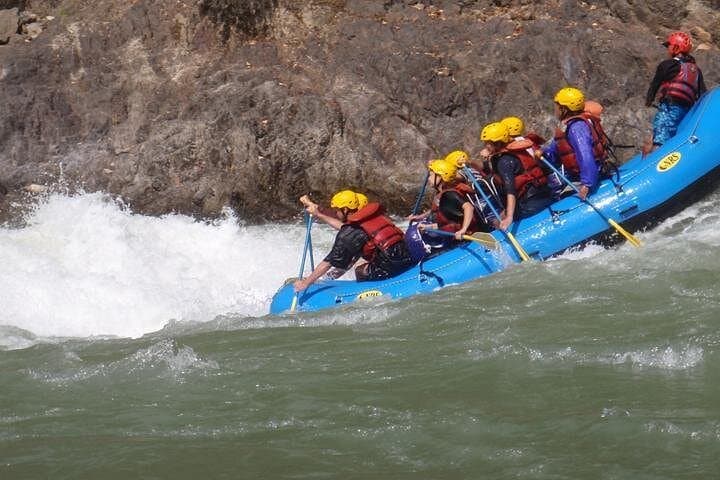
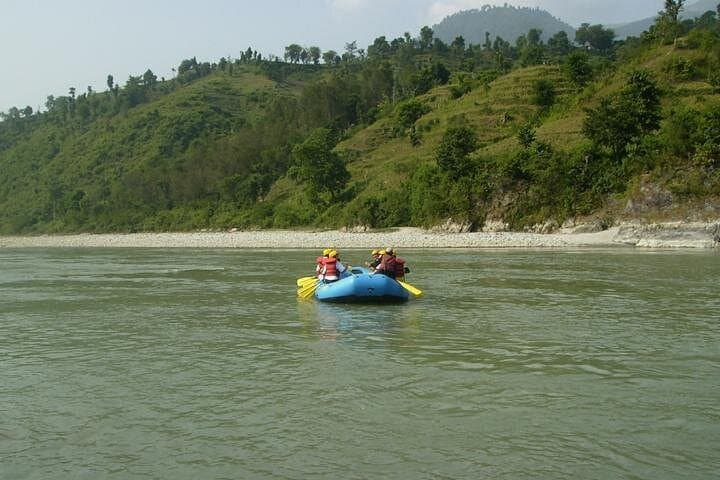
This is Nepal’s most popular rafting day trip for good reason. Fed by high-country springs and holy lakes above Gosainkunda, the Trishuli funnels Himalayan energy into approachable, bouncy whitewater. In spring and fall, it runs playful Class II–III+, with wave trains that slap the raft awake and friendly holes that tug at your paddle. During the summer monsoon, it swells and flexes, stacking up punchy Class III–IV features that demand crisp paddle commands and tighter teamwork. The river moves with purpose either way, pushing forward through forested bends, past suspension bridges strung with prayer flags, and alongside stone hamlets that have watched travelers pass since the highway opened the trade route decades ago.
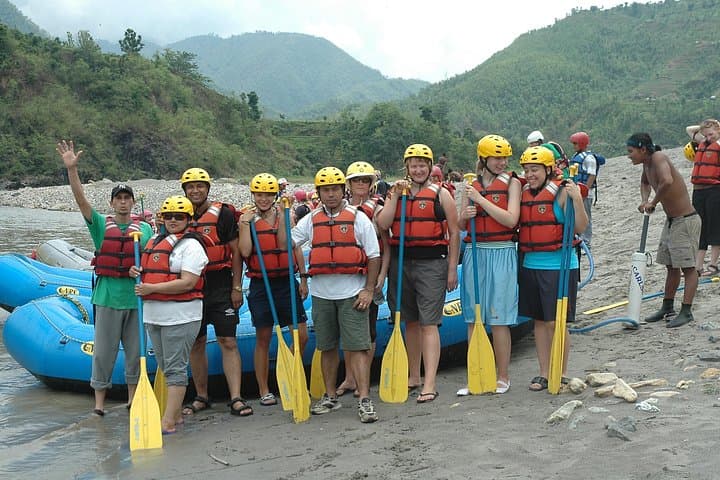
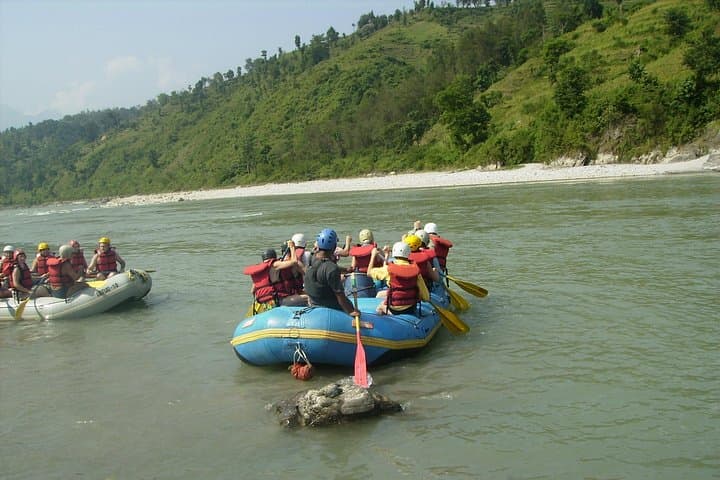
Guides—government certified and river-seasoned—fit you with helmets and PFDs, walk through safety, and choreograph the crew: forward, high-side, hold on. Then the Trishuli takes the lead. Rapids like Ladies’ Delight and Upset tease the bow, then relent into calm pools where the current loosens its grip and macaques skitter along the banks. Kingfishers streak blue. The highway is never far, yet the river carves its own corridor, cool and loud, reminding you to stay present.
Logistically, this day is streamlined. Expect hotel pickup in Kathmandu, a 2.5‑hour drive to the put‑in near Charaudi/Benighat, 3–4 hours on the water (river time varies with season and flow), and a late‑afternoon return to the city. Lunch lands riverside—simple, hearty, and exactly what paddlers crave. Operators provide all safety gear and the raft; you bring quick-dry layers, river shoes, and a willingness to get splashed.
Hydration matters at this elevation and sun angle, and so does timing: aim for spring (Mar–May) or post-monsoon fall (Oct–Nov) for the cleanest rides and long views. Winter trips run with lower, chillier water and bright skies; summer delivers bigger features and less predictability. Whichever window you choose, the Trishuli meets you where you are—sometimes playful, sometimes serious, always moving.
By the take‑out, you’ve read its moods: the way it laughs around boulders, shoulders into corners, and softens just when you need a breath. Back in the van, you glance upriver through the window, already plotting the next run. The Trishuli prods you onward even as it recedes, a restless companion calling you back to the Himalaya’s fast water.
Typically Class II–III+ in spring and fall, with some Class IV features during peak monsoon flows. Guides may adjust the section to match conditions.
No. Certified guides provide a full safety briefing and paddle instruction. Basic swimming ability and comfort in water are recommended.
Plan for about 2.5 hours to the put-in and 3–3.5 hours back depending on traffic and road conditions.
Round-trip transport from Kathmandu, raft and safety gear, government-certified guide, lunch, and taxes are typically included.
Most operators require adults for this day trip. Families should inquire directly about seasonal flows and age limits.
Spring (Mar–May) and fall (Oct–Nov) offer stable flows, warm days, and clear views. Summer brings bigger water; winter is cooler with lower flows.
Himalayan Planet Adventures operates guided outdoor trips and adventures with an emphasis on safety, stewardship, and memorable experiences.
Dawn in Kathmandu hums to life as vans thread out of the city and onto the Prithvi Highway, bound for the Trishuli. Terraced hills unfold, road-side tea stalls steam, and the river keeps pace to your left, flashing silver as if winking you closer. By the time you reach the put‑in, the Trishuli is already speaking—eddies swirl and rapids mutter, daring you to push off.
Dawn in Kathmandu hums to life as vans thread out of the city and onto the Prithvi Highway, bound for the Trishuli. Terraced hills unfold, road-side tea stalls steam, and the river keeps pace to your left, flashing silver as if winking you closer. By the time you reach the put‑in, the Trishuli is already speaking—eddies swirl and rapids mutter, daring you to push off.
This is Nepal’s most popular rafting day trip for good reason. Fed by high-country springs and holy lakes above Gosainkunda, the Trishuli funnels Himalayan energy into approachable, bouncy whitewater. In spring and fall, it runs playful Class II–III+, with wave trains that slap the raft awake and friendly holes that tug at your paddle. During the summer monsoon, it swells and flexes, stacking up punchy Class III–IV features that demand crisp paddle commands and tighter teamwork. The river moves with purpose either way, pushing forward through forested bends, past suspension bridges strung with prayer flags, and alongside stone hamlets that have watched travelers pass since the highway opened the trade route decades ago.
Guides—government certified and river-seasoned—fit you with helmets and PFDs, walk through safety, and choreograph the crew: forward, high-side, hold on. Then the Trishuli takes the lead. Rapids like Ladies’ Delight and Upset tease the bow, then relent into calm pools where the current loosens its grip and macaques skitter along the banks. Kingfishers streak blue. The highway is never far, yet the river carves its own corridor, cool and loud, reminding you to stay present.
Logistically, this day is streamlined. Expect hotel pickup in Kathmandu, a 2.5‑hour drive to the put‑in near Charaudi/Benighat, 3–4 hours on the water (river time varies with season and flow), and a late‑afternoon return to the city. Lunch lands riverside—simple, hearty, and exactly what paddlers crave. Operators provide all safety gear and the raft; you bring quick-dry layers, river shoes, and a willingness to get splashed.
Hydration matters at this elevation and sun angle, and so does timing: aim for spring (Mar–May) or post-monsoon fall (Oct–Nov) for the cleanest rides and long views. Winter trips run with lower, chillier water and bright skies; summer delivers bigger features and less predictability. Whichever window you choose, the Trishuli meets you where you are—sometimes playful, sometimes serious, always moving.
By the take‑out, you’ve read its moods: the way it laughs around boulders, shoulders into corners, and softens just when you need a breath. Back in the van, you glance upriver through the window, already plotting the next run. The Trishuli prods you onward even as it recedes, a restless companion calling you back to the Himalaya’s fast water.