THE ADVENTURE COLLECTIVE® · Independent discovery and booking for outdoor travel

Drive beyond the city lights with a small, expert-led crew that chases aurora through fjords, mountain corridors and—when needed—into Finland for clearer skies. This tour emphasizes precision routing, pro photos, and a flexible, fast-moving approach for better viewing windows.
Drive beyond the city lights with a small, expert-led crew that chases aurora through fjords, mountain corridors and—when needed—into Finland for clearer skies. This tour emphasizes precision routing, pro photos, and a flexible, fast-moving approach for better viewing windows.
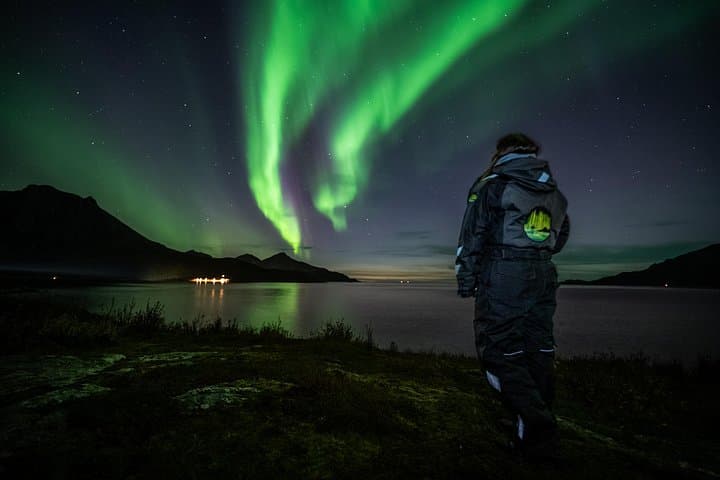
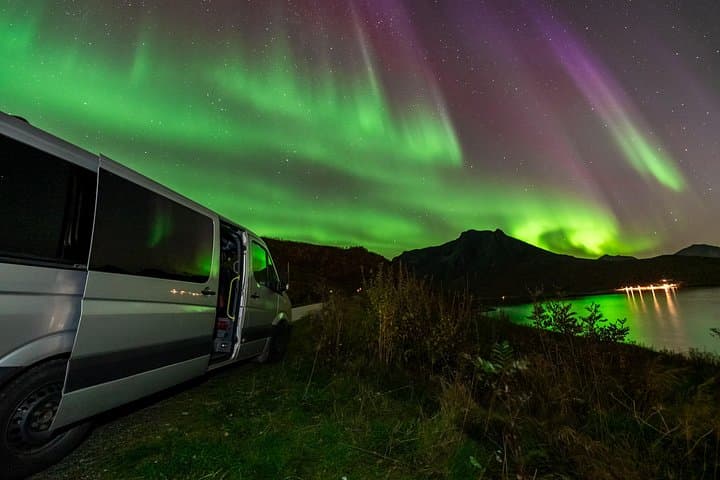
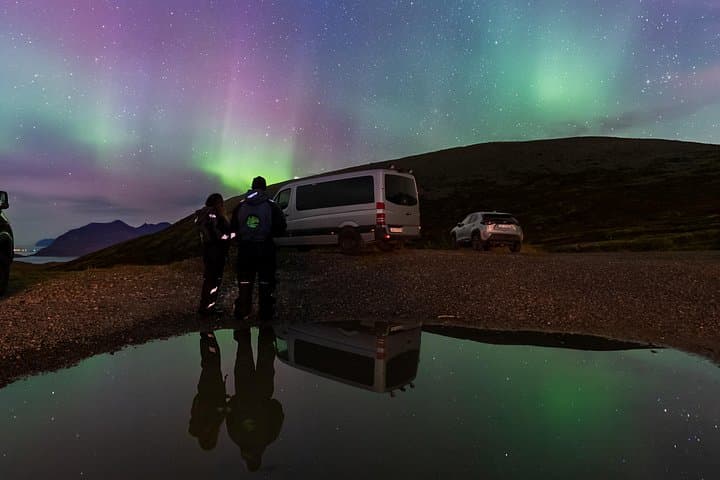
A cold wind from the fjord cuts across the road as a compact 4x4 slides off into a dark valley. Under a high, star-sprinkled sky a small group steps out onto a gravel shoulder; the guide points, checks a tablet full of satellite overlays, and within minutes a green ribbon unfolds above the ridgelines. This is not a roadside stop—it’s a targeted chase that moves where the sky clears.
Verified experiences and guided adventures in the surrounding area.
Operated by ALSHEMAL Norway · Tromsø, Troms og Finnmark
A cold wind from the fjord cuts across the road as a compact 4x4 slides off into a dark valley. Under a high, star-sprinkled sky a small group steps out onto a gravel shoulder; the guide points, checks a tablet full of satellite overlays, and within minutes a green ribbon unfolds above the ridgelines. This is not a roadside stop—it’s a targeted chase that moves where the sky clears.
The route follows classic Arctic geography: coastal fjords carved by Pleistocene ice, mountain corridors that funnel colder, drier air, and inland plateaus that often break through cloud cover. Sámi history is threaded through the landscape—reindeer paths and centuries of aurora folklore that warned of the lights’ moods. Modern forecasts, live road cams, and local aurora networks now supplement those old weather senses.
Expect long evenings (roughly 7–8 hours) of short drives and repeated stops; the team may cross the Norwegian–Finnish border if satellite data promises clearer skies. Guides supply thermal suits, warm drinks, and professional aurora portraits; guests should bring insulated boots, camera batteries kept warm, and a passport if cross-border strategy is possible.
Practical planning matters: tours run best September–April when nights are long, and peak activity often occurs between late evening and the early hours. Temperatures can plummet; layers and good footwear determine how long you’ll stand watching. A compact tripod, spare batteries, and a headlamp with red light keep photography and movement efficient. Above all, the experience is about mobility—being ready to follow the sky where it opens—and patience when the aurora decides to show itself.
Yes—this tour can cross into Finland when conditions are better there; bring your passport to avoid being unable to cross the border.
Thermal suits rated to around –20°C are provided (sizes S–XXXL) but boots are not included—bring insulated footwear.
Tours operate in darkness months (roughly September–April); the most active viewing window is usually late evening to early morning, though guides chase based on real-time forecasts.
The operator uses satellite data and local networks to move to clearer micro-locations; tours may be canceled or rescheduled if conditions make viewing unlikely.
ALSHEMAL Norway operates guided outdoor trips and adventures with an emphasis on safety, stewardship, and memorable experiences.

A cold wind from the fjord cuts across the road as a compact 4x4 slides off into a dark valley. Under a high, star-sprinkled sky a small group steps out onto a gravel shoulder; the guide points, checks a tablet full of satellite overlays, and within minutes a green ribbon unfolds above the ridgelines. This is not a roadside stop—it’s a targeted chase that moves where the sky clears.
A cold wind from the fjord cuts across the road as a compact 4x4 slides off into a dark valley. Under a high, star-sprinkled sky a small group steps out onto a gravel shoulder; the guide points, checks a tablet full of satellite overlays, and within minutes a green ribbon unfolds above the ridgelines. This is not a roadside stop—it’s a targeted chase that moves where the sky clears.
The route follows classic Arctic geography: coastal fjords carved by Pleistocene ice, mountain corridors that funnel colder, drier air, and inland plateaus that often break through cloud cover. Sámi history is threaded through the landscape—reindeer paths and centuries of aurora folklore that warned of the lights’ moods. Modern forecasts, live road cams, and local aurora networks now supplement those old weather senses.
Expect long evenings (roughly 7–8 hours) of short drives and repeated stops; the team may cross the Norwegian–Finnish border if satellite data promises clearer skies. Guides supply thermal suits, warm drinks, and professional aurora portraits; guests should bring insulated boots, camera batteries kept warm, and a passport if cross-border strategy is possible.
Practical planning matters: tours run best September–April when nights are long, and peak activity often occurs between late evening and the early hours. Temperatures can plummet; layers and good footwear determine how long you’ll stand watching. A compact tripod, spare batteries, and a headlamp with red light keep photography and movement efficient. Above all, the experience is about mobility—being ready to follow the sky where it opens—and patience when the aurora decides to show itself.