THE ADVENTURE COLLECTIVE® · Independent discovery and booking for outdoor travel

A full-day private safari from Mombasa into Tsavo East delivers classic East African wildlife and dramatic open landscapes. Visit Aruba Dam, enjoy guided game drives, and return the same evening—ideal for travelers short on time but hungry for big-game viewing.
A full-day private safari from Mombasa into Tsavo East delivers classic East African wildlife and dramatic open landscapes. Visit Aruba Dam, enjoy guided game drives, and return the same evening—ideal for travelers short on time but hungry for big-game viewing.
You roll out before dawn on the Mombasa–Nairobi road, the coast light thinning as the van hums toward the dry, open heart of Tsavo East.
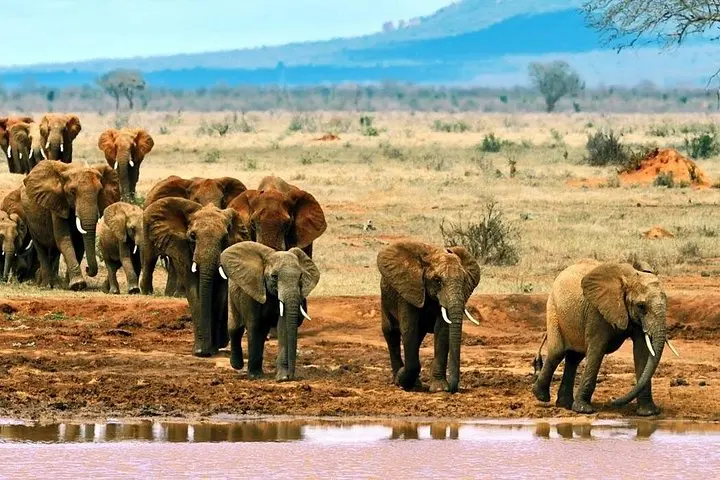
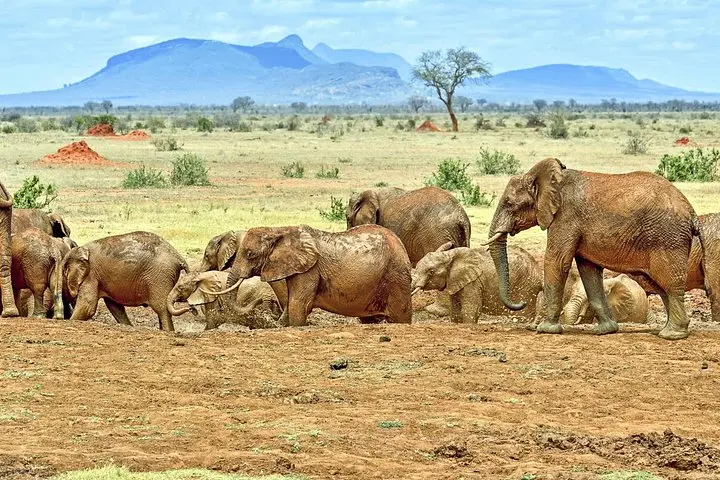
By mid-morning the scrub and red soil open into long plains; herds and lone silhouettes punctuate the horizon. The guide lifts the pop-up roof and the park becomes a living stage—baboons foraging at the road edge, giraffes tilting to nibble from thorn trees, and elephants dusting themselves in the ochre soil.
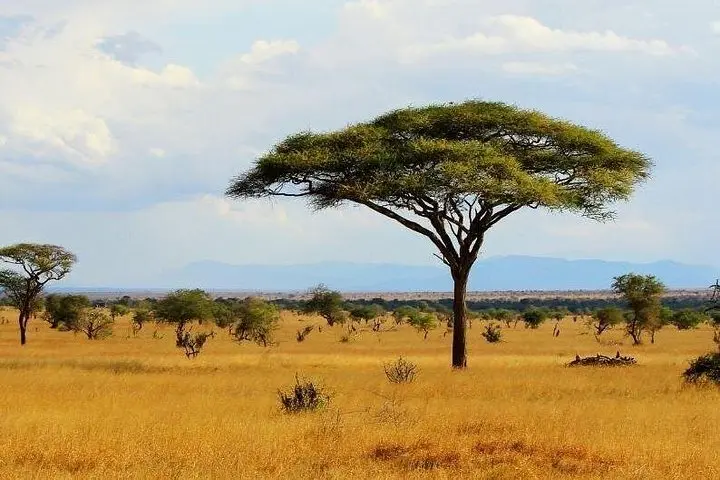
Tsavo’s landscape is shaped by ancient plate movements and seasonal rivers; volcanic ridges and outcrops break the flatness and concentrate wildlife around permanent waterholes like Aruba Dam. The park has a complex human history—ranger stations, railway tales, and conservation efforts that shaped modern Kenyan wildlife management. Local communities around Mombasa and Voi have longstanding pastoral and coastal cultures that now intersect with safari tourism.
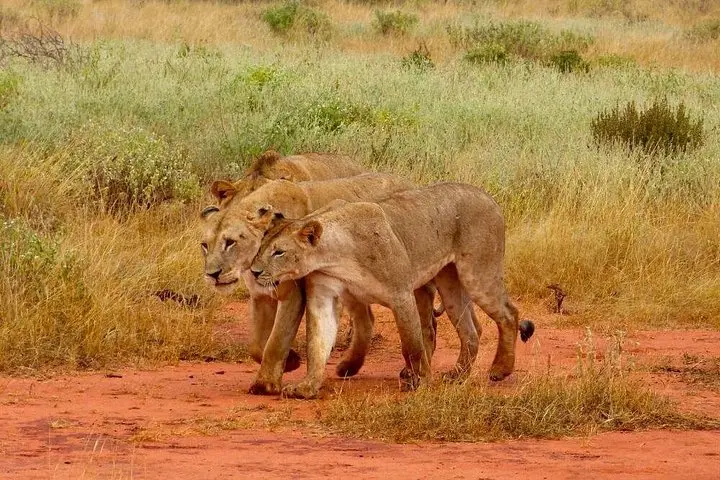
Expect long game drives across mixed terrain—dirt tracks, seasonal riverbeds, and open savanna. Aruba Dam is a highlight for concentrated sightings, especially in the dry months when animals gather to drink. Lunch at a park lodge gives a window to watch birds and plains game.
Practical guidance: dress in neutral layers, bring sun protection and refillable water, and keep camera gear accessible for sudden sightings. Motion on rough tracks is normal—secure loose items and be ready for early starts and late returns. The trip is vehicle-based with short, supervised stops; follow your guide’s directions to minimize disturbance and maximize sightings.
Verified experiences and guided adventures in the surrounding area.
Operated by PERFECT WILDERNESS TOURS AND SAFARIS · Mombasa, Mombasa County
You roll out before dawn on the Mombasa–Nairobi road, the coast light thinning as the van hums toward the dry, open heart of Tsavo East.
By mid-morning the scrub and red soil open into long plains; herds and lone silhouettes punctuate the horizon. The guide lifts the pop-up roof and the park becomes a living stage—baboons foraging at the road edge, giraffes tilting to nibble from thorn trees, and elephants dusting themselves in the ochre soil.
Tsavo’s landscape is shaped by ancient plate movements and seasonal rivers; volcanic ridges and outcrops break the flatness and concentrate wildlife around permanent waterholes like Aruba Dam. The park has a complex human history—ranger stations, railway tales, and conservation efforts that shaped modern Kenyan wildlife management. Local communities around Mombasa and Voi have longstanding pastoral and coastal cultures that now intersect with safari tourism.
Expect long game drives across mixed terrain—dirt tracks, seasonal riverbeds, and open savanna. Aruba Dam is a highlight for concentrated sightings, especially in the dry months when animals gather to drink. Lunch at a park lodge gives a window to watch birds and plains game.
Practical guidance: dress in neutral layers, bring sun protection and refillable water, and keep camera gear accessible for sudden sightings. Motion on rough tracks is normal—secure loose items and be ready for early starts and late returns. The trip is vehicle-based with short, supervised stops; follow your guide’s directions to minimize disturbance and maximize sightings.
The transfer is about one to 1.5 hours each way, depending on traffic and your hotel location in Mombasa.
Elephants in Tsavo often appear dust-streaked or red from the park’s ochre soil; sightings are common but never guaranteed.
Yes—bottled drinking water and lunch at a lodge inside the park are included in the tour price.
The safari is vehicle-based and suitable for most ages, but discuss mobility needs with the operator if prolonged entry/exit from the vehicle is required.
PERFECT WILDERNESS TOURS AND SAFARIS operates guided outdoor trips and adventures with an emphasis on safety, stewardship, and memorable experiences.
You roll out before dawn on the Mombasa–Nairobi road, the coast light thinning as the van hums toward the dry, open heart of Tsavo East.
By mid-morning the scrub and red soil open into long plains; herds and lone silhouettes punctuate the horizon. The guide lifts the pop-up roof and the park becomes a living stage—baboons foraging at the road edge, giraffes tilting to nibble from thorn trees, and elephants dusting themselves in the ochre soil.
Tsavo’s landscape is shaped by ancient plate movements and seasonal rivers; volcanic ridges and outcrops break the flatness and concentrate wildlife around permanent waterholes like Aruba Dam. The park has a complex human history—ranger stations, railway tales, and conservation efforts that shaped modern Kenyan wildlife management. Local communities around Mombasa and Voi have longstanding pastoral and coastal cultures that now intersect with safari tourism.
Expect long game drives across mixed terrain—dirt tracks, seasonal riverbeds, and open savanna. Aruba Dam is a highlight for concentrated sightings, especially in the dry months when animals gather to drink. Lunch at a park lodge gives a window to watch birds and plains game.
Practical guidance: dress in neutral layers, bring sun protection and refillable water, and keep camera gear accessible for sudden sightings. Motion on rough tracks is normal—secure loose items and be ready for early starts and late returns. The trip is vehicle-based with short, supervised stops; follow your guide’s directions to minimize disturbance and maximize sightings.