THE ADVENTURE COLLECTIVE® · Independent discovery and booking for outdoor travel

Three days of baobabs, lemurs, river canoes and the vertiginous limestone spires of Tsingy de Bemaraha. This private 4x4 loop from Morondava pairs cultural river crossings with guided hikes into Big and Little Tsingy.
Three days of baobabs, lemurs, river canoes and the vertiginous limestone spires of Tsingy de Bemaraha. This private 4x4 loop from Morondava pairs cultural river crossings with guided hikes into Big and Little Tsingy.
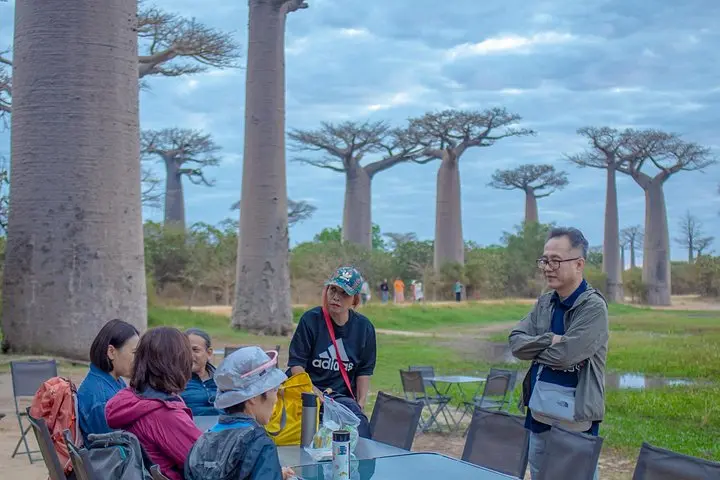
You arrive on a red-earth track as the sun leans low, the looming silhouettes of baobabs cutting sharp against the sky. The first day opens with Baobab Avenue’s ancient trunks dwarfing your vehicle, then the landscape tightens into dry deciduous forest where sifaka and other lemurs cartwheel through branches.
Verified experiences and guided adventures in the surrounding area.
Operated by Madagascar-bamtours · Bekopaka, Melaky
You arrive on a red-earth track as the sun leans low, the looming silhouettes of baobabs cutting sharp against the sky. The first day opens with Baobab Avenue’s ancient trunks dwarfing your vehicle, then the landscape tightens into dry deciduous forest where sifaka and other lemurs cartwheel through branches.
This three-day loop crosses western Madagascar’s geological boundary: sedimentary plains give way to the limestone labyrinth of Tsingy de Bemaraha, a karst maze forged by millennia of water and wind. Local Sakalava culture threads through the journey—river ferrymen, village markets and gravesites tucked in cave mouths tell human stories alongside natural history.
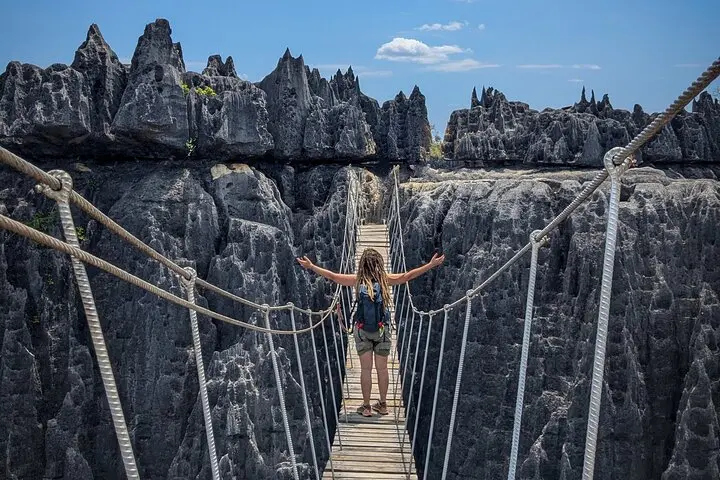
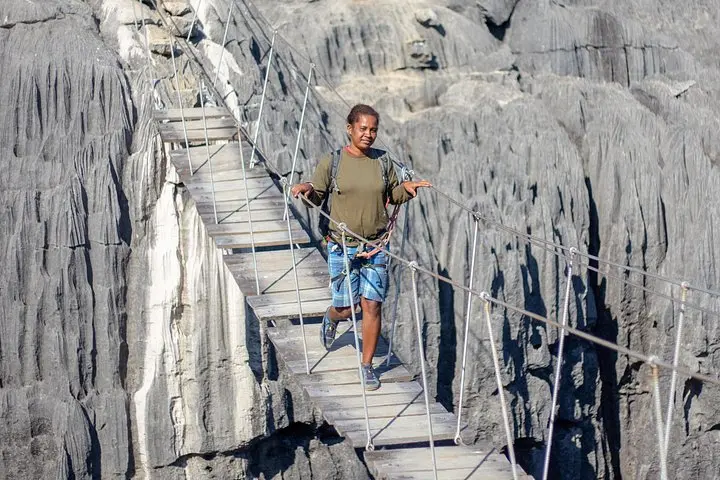
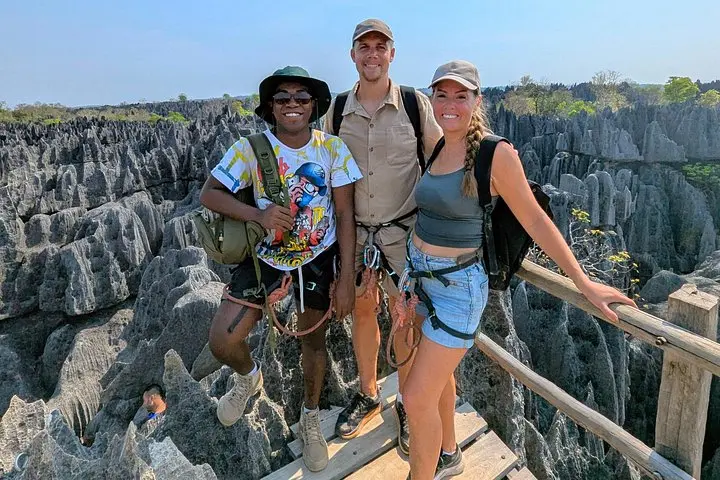
Expect narrow suspension bridges, vertical chimneys and razor-like pinnacles that demand steady footing and, on the Big Tsingy, clip-in harnesses for exposed sections. Canoeing the Manambolo River offers a different rhythm: slow wakes, cave entrances marked with Vazimba bone sites, and local guides pointing out birds and endemic flora.
Practically, the tour runs with private 4x4 transfer, park guides, two nights’ lodging and breakfasts included. Roads are rough; river crossings and seasonal mud can slow progress. Bring sturdy shoes, sun protection and a daypack—water is provided but refills are useful. Best visited in the dry season (April–October) for safer trails and more reliable ferry crossings.
By the final sunset at Baobab Avenue your camera won’t be the only thing full: you’ll leave with sharp memories of limestone spires, river voices and an intimate portrait of western Madagascar’s wild edge.
Hikes vary from firm switchbacks to narrow limestone chimneys; the Big Tsingy includes exposed sections where some vertigo and basic scrambling occurs—park guides provide harnesses where required.
Technically yes, but heavy rains can make dirt roads impassable, ferries intermittent and trails hazardous; the dry season is strongly recommended for reliability and safety.
Yes—this tour includes all park entrance fees and local park guides for Tsingy and Kirindy visits, as well as two nights’ accommodation and breakfasts.
River crossings use local raft ferries or canoes handled by experienced operators; you won’t be required to swim, but expect basic, rustic boats and secure footing when boarding.
Madagascar-bamtours operates guided outdoor trips and adventures with an emphasis on safety, stewardship, and memorable experiences.
You arrive on a red-earth track as the sun leans low, the looming silhouettes of baobabs cutting sharp against the sky. The first day opens with Baobab Avenue’s ancient trunks dwarfing your vehicle, then the landscape tightens into dry deciduous forest where sifaka and other lemurs cartwheel through branches.
You arrive on a red-earth track as the sun leans low, the looming silhouettes of baobabs cutting sharp against the sky. The first day opens with Baobab Avenue’s ancient trunks dwarfing your vehicle, then the landscape tightens into dry deciduous forest where sifaka and other lemurs cartwheel through branches.
This three-day loop crosses western Madagascar’s geological boundary: sedimentary plains give way to the limestone labyrinth of Tsingy de Bemaraha, a karst maze forged by millennia of water and wind. Local Sakalava culture threads through the journey—river ferrymen, village markets and gravesites tucked in cave mouths tell human stories alongside natural history.
Expect narrow suspension bridges, vertical chimneys and razor-like pinnacles that demand steady footing and, on the Big Tsingy, clip-in harnesses for exposed sections. Canoeing the Manambolo River offers a different rhythm: slow wakes, cave entrances marked with Vazimba bone sites, and local guides pointing out birds and endemic flora.
Practically, the tour runs with private 4x4 transfer, park guides, two nights’ lodging and breakfasts included. Roads are rough; river crossings and seasonal mud can slow progress. Bring sturdy shoes, sun protection and a daypack—water is provided but refills are useful. Best visited in the dry season (April–October) for safer trails and more reliable ferry crossings.
By the final sunset at Baobab Avenue your camera won’t be the only thing full: you’ll leave with sharp memories of limestone spires, river voices and an intimate portrait of western Madagascar’s wild edge.