THE ADVENTURE COLLECTIVE® · Independent discovery and booking for outdoor travel

A remote high‑altitude trek into Nepal’s Tsum Valley, this multi‑day route traces the Budi Gandaki to Mu Gompa and back, passing ancient gompas, suspension bridges and sweeping views of Manaslu. Expect long days, simple tea‑houses and strong cultural rewards.
A remote high‑altitude trek into Nepal’s Tsum Valley, this multi‑day route traces the Budi Gandaki to Mu Gompa and back, passing ancient gompas, suspension bridges and sweeping views of Manaslu. Expect long days, simple tea‑houses and strong cultural rewards.
You round a granite outcrop and the Budi Gandaki river, low and defiant, hurls itself through a gorge, daring you to keep pace. Prayer flags flutter above narrow trails as yaks pass like slow ships; distant ridgelines reveal knife-edged glaciers and the brooding silhouette of Manaslu to the north.
Verified experiences and guided adventures in the surrounding area.
Operated by Trek Around Himalayas Pvt. Ltd. · Tsum Valley, Gorkha District
You round a granite outcrop and the Budi Gandaki river, low and defiant, hurls itself through a gorge, daring you to keep pace. Prayer flags flutter above narrow trails as yaks pass like slow ships; distant ridgelines reveal knife-edged glaciers and the brooding silhouette of Manaslu to the north.
The Tsum Valley opened to foreign trekkers only in the late 1990s, preserving a culture that blends Tibetan Buddhism and Himalayan farming. Geologically the route follows the Budi Gandaki fault corridor — steep river-cut gorges, moraine-scarred slopes and high-plateau valleys shaped by repeated glaciation. Villages like Chumling, Nile and Mu Gompa host centuries-old gompas and murals; Milerapa Cave ties the landscape to living spiritual practice.
You’ll trek on rocky singletrack, stone staircases and occasional jeep tracks, climbing from roughly 700m at Soti Khola to Mu Gompa near 3,700m. Expect long walking days (5–7+ hours), tea-house lodging on twin-share, and simple local food—dal, rice and Tibetan-style stews.
Practical guidance: acclimatize early, drink often, and expect cold nights even in summer. Layers are essential; waterproofs and sturdy boots make steep descents manageable. Guides and permits (TIMS and Manaslu Conservation Area) are standard; porter support lightens the load and helps with altitude pacing.
This is a demanding, immersive trek best for hikers with multi-day experience who want quiet trails, remote monasteries and close mountain views rather than crowded peaks.
You need TIMS (Trekkers’ Information Management System) and Manaslu Conservation Area entry permits; your operator usually handles these before departure.
Spring (March–May) and autumn (September–November) offer the most stable weather and clear mountain views; monsoon brings green valleys but more rain and trail erosion.
Mu Gompa is around 3,700m and the trek is non-technical; however altitude and rugged terrain make it physically demanding rather than technical climbing.
Tea-house lodges are standard throughout the route; a few sections and optional side trips may use tents—confirm with your operator if you prefer camping.
Trek Around Himalayas Pvt. Ltd. operates guided outdoor trips and adventures with an emphasis on safety, stewardship, and memorable experiences.
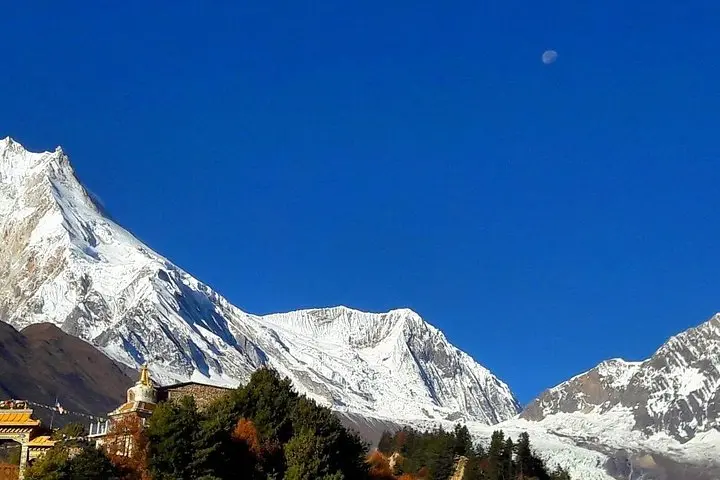
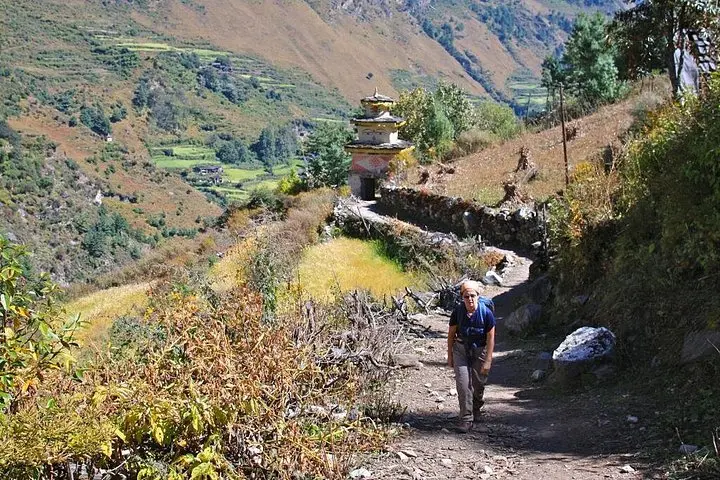
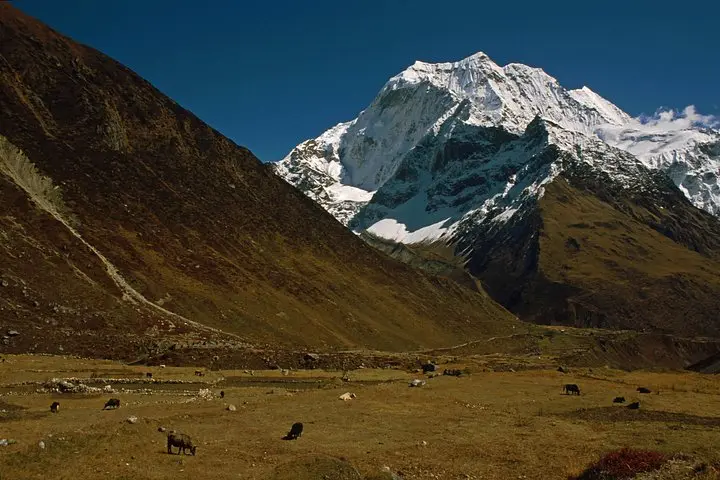
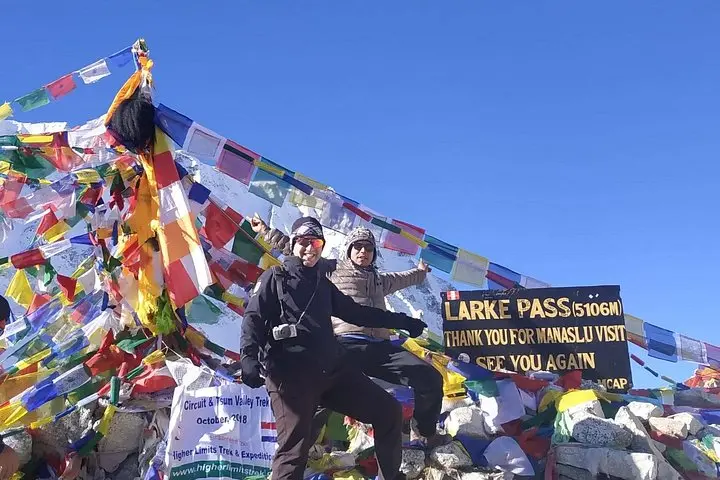
You round a granite outcrop and the Budi Gandaki river, low and defiant, hurls itself through a gorge, daring you to keep pace. Prayer flags flutter above narrow trails as yaks pass like slow ships; distant ridgelines reveal knife-edged glaciers and the brooding silhouette of Manaslu to the north.
You round a granite outcrop and the Budi Gandaki river, low and defiant, hurls itself through a gorge, daring you to keep pace. Prayer flags flutter above narrow trails as yaks pass like slow ships; distant ridgelines reveal knife-edged glaciers and the brooding silhouette of Manaslu to the north.
The Tsum Valley opened to foreign trekkers only in the late 1990s, preserving a culture that blends Tibetan Buddhism and Himalayan farming. Geologically the route follows the Budi Gandaki fault corridor — steep river-cut gorges, moraine-scarred slopes and high-plateau valleys shaped by repeated glaciation. Villages like Chumling, Nile and Mu Gompa host centuries-old gompas and murals; Milerapa Cave ties the landscape to living spiritual practice.
You’ll trek on rocky singletrack, stone staircases and occasional jeep tracks, climbing from roughly 700m at Soti Khola to Mu Gompa near 3,700m. Expect long walking days (5–7+ hours), tea-house lodging on twin-share, and simple local food—dal, rice and Tibetan-style stews.
Practical guidance: acclimatize early, drink often, and expect cold nights even in summer. Layers are essential; waterproofs and sturdy boots make steep descents manageable. Guides and permits (TIMS and Manaslu Conservation Area) are standard; porter support lightens the load and helps with altitude pacing.
This is a demanding, immersive trek best for hikers with multi-day experience who want quiet trails, remote monasteries and close mountain views rather than crowded peaks.