THE ADVENTURE COLLECTIVE® · Independent discovery and booking for outdoor travel

Charge through Tulum’s downtown and into the jungle on an e-bike, then cool off snorkeling in three distinct cenotes capped off with a local Mayan lunch. This full-day ride combines easy e-bike miles with long swims in cave and open-air sinkholes.
Charge through Tulum’s downtown and into the jungle on an e-bike, then cool off snorkeling in three distinct cenotes capped off with a local Mayan lunch. This full-day ride combines easy e-bike miles with long swims in cave and open-air sinkholes.
The morning light in Tulum slices through skinny palms as a row of humming e-bikes waits at TAE Headquarters. You push the throttle and the town slips behind—colorful houses and the occasional stray dog—while the road tightens into a dust-slick ribbon through low jungle. After ten minutes the air changes: cooler, wetter, the limestone smell of karst earth. When the first cenote opens before you, it’s a hole in the world—an oval of deep, impossibly clear water fringed by roots and a ring of stalactites overhead. The guide hands you a snorkel and points to a column of light where freshwater meets freshwater, and you step in.
Verified experiences and guided adventures in the surrounding area.
Operated by TAE Tulum Area Experiences · Tulum, Quintana Roo
The morning light in Tulum slices through skinny palms as a row of humming e-bikes waits at TAE Headquarters. You push the throttle and the town slips behind—colorful houses and the occasional stray dog—while the road tightens into a dust-slick ribbon through low jungle. After ten minutes the air changes: cooler, wetter, the limestone smell of karst earth. When the first cenote opens before you, it’s a hole in the world—an oval of deep, impossibly clear water fringed by roots and a ring of stalactites overhead. The guide hands you a snorkel and points to a column of light where freshwater meets freshwater, and you step in.
Cenotes defined Maya life and cosmology. These sinkholes are exposed parts of an immense Yucatán aquifer carved from porous limestone over millennia—collapsed caves that became freshwater wells. Archaeologists have found offerings and tools at many sites; today, cenotes are both sacred and practical: sources of potable water, habitats for endemic species, and, for travelers, cool pockets of stillness.
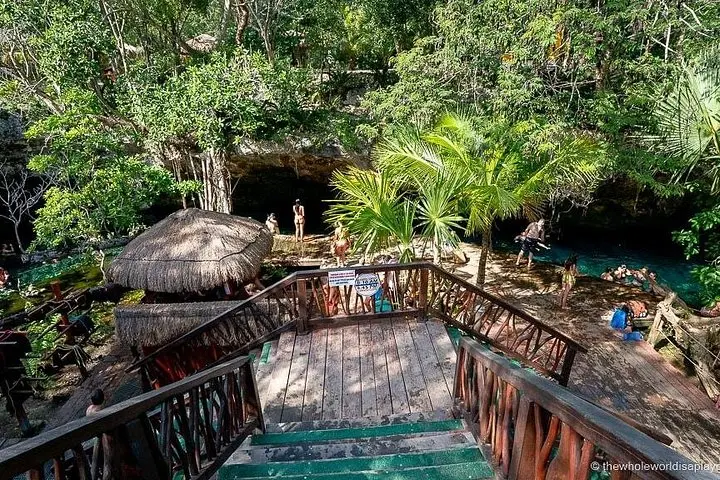
Geologically the region is flat—no elevation to climb—yet the terrain moves between packed earth roads, sandy coastal scrub, and jittery boardwalks above dissolved limestone. The tour stitches three different types of cenote: the vaulted, swim-through passages at Gran Cenote; the wide, sunlit bowl of Natural Cenote Cristal; and the quieter, aquamarine pool often called Mayan Blue (Cenote Escondido). Each offers different light, visibility, and underwater formations.
Culturally, the day is punctuated by a local Mayan lunch served near Cenote Cristal—simple, fresh, and often cooked from local ingredients. Guides typically share Mayan stories about the water and point out flora used for traditional remedies.
Practical guidance: expect a full six hours with roughly two hours scheduled at each cenote for swimming and snorkeling. Distances between stops are short—usually 3–12 km of mostly flat e-bike riding on dirt and paved access roads—so even riders with light fitness can manage the route. Wear water shoes, bring a waterproof bag, and use reef-safe sunscreen; the operator provides snorkeling gear and a heavy-duty lock for the e-bike. If you prefer a different ride, you can substitute an ATV or scooter, though local dirt roads demand attentive handling.
Timing is everything: mid-morning light gives the best underwater clarity, while arriving before noon helps you avoid late-afternoon crowds. Hydrate before you leave, secure valuables in the supplied backpack, and respect posted conservation rules—cenotes are fragile ecosystems. By day’s end you’ll have a mix of slow, weightless swims and a gentle, powered ride through jungle roads—the kind of day that balances cultural context, geology, and uncomplicated adventure.
Yes—this operator allows you to substitute an ATV or scooter; note additional handling skill is required and prices may vary.
Yes—use of snorkeling equipment is included, though you may bring your own mask if you prefer a personal fit.
Most stops have basic restroom facilities at the visitor areas; bring hand sanitizer for remote spots.
Children are welcome if they can swim and fit provided life vests; check with the operator about age limits and child seats for bikes/ATVs.
You should be comfortable in open water—life jackets are typically available, but basic swimming ability is recommended for safety.
The tour may be canceled for bad weather; cancel at least 24 hours before departure for a full refund per the operator’s policy.
TAE Tulum Area Experiences operates guided outdoor trips and adventures with an emphasis on safety, stewardship, and memorable experiences.
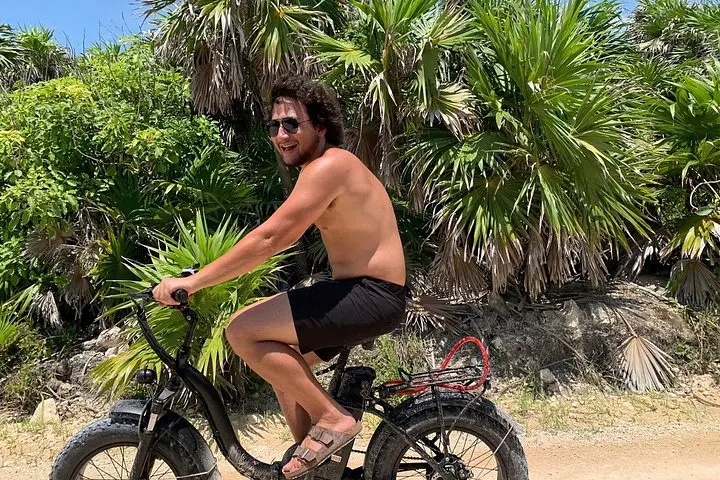
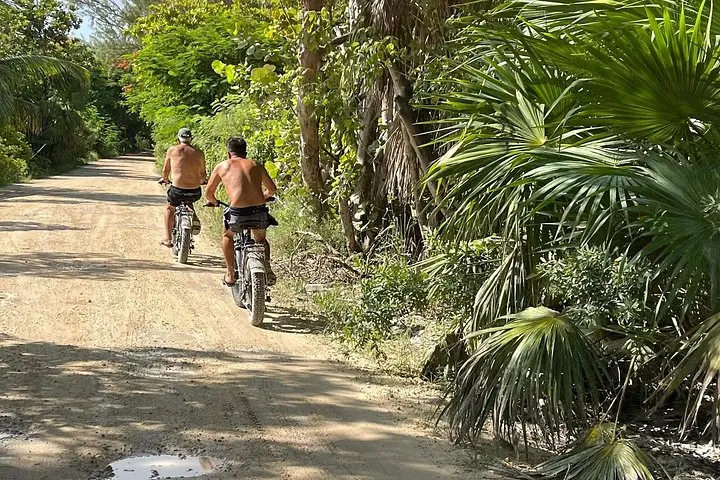
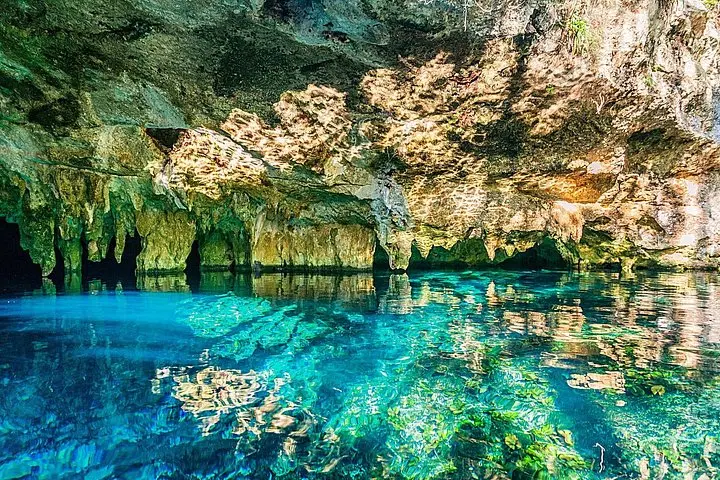
The morning light in Tulum slices through skinny palms as a row of humming e-bikes waits at TAE Headquarters. You push the throttle and the town slips behind—colorful houses and the occasional stray dog—while the road tightens into a dust-slick ribbon through low jungle. After ten minutes the air changes: cooler, wetter, the limestone smell of karst earth. When the first cenote opens before you, it’s a hole in the world—an oval of deep, impossibly clear water fringed by roots and a ring of stalactites overhead. The guide hands you a snorkel and points to a column of light where freshwater meets freshwater, and you step in.
The morning light in Tulum slices through skinny palms as a row of humming e-bikes waits at TAE Headquarters. You push the throttle and the town slips behind—colorful houses and the occasional stray dog—while the road tightens into a dust-slick ribbon through low jungle. After ten minutes the air changes: cooler, wetter, the limestone smell of karst earth. When the first cenote opens before you, it’s a hole in the world—an oval of deep, impossibly clear water fringed by roots and a ring of stalactites overhead. The guide hands you a snorkel and points to a column of light where freshwater meets freshwater, and you step in.
Cenotes defined Maya life and cosmology. These sinkholes are exposed parts of an immense Yucatán aquifer carved from porous limestone over millennia—collapsed caves that became freshwater wells. Archaeologists have found offerings and tools at many sites; today, cenotes are both sacred and practical: sources of potable water, habitats for endemic species, and, for travelers, cool pockets of stillness.
Geologically the region is flat—no elevation to climb—yet the terrain moves between packed earth roads, sandy coastal scrub, and jittery boardwalks above dissolved limestone. The tour stitches three different types of cenote: the vaulted, swim-through passages at Gran Cenote; the wide, sunlit bowl of Natural Cenote Cristal; and the quieter, aquamarine pool often called Mayan Blue (Cenote Escondido). Each offers different light, visibility, and underwater formations.
Culturally, the day is punctuated by a local Mayan lunch served near Cenote Cristal—simple, fresh, and often cooked from local ingredients. Guides typically share Mayan stories about the water and point out flora used for traditional remedies.
Practical guidance: expect a full six hours with roughly two hours scheduled at each cenote for swimming and snorkeling. Distances between stops are short—usually 3–12 km of mostly flat e-bike riding on dirt and paved access roads—so even riders with light fitness can manage the route. Wear water shoes, bring a waterproof bag, and use reef-safe sunscreen; the operator provides snorkeling gear and a heavy-duty lock for the e-bike. If you prefer a different ride, you can substitute an ATV or scooter, though local dirt roads demand attentive handling.
Timing is everything: mid-morning light gives the best underwater clarity, while arriving before noon helps you avoid late-afternoon crowds. Hydrate before you leave, secure valuables in the supplied backpack, and respect posted conservation rules—cenotes are fragile ecosystems. By day’s end you’ll have a mix of slow, weightless swims and a gentle, powered ride through jungle roads—the kind of day that balances cultural context, geology, and uncomplicated adventure.