THE ADVENTURE COLLECTIVE® · Independent discovery and booking for outdoor travel

Explore coastal Maya history, swim alongside Akumal’s sea turtles, and cool off in a cavernous cenote on a full-day tour from Cancún or the Riviera Maya. Practical tips on fees, gear, and etiquette help you plan a respectful, smooth visit.
Explore coastal Maya history, swim alongside Akumal’s sea turtles, and cool off in a cavernous cenote on a full-day tour from Cancún or the Riviera Maya. Practical tips on fees, gear, and etiquette help you plan a respectful, smooth visit.
You step out of the shuttle as the Caribbean light hits ancient stone — wind pushing saline tang across the cliff where the Tulum ruins keep watch. The guide’s voice falls to a conversational hush while waves dare the base of the promontory; gulls wheel and the scent of salt and jungle is immediate. This is a day stitched from coastal archaeology, reef encounters, and the cool hush of subterranean water.
Verified experiences and guided adventures in the surrounding area.
Operated by Pata de peek travel · Tulum, Quintana Roo
You step out of the shuttle as the Caribbean light hits ancient stone — wind pushing saline tang across the cliff where the Tulum ruins keep watch. The guide’s voice falls to a conversational hush while waves dare the base of the promontory; gulls wheel and the scent of salt and jungle is immediate. This is a day stitched from coastal archaeology, reef encounters, and the cool hush of subterranean water.
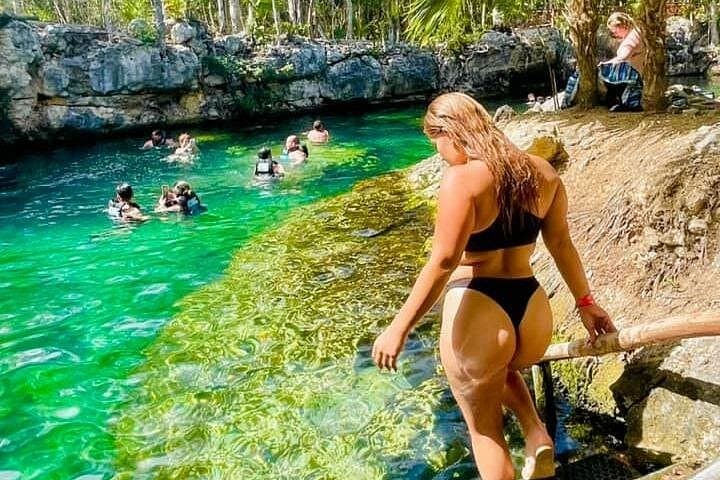
Tulum was a Late Postclassic Maya port, its limestone structures oriented toward sea lanes and celestial markers. The cliffs are fossilized reef and coral-limestone sculpted by sea-level change and time, while Akumal — literally “place of turtles” — fronts a shallow bay where seagrass beds sustain green sea turtles and a host of reef fish. Cenotes are collapsed karst systems: openings where groundwater is exposed, forming layered, crystal water with dramatic light shafts and limestone formations.
Expect guided archaeology at Tulum with panoramic ocean views, a supervised snorkel in Akumal to observe turtles (keep distance and don’t touch), and a visit to a large cenote for swimming and photos. Practical notes: government preservation fees apply at Tulum and Akumal, bring biodegradable sunscreen and reef-safe repellant, and pack a lightweight towel and change of clothes. Footwear should handle sand, slick stone, and short jungle paths. Timing matters — arrive early to avoid crowds and the midday heat. Hydrate, protect against sun, and plan for a full day of transport and shore-water transitions.
Round‑trip transportation from Cancún and many Riviera Maya hotels is included; confirm pickup point when booking.
Yes — Tulum and Akumal have preservation/conservation fees (around USD 20 each) payable on site; have cash or confirm card options.
Wildlife sightings cannot be guaranteed, but Akumal’s protected seagrass and shallow bay make turtle encounters likely when conditions are good; guides follow strict interaction rules.
Cenotes vary; many have shallow edges and guides provide life vests — non‑swimmers should use a vest and stay near supervised areas.
Pata de peek travel operates guided outdoor trips and adventures with an emphasis on safety, stewardship, and memorable experiences.



You step out of the shuttle as the Caribbean light hits ancient stone — wind pushing saline tang across the cliff where the Tulum ruins keep watch. The guide’s voice falls to a conversational hush while waves dare the base of the promontory; gulls wheel and the scent of salt and jungle is immediate. This is a day stitched from coastal archaeology, reef encounters, and the cool hush of subterranean water.
You step out of the shuttle as the Caribbean light hits ancient stone — wind pushing saline tang across the cliff where the Tulum ruins keep watch. The guide’s voice falls to a conversational hush while waves dare the base of the promontory; gulls wheel and the scent of salt and jungle is immediate. This is a day stitched from coastal archaeology, reef encounters, and the cool hush of subterranean water.
Tulum was a Late Postclassic Maya port, its limestone structures oriented toward sea lanes and celestial markers. The cliffs are fossilized reef and coral-limestone sculpted by sea-level change and time, while Akumal — literally “place of turtles” — fronts a shallow bay where seagrass beds sustain green sea turtles and a host of reef fish. Cenotes are collapsed karst systems: openings where groundwater is exposed, forming layered, crystal water with dramatic light shafts and limestone formations.
Expect guided archaeology at Tulum with panoramic ocean views, a supervised snorkel in Akumal to observe turtles (keep distance and don’t touch), and a visit to a large cenote for swimming and photos. Practical notes: government preservation fees apply at Tulum and Akumal, bring biodegradable sunscreen and reef-safe repellant, and pack a lightweight towel and change of clothes. Footwear should handle sand, slick stone, and short jungle paths. Timing matters — arrive early to avoid crowds and the midday heat. Hydrate, protect against sun, and plan for a full day of transport and shore-water transitions.