THE ADVENTURE COLLECTIVE® · Independent discovery and booking for outdoor travel

Walk barefoot on the white terraces of Pamukkale, trace marble avenues in Ephesus and watch a string of balloons rise over Cappadocia’s fairy chimneys. This focused 5-day route compresses Turkey’s top cultural and geological highlights into an efficient, adventure-ready itinerary.
Walk barefoot on the white terraces of Pamukkale, trace marble avenues in Ephesus and watch a string of balloons rise over Cappadocia’s fairy chimneys. This focused 5-day route compresses Turkey’s top cultural and geological highlights into an efficient, adventure-ready itinerary.
The limestone steps glint like bleached bone beneath your feet as steam threads the morning air; you take your shoes off because Pamukkale asks you to—its travertine pools insist you feel the water first-hand. Later that day the marble streets of Ephesus fold open under your boots: carved thresholds, soaring library façades and the theatre that once held 25,000 spectators. By the third dawn, a string of balloons lifts off over Cappadocia and the valley becomes a slow-moving ocean of ochre spires and carved cave-homes.
Verified experiences and guided adventures in the surrounding area.
Operated by Travel Experts · Goreme, Nevşehir
The limestone steps glint like bleached bone beneath your feet as steam threads the morning air; you take your shoes off because Pamukkale asks you to—its travertine pools insist you feel the water first-hand. Later that day the marble streets of Ephesus fold open under your boots: carved thresholds, soaring library façades and the theatre that once held 25,000 spectators. By the third dawn, a string of balloons lifts off over Cappadocia and the valley becomes a slow-moving ocean of ochre spires and carved cave-homes.
This five-day loop stitches together three of Turkey’s most elemental experiences: Pamukkale’s calcium terraces and the Roman spa town of Hierapolis; the compact imperial grandeur of Ephesus and the House of the Virgin Mary; and Cappadocia’s volcanic geology and centuries of cave-dwelling culture, with an optional hot-air balloon flight for a bird’s-eye reading of the landscape.
Geology does a lot of the heavy lifting here. Pamukkale’s white terraces are living mineral deposits—thermal springs deposit calcium carbonate into pools you walk across barefoot. Cappadocia was formed when volcanics (tuff and ignimbrite) were carved by wind and water into fairy chimneys, hoodoos and valley cathedrals; locals carved homes, churches and storage rooms into that soft rock. Ephesus, by contrast, reads as an urban palimpsest of Hellenistic planning and Roman marble—its library and street grid still feel like an instruction manual for ancient city life.
Culture shows up in workshops and meals: Avanos pottery, terrace-house mosaics, and long lunches of local kebabs and mezze. Guides on the semi-private tours (max ~10) are licensed by Turkey’s Ministry of Culture and provide practical context—who built what, when, and why a city once thrived on trade routes that have since shifted.
Practicalities: this is an active itinerary with domestic flights (Istanbul–Denizli, Izmir–Kayseri, Kayseri–Istanbul) and travel between sites. Expect uneven surfaces, cobbled Roman streets, and short climbs—good walking shoes (and a daypack) matter. Balloon flights are weather-dependent: pilots and the Civil Aviation Authority make go/no-go calls; refunds apply if flights are canceled. Domestic air tickets use a 15kg checked + 8kg carry-on quota; passport details are required early to secure these e-tickets.
Timing is tactical: sunrise is best for balloons and soft light in Cappadocia; arrive early in Ephesus to avoid tour buses and the midday heat. Hydrate, use sunscreen, and carry small local-currency cash for markets and tips. If you want the full sensory sweep—the mineral heat of Pamukkale, the marble hush of Ephesus and the airborne quiet of Cappadocia—this five-day route delivers a compact, layered portrait of Turkey’s past and its living landscape.
The balloon is optional — you can add it when booking; flights are weather-dependent and may be canceled by authorities with a partial refund policy.
Domestic flights usually allow 15kg checked luggage + 8kg carry-on per person; notify the operator in advance if you need extra allowance (may incur fees).
Yes — visitors walk barefoot on designated travertine terraces to protect the deposits; bring a towel and easy slip-on footwear for transfers.
The package includes breakfasts and three lunches during the itinerary; other meals are at your discretion or as noted in the itinerary.
Children under 5 are not permitted for the balloon; check age and weight restrictions with the supplier when booking.
The tour involves uneven surfaces and steps; it’s not recommended for travelers with significant mobility or spinal problems — consult the operator for accommodations.
Travel Experts operates guided outdoor trips and adventures with an emphasis on safety, stewardship, and memorable experiences.


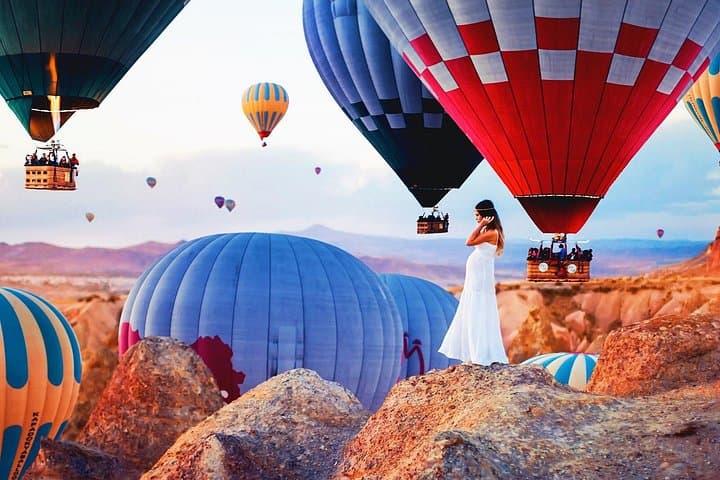

The limestone steps glint like bleached bone beneath your feet as steam threads the morning air; you take your shoes off because Pamukkale asks you to—its travertine pools insist you feel the water first-hand. Later that day the marble streets of Ephesus fold open under your boots: carved thresholds, soaring library façades and the theatre that once held 25,000 spectators. By the third dawn, a string of balloons lifts off over Cappadocia and the valley becomes a slow-moving ocean of ochre spires and carved cave-homes.
The limestone steps glint like bleached bone beneath your feet as steam threads the morning air; you take your shoes off because Pamukkale asks you to—its travertine pools insist you feel the water first-hand. Later that day the marble streets of Ephesus fold open under your boots: carved thresholds, soaring library façades and the theatre that once held 25,000 spectators. By the third dawn, a string of balloons lifts off over Cappadocia and the valley becomes a slow-moving ocean of ochre spires and carved cave-homes.
This five-day loop stitches together three of Turkey’s most elemental experiences: Pamukkale’s calcium terraces and the Roman spa town of Hierapolis; the compact imperial grandeur of Ephesus and the House of the Virgin Mary; and Cappadocia’s volcanic geology and centuries of cave-dwelling culture, with an optional hot-air balloon flight for a bird’s-eye reading of the landscape.
Geology does a lot of the heavy lifting here. Pamukkale’s white terraces are living mineral deposits—thermal springs deposit calcium carbonate into pools you walk across barefoot. Cappadocia was formed when volcanics (tuff and ignimbrite) were carved by wind and water into fairy chimneys, hoodoos and valley cathedrals; locals carved homes, churches and storage rooms into that soft rock. Ephesus, by contrast, reads as an urban palimpsest of Hellenistic planning and Roman marble—its library and street grid still feel like an instruction manual for ancient city life.
Culture shows up in workshops and meals: Avanos pottery, terrace-house mosaics, and long lunches of local kebabs and mezze. Guides on the semi-private tours (max ~10) are licensed by Turkey’s Ministry of Culture and provide practical context—who built what, when, and why a city once thrived on trade routes that have since shifted.
Practicalities: this is an active itinerary with domestic flights (Istanbul–Denizli, Izmir–Kayseri, Kayseri–Istanbul) and travel between sites. Expect uneven surfaces, cobbled Roman streets, and short climbs—good walking shoes (and a daypack) matter. Balloon flights are weather-dependent: pilots and the Civil Aviation Authority make go/no-go calls; refunds apply if flights are canceled. Domestic air tickets use a 15kg checked + 8kg carry-on quota; passport details are required early to secure these e-tickets.
Timing is tactical: sunrise is best for balloons and soft light in Cappadocia; arrive early in Ephesus to avoid tour buses and the midday heat. Hydrate, use sunscreen, and carry small local-currency cash for markets and tips. If you want the full sensory sweep—the mineral heat of Pamukkale, the marble hush of Ephesus and the airborne quiet of Cappadocia—this five-day route delivers a compact, layered portrait of Turkey’s past and its living landscape.