THE ADVENTURE COLLECTIVE® · Independent discovery and booking for outdoor travel
Walk Sintra at the hour between day and night with a local writer who weaves history, legend and geology into a twilight route. This small‑group, adaptable hike passes palaces, castle ruins and misty forest tracks while avoiding the daytime crowds.
Walk Sintra at the hour between day and night with a local writer who weaves history, legend and geology into a twilight route. This small‑group, adaptable hike passes palaces, castle ruins and misty forest tracks while avoiding the daytime crowds.
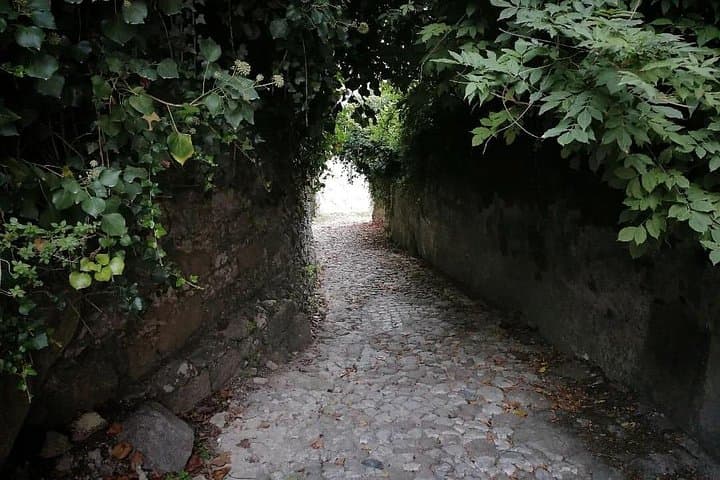
The light thins and fog begins to rise off the slopes of the Serra de Sintra, silhouettes of Pena Palace and the Moorish Castle hardening against an indigo sky. A local writer leads the group along cobbled lanes and shaded forest tracks, voice low, pulling history and legend into the same thread as the path beneath your feet.
Verified experiences and guided adventures in the surrounding area.
Operated by MIGUEL BOIM ESTEVES MARQUES · Sintra, Lisbon District
The light thins and fog begins to rise off the slopes of the Serra de Sintra, silhouettes of Pena Palace and the Moorish Castle hardening against an indigo sky. A local writer leads the group along cobbled lanes and shaded forest tracks, voice low, pulling history and legend into the same thread as the path beneath your feet.
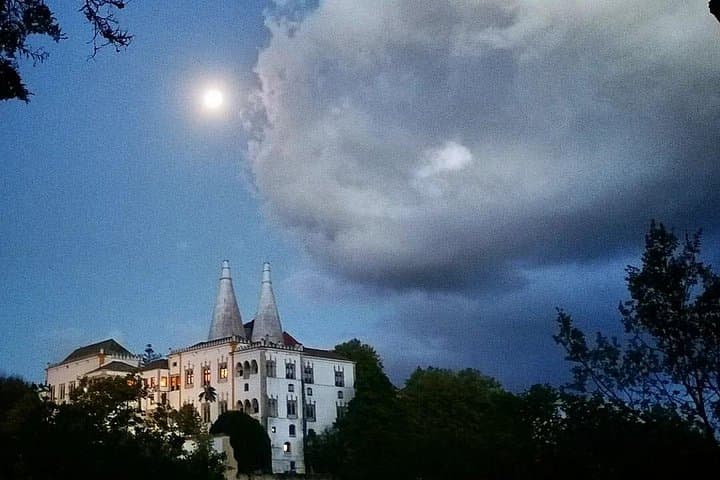
Sintra’s geology is compact granite and schist worn into abrupt ridges; its microclimate—cooled by Atlantic breezes and frequent fog—created a royal retreat for centuries. Romans, Moors and 19th‑century Romantic poets all left marks: medieval battlements sit above ornate palaces, and convent ruins gather stories of knights, apparitions and royal hunts. The guide’s narrative links those layers to visible landmarks and lesser‑known corners of the Mountain of the Moon (Monte da Lua) where names and meanings blur.
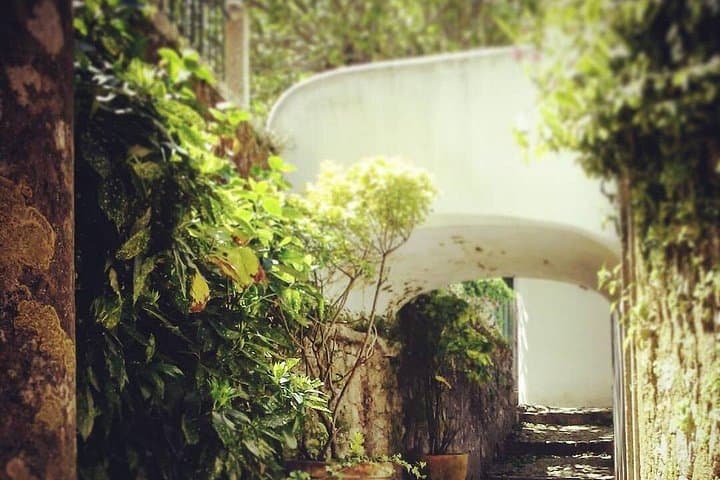
The walk is conversational, tuned to questions and pace. Expect mixed surfaces—paved alleys, earthen trails, a few stone steps—and modest elevation changes; a typical twilight route covers roughly 3–6 km with up to 250–300 m of cumulative ascent depending on the day’s chosen path. Bring a headlamp, warm layers and grippy shoes: fog can make roots and flagstones slippery after sundown.
Practicalities: meet in central Sintra near the train area for easy public‑transport access; tours run about 2–3.5 hours and are adaptable in length and intensity. The experience balances storytelling with steady walking—ideal for travelers who want history and atmosphere without the daytime crowds.
Most tours meet in central Sintra close to the train station or main square; confirm exact meeting details on your booking voucher.
Yes—operators describe the walk as easy; however, participants should be steady on uneven ground and prepared for cooler temperatures after dusk.
Tours are typically conducted in English by a local writer/historian; check the booking page for language options or private‑tour customizations.
The tour may be cancelled for heavy rain or unsafe conditions—operators often allow full refunds if you cancel at least 24 hours in advance or if the guide cancels for weather.
MIGUEL BOIM ESTEVES MARQUES operates guided outdoor trips and adventures with an emphasis on safety, stewardship, and memorable experiences.
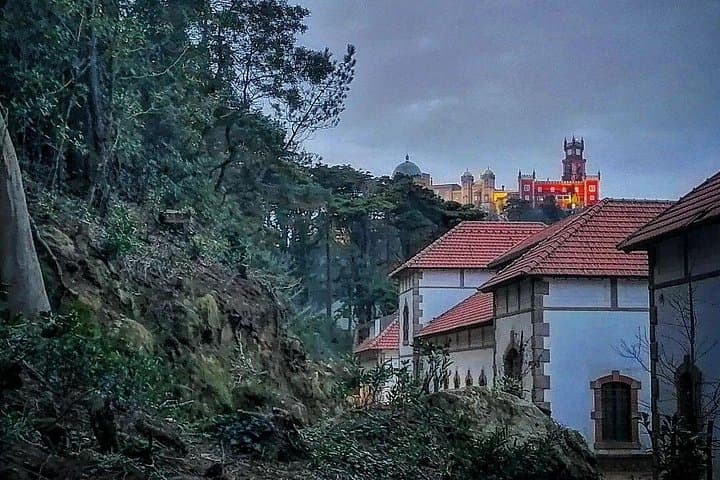
The light thins and fog begins to rise off the slopes of the Serra de Sintra, silhouettes of Pena Palace and the Moorish Castle hardening against an indigo sky. A local writer leads the group along cobbled lanes and shaded forest tracks, voice low, pulling history and legend into the same thread as the path beneath your feet.
The light thins and fog begins to rise off the slopes of the Serra de Sintra, silhouettes of Pena Palace and the Moorish Castle hardening against an indigo sky. A local writer leads the group along cobbled lanes and shaded forest tracks, voice low, pulling history and legend into the same thread as the path beneath your feet.
Sintra’s geology is compact granite and schist worn into abrupt ridges; its microclimate—cooled by Atlantic breezes and frequent fog—created a royal retreat for centuries. Romans, Moors and 19th‑century Romantic poets all left marks: medieval battlements sit above ornate palaces, and convent ruins gather stories of knights, apparitions and royal hunts. The guide’s narrative links those layers to visible landmarks and lesser‑known corners of the Mountain of the Moon (Monte da Lua) where names and meanings blur.
The walk is conversational, tuned to questions and pace. Expect mixed surfaces—paved alleys, earthen trails, a few stone steps—and modest elevation changes; a typical twilight route covers roughly 3–6 km with up to 250–300 m of cumulative ascent depending on the day’s chosen path. Bring a headlamp, warm layers and grippy shoes: fog can make roots and flagstones slippery after sundown.
Practicalities: meet in central Sintra near the train area for easy public‑transport access; tours run about 2–3.5 hours and are adaptable in length and intensity. The experience balances storytelling with steady walking—ideal for travelers who want history and atmosphere without the daytime crowds.
