THE ADVENTURE COLLECTIVE® · Independent discovery and booking for outdoor travel

Explore Balinsasayao and Danao—two crater lakes framed by rainforest and volcanic ridgelines—on a half-day nature and city tour from Dumaguete. Expect short forest hikes, lakeside viewpoints, local food stops, and close-up encounters with the park’s wildlife and waters.
Explore Balinsasayao and Danao—two crater lakes framed by rainforest and volcanic ridgelines—on a half-day nature and city tour from Dumaguete. Expect short forest hikes, lakeside viewpoints, local food stops, and close-up encounters with the park’s wildlife and waters.
Mist lifts from two glassy craters before breakfast, and the forest exhales—leaves brushing the path, water daring you to step closer. The Twin Lakes of Balinsasayao and Danao sit like quiet bowls in the Negros highlands, ringed by mossy trails and volcanic ridgelines. A guided morning walk threads boardwalks and dirt tracks to shoreline viewpoints; a short climb to a lookout rewards with the twin mirrors of water and a panorama that frames Dumaguete’s distant coast.
Verified experiences and guided adventures in the surrounding area.
Operated by Travis Travel and Tours · Dumaguete, Negros Oriental
Mist lifts from two glassy craters before breakfast, and the forest exhales—leaves brushing the path, water daring you to step closer. The Twin Lakes of Balinsasayao and Danao sit like quiet bowls in the Negros highlands, ringed by mossy trails and volcanic ridgelines. A guided morning walk threads boardwalks and dirt tracks to shoreline viewpoints; a short climb to a lookout rewards with the twin mirrors of water and a panorama that frames Dumaguete’s distant coast.
Geologically the lakes are crater basins formed by ancient volcanic activity on Negros Island; geologic scarps and steep forested slopes give way to shaded lowland swamp pockets. Cultural traces sit nearby—small villages and a hilltop native restaurant where fishermen still use simple traps and local families sell banana fritters and coffee. The area was set aside as a protected natural park to conserve watershed and endemic species, and locals maintain trails and viewing platforms.
Expect mostly easy-to-moderate hiking: shoreline circuits of 1–3 km with optional viewpoint hikes adding 150–300 m of ascent on uneven, root-strewn terrain. Trails can be muddy after rain; boardwalks are short but exposed. Water will be present at any turn—streams that seem to pull you downstream, fish that nibble at toes in shallows.
Practical notes: start early to avoid midday heat, bring insect repellent and quick-dry layers, and budget 4–8 hours for travel, hikes, and a lakeside meal. Follow your guide, stick to marked routes, and carry water—the forest gives shade, but it doesn’t give hydration.
The tour runs approximately 4–8 hours including transport from Dumaguete, lakeside walks, a viewpoint hike, and a meal stop.
Children can join but must be accompanied by an adult; the guide may adjust pacing and routes for younger participants.
Swimming is generally discouraged in protected areas—follow your guide’s advice and local regulations to protect water quality and wildlife.
Yes—hotel pickup and drop-off in Dumaguete are included, plus a local guide and driver.
Travis Travel and Tours operates guided outdoor trips and adventures with an emphasis on safety, stewardship, and memorable experiences.
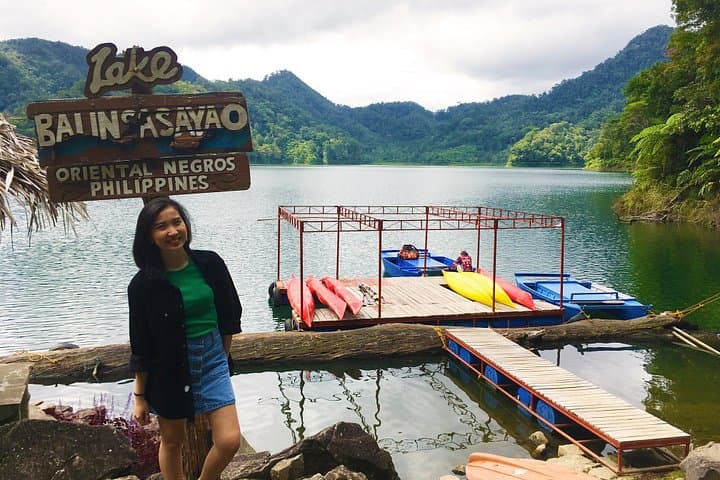


Mist lifts from two glassy craters before breakfast, and the forest exhales—leaves brushing the path, water daring you to step closer. The Twin Lakes of Balinsasayao and Danao sit like quiet bowls in the Negros highlands, ringed by mossy trails and volcanic ridgelines. A guided morning walk threads boardwalks and dirt tracks to shoreline viewpoints; a short climb to a lookout rewards with the twin mirrors of water and a panorama that frames Dumaguete’s distant coast.
Mist lifts from two glassy craters before breakfast, and the forest exhales—leaves brushing the path, water daring you to step closer. The Twin Lakes of Balinsasayao and Danao sit like quiet bowls in the Negros highlands, ringed by mossy trails and volcanic ridgelines. A guided morning walk threads boardwalks and dirt tracks to shoreline viewpoints; a short climb to a lookout rewards with the twin mirrors of water and a panorama that frames Dumaguete’s distant coast.
Geologically the lakes are crater basins formed by ancient volcanic activity on Negros Island; geologic scarps and steep forested slopes give way to shaded lowland swamp pockets. Cultural traces sit nearby—small villages and a hilltop native restaurant where fishermen still use simple traps and local families sell banana fritters and coffee. The area was set aside as a protected natural park to conserve watershed and endemic species, and locals maintain trails and viewing platforms.
Expect mostly easy-to-moderate hiking: shoreline circuits of 1–3 km with optional viewpoint hikes adding 150–300 m of ascent on uneven, root-strewn terrain. Trails can be muddy after rain; boardwalks are short but exposed. Water will be present at any turn—streams that seem to pull you downstream, fish that nibble at toes in shallows.
Practical notes: start early to avoid midday heat, bring insect repellent and quick-dry layers, and budget 4–8 hours for travel, hikes, and a lakeside meal. Follow your guide, stick to marked routes, and carry water—the forest gives shade, but it doesn’t give hydration.