THE ADVENTURE COLLECTIVE® · Independent discovery and booking for outdoor travel

Explore Palm Springs’ Twin Palms Estates on a guided, private two‑hour walk that highlights original 1950s mid‑century homes and celebrity addresses. Ideal for architecture fans and photographers, the route is flat, accessible, and rich with local design history.
Explore Palm Springs’ Twin Palms Estates on a guided, private two‑hour walk that highlights original 1950s mid‑century homes and celebrity addresses. Ideal for architecture fans and photographers, the route is flat, accessible, and rich with local design history.
Morning light slides between tall date palms as a small group moves down E. Twin Palms Drive. The street hums with low conversation and the soft click of sandals on pavement; roofs with classic butterfly silhouettes cut a clean line against the desert sky. This private two‑hour stroll focuses on the Twin Palms Estates, a compact enclave of mid‑century modern residential architecture that reads like a who’s‑who of 1950s Palm Springs design.
Verified experiences and guided adventures in the surrounding area.
Operated by Douglas Kline · Palm Springs, California
Morning light slides between tall date palms as a small group moves down E. Twin Palms Drive. The street hums with low conversation and the soft click of sandals on pavement; roofs with classic butterfly silhouettes cut a clean line against the desert sky. This private two‑hour stroll focuses on the Twin Palms Estates, a compact enclave of mid‑century modern residential architecture that reads like a who’s‑who of 1950s Palm Springs design.
Built as part of postwar suburban expansion, Twin Palms showcases William Krisel’s pragmatic brilliance: low‑slung plans, curtain‑glass walls and car‑forward entries that responded to car culture and desert light. Geologically the neighborhood sits on alluvial fans at the base of the San Jacinto range, where wind and sun influence landscape choices—xeric gardens, gravel patios and towering palms that move and cast long shadows through the afternoon.
Culturally, expect stories about celebrity residents—Debbie Reynolds, Ray Bradbury—and how the area became a laboratory for modern living in hot, dry climates. The guide will point out original detailing, later remodels and how preservation efforts have maintained street character.
Practical guidance: the walk covers about one mile on flat, paved streets—comfortable shoes are enough. There are no public restrooms available during the tour; bring water and sun protection. Mornings are cooler and easier for photography; summer afternoons are very hot. The tour is wheelchair accessible and suited to a wide range of ages and fitness levels. Arrive 10 minutes early to locate on‑street parking at the E. Twin Palms Dr. and S. Navajo Dr. intersection and to catch the best light for exterior shots of the iconic roofs.
No—there are no public restrooms on the route; plan accordingly before the tour or bring bottled water.
Yes—the route is on flat, paved streets and is listed as wheelchair and stroller accessible.
The tour lasts two hours and covers roughly one mile on flat pavement with frequent stops.
Service animals are allowed; private pets are not typically recommended due to neighborhood etiquette—confirm with the operator.
Douglas Kline operates guided outdoor trips and adventures with an emphasis on safety, stewardship, and memorable experiences.
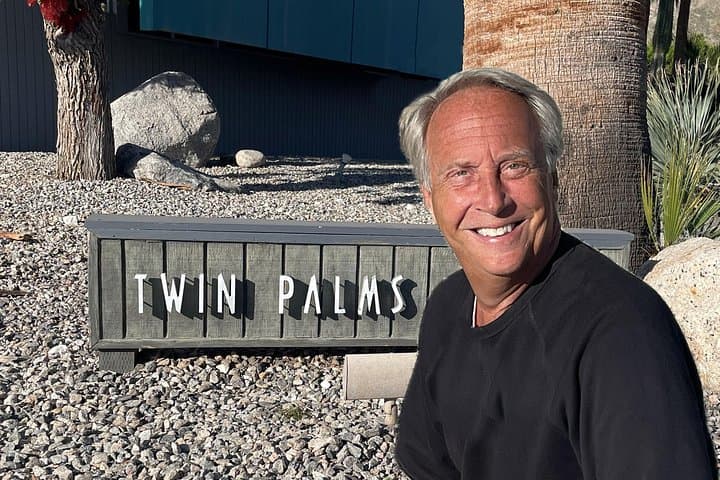
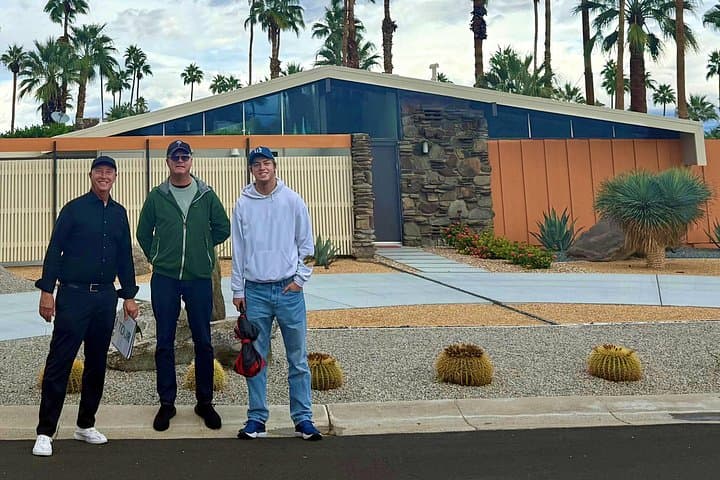
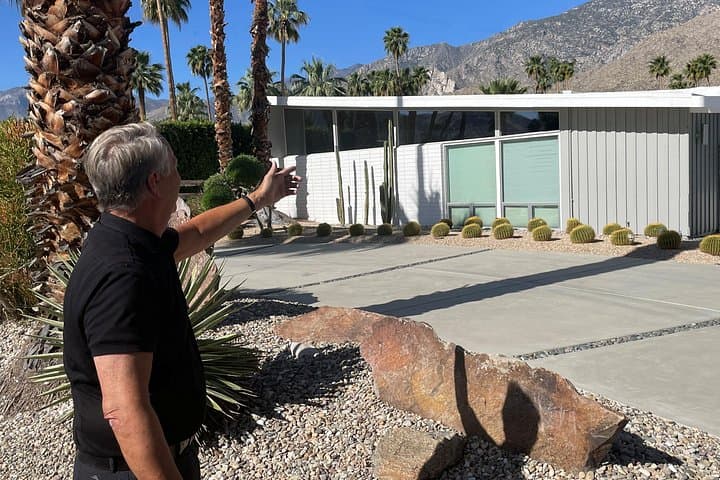
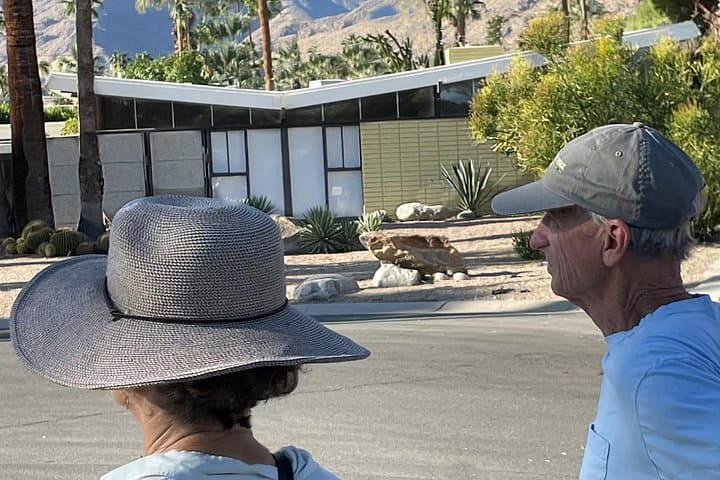
Morning light slides between tall date palms as a small group moves down E. Twin Palms Drive. The street hums with low conversation and the soft click of sandals on pavement; roofs with classic butterfly silhouettes cut a clean line against the desert sky. This private two‑hour stroll focuses on the Twin Palms Estates, a compact enclave of mid‑century modern residential architecture that reads like a who’s‑who of 1950s Palm Springs design.
Morning light slides between tall date palms as a small group moves down E. Twin Palms Drive. The street hums with low conversation and the soft click of sandals on pavement; roofs with classic butterfly silhouettes cut a clean line against the desert sky. This private two‑hour stroll focuses on the Twin Palms Estates, a compact enclave of mid‑century modern residential architecture that reads like a who’s‑who of 1950s Palm Springs design.
Built as part of postwar suburban expansion, Twin Palms showcases William Krisel’s pragmatic brilliance: low‑slung plans, curtain‑glass walls and car‑forward entries that responded to car culture and desert light. Geologically the neighborhood sits on alluvial fans at the base of the San Jacinto range, where wind and sun influence landscape choices—xeric gardens, gravel patios and towering palms that move and cast long shadows through the afternoon.
Culturally, expect stories about celebrity residents—Debbie Reynolds, Ray Bradbury—and how the area became a laboratory for modern living in hot, dry climates. The guide will point out original detailing, later remodels and how preservation efforts have maintained street character.
Practical guidance: the walk covers about one mile on flat, paved streets—comfortable shoes are enough. There are no public restrooms available during the tour; bring water and sun protection. Mornings are cooler and easier for photography; summer afternoons are very hot. The tour is wheelchair accessible and suited to a wide range of ages and fitness levels. Arrive 10 minutes early to locate on‑street parking at the E. Twin Palms Dr. and S. Navajo Dr. intersection and to catch the best light for exterior shots of the iconic roofs.