THE ADVENTURE COLLECTIVE® · Independent discovery and booking for outdoor travel

Spend two days exploring Angkor’s major temples and the floating communities of Tonle Sap. This guided itinerary balances sunrise temple visits with countryside stops and a sunset boat ride on Southeast Asia’s largest lake.
Spend two days exploring Angkor’s major temples and the floating communities of Tonle Sap. This guided itinerary balances sunrise temple visits with countryside stops and a sunset boat ride on Southeast Asia’s largest lake.
At first light the stones hold cool and the jungle exhales — the silhouette of a temple rimmed in gold as the sun climbs over Angkor's horizon. On this two-day loop from Siem Reap you stand on ancient causeways, feel roots pry at lintels, and glide across Tonle Sap as wooden houses rock like slow breathing.
Verified experiences and guided adventures in the surrounding area.
Operated by Siemreapian Tourguide · Siem Reap, Siem Reap Province
At first light the stones hold cool and the jungle exhales — the silhouette of a temple rimmed in gold as the sun climbs over Angkor's horizon. On this two-day loop from Siem Reap you stand on ancient causeways, feel roots pry at lintels, and glide across Tonle Sap as wooden houses rock like slow breathing.
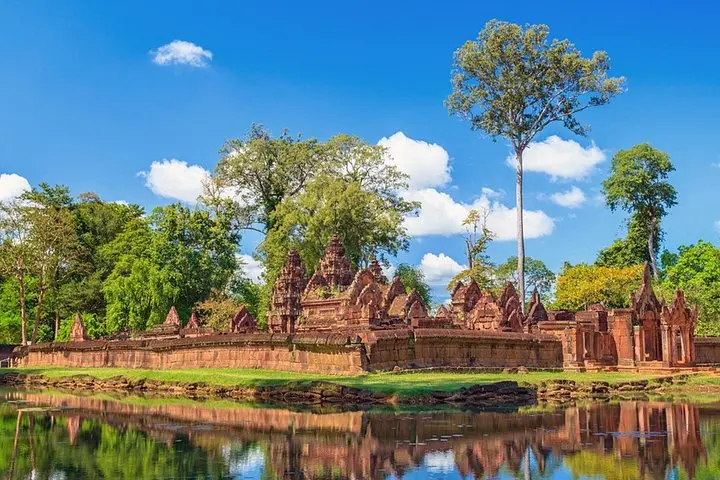
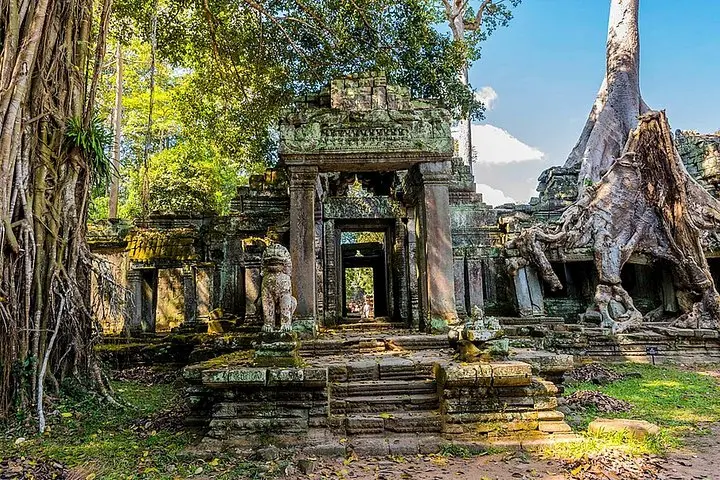
The route threads Angkor Wat’s grand galleries with Angkor Thom’s carved faces at the Bayon and the root-entangled drama of Ta Prohm, then pushes farther to Preah Khan, Banteay Srei (about 37 km from town) and the overgrown ruin of Beng Mealea (roughly 60 km). These monuments span the height of the Khmer Empire (9th–13th centuries) and sit on low, flat Khorat Plateau terrain — mostly level walking between compacted earth, sandstone steps and uneven temple stones.
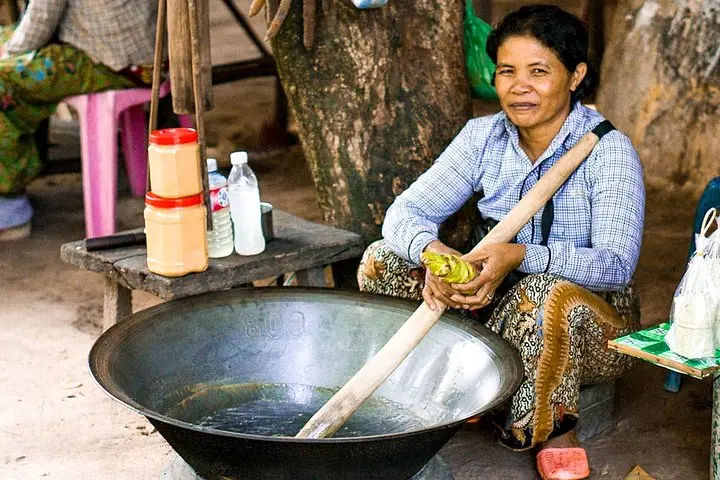
Culturally the tour mixes archaeology and village life: stopoffs include a palm-sugar workshop and a late-afternoon boat on Tonle Sap, Southeast Asia’s largest freshwater lake, where stilt villages track the monsoon’s rise and fall.
Practical side: the program is full days of walking and short drives, best tackled with stable footwear, sun protection and a current Angkor pass (purchase online or at the park). Expect humid heat, lots of stairs and tight corridors — move deliberately, keep to marked paths, and bring cash (USD and riel) for small purchases and tips. Guides typically arrange air-conditioned transfers and a boat ticket for the lake; schedule sunrise days early to avoid crowds and midafternoon for Tonle Sap light. Respect temple dress codes, conserve water, and allow time to pause — the site rewards patience as much as pace.
Yes — an Angkor pass is required for temple entry; options include 1-, 3- and 7-day passes available at park entry or online.
Banteay Srei is about 37 km from Siem Reap and Beng Mealea roughly 60 km; expect 45–90 minute drives depending on traffic and stops.
The itinerary includes a boat ticket to the floating village and a sunset cruise as noted; confirm exact pickup and boat type with the operator.
Tipping is customary; consider $5–10 per person per day for guides and $2–5 for drivers, adjusted to service level and group size.
Siemreapian Tourguide operates guided outdoor trips and adventures with an emphasis on safety, stewardship, and memorable experiences.
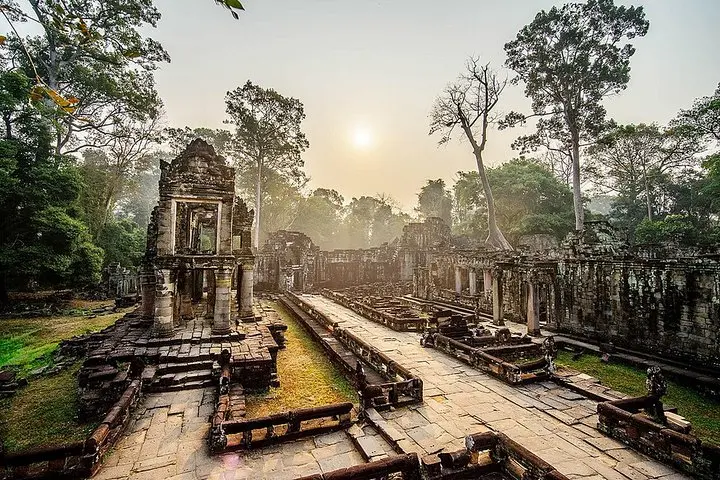
At first light the stones hold cool and the jungle exhales — the silhouette of a temple rimmed in gold as the sun climbs over Angkor's horizon. On this two-day loop from Siem Reap you stand on ancient causeways, feel roots pry at lintels, and glide across Tonle Sap as wooden houses rock like slow breathing.
At first light the stones hold cool and the jungle exhales — the silhouette of a temple rimmed in gold as the sun climbs over Angkor's horizon. On this two-day loop from Siem Reap you stand on ancient causeways, feel roots pry at lintels, and glide across Tonle Sap as wooden houses rock like slow breathing.
The route threads Angkor Wat’s grand galleries with Angkor Thom’s carved faces at the Bayon and the root-entangled drama of Ta Prohm, then pushes farther to Preah Khan, Banteay Srei (about 37 km from town) and the overgrown ruin of Beng Mealea (roughly 60 km). These monuments span the height of the Khmer Empire (9th–13th centuries) and sit on low, flat Khorat Plateau terrain — mostly level walking between compacted earth, sandstone steps and uneven temple stones.
Culturally the tour mixes archaeology and village life: stopoffs include a palm-sugar workshop and a late-afternoon boat on Tonle Sap, Southeast Asia’s largest freshwater lake, where stilt villages track the monsoon’s rise and fall.
Practical side: the program is full days of walking and short drives, best tackled with stable footwear, sun protection and a current Angkor pass (purchase online or at the park). Expect humid heat, lots of stairs and tight corridors — move deliberately, keep to marked paths, and bring cash (USD and riel) for small purchases and tips. Guides typically arrange air-conditioned transfers and a boat ticket for the lake; schedule sunrise days early to avoid crowds and midafternoon for Tonle Sap light. Respect temple dress codes, conserve water, and allow time to pause — the site rewards patience as much as pace.