THE ADVENTURE COLLECTIVE® · Independent discovery and booking for outdoor travel

A compact, private two-day tour that pairs Angkor’s greatest temples with an immersive visit to Kompong Phluk on Tonle Sap. Expect early starts, on-site storytelling by an English-speaking guide, and a mix of stone-carved history and living lake culture.
A compact, private two-day tour that pairs Angkor’s greatest temples with an immersive visit to Kompong Phluk on Tonle Sap. Expect early starts, on-site storytelling by an English-speaking guide, and a mix of stone-carved history and living lake culture.
Dawn breaks across sandstone and carved faces as you step out of an air-conditioned vehicle into the broad temple grounds of Angkor.
Verified experiences and guided adventures in the surrounding area.
Operated by Angkor Wat Travel Tour · Siem Reap, Siem Reap Province
Dawn breaks across sandstone and carved faces as you step out of an air-conditioned vehicle into the broad temple grounds of Angkor.
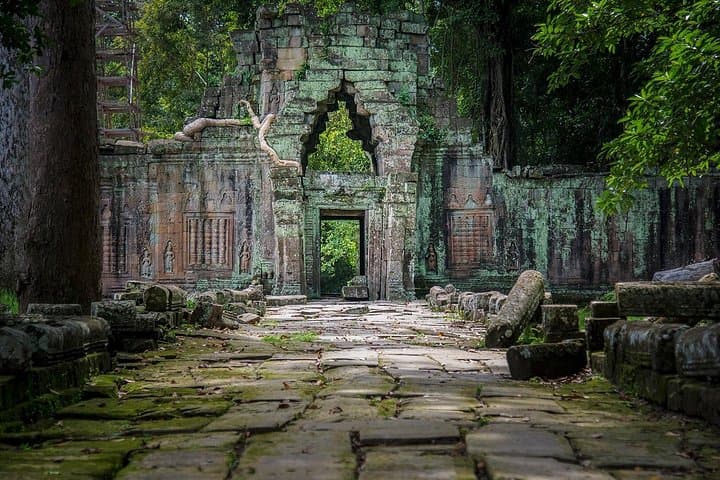
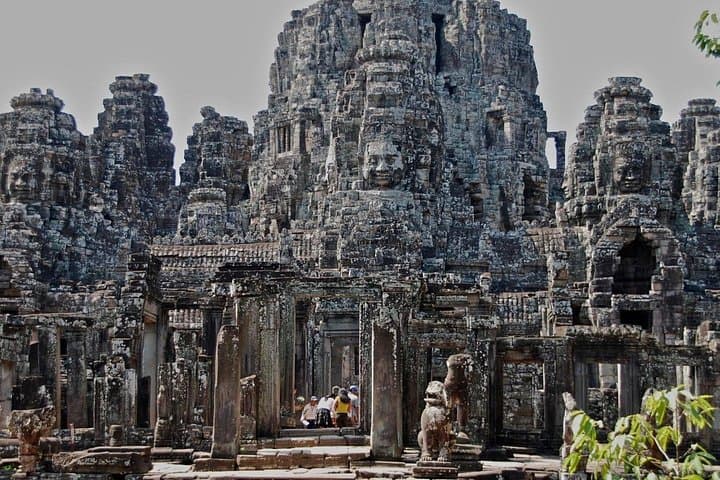
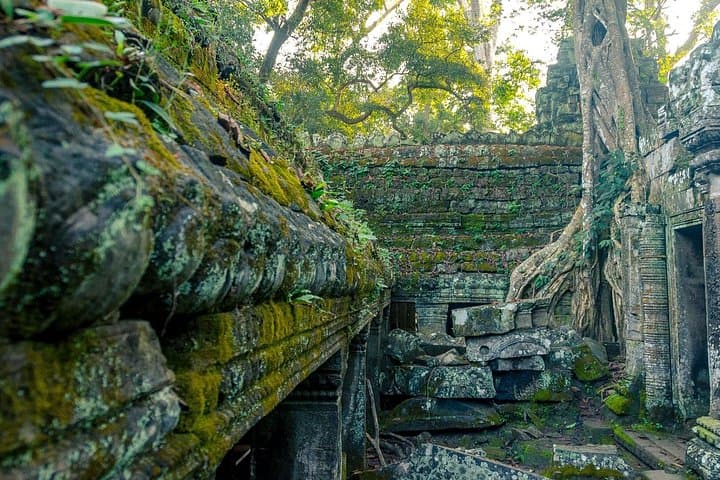
On day one the guide leads you through the hush of Angkor Thom’s southern gate, across the Terrace of the Elephants and into Bayon’s many-faced towers—stone eyes that seem to watch the slow flow of tourists and time. Ta Prohm’s roots press against the ruins like an insistence from the jungle; Angkor Wat opens later, its bas-reliefs telling stories carved in the early 12th century under King Suryavarman II.
The area sits on an uplifted sandstone plain formed during long cycles of sea-level change; the Angkor complex marks the apex of Khmer engineering and hydraulics when the empire managed vast reservoirs and canals.
Day two moves to Tonle Sap, where the lake’s tide-like pulse swells and shrinks with the monsoon, and Kompong Phluk rises on stilts—houses, markets and schools adapting to a moving shoreline. Community-run workshops such as Artisans d’Angkor provide cultural context and a hands-on chance to try stone carving.
Practical guidance: purchase an Angkor Park pass in advance, wear modest, breathable clothing that covers shoulders and knees, and bring sturdy shoes for uneven stone and muddy boardwalks. Start temple days early to miss the heat and the crowds; at Tonle Sap, a shallow-draft boat and a knowledgeable boatman make the mangrove channels accessible. Carry water, cash for local purchases, and a lightweight rain layer in wet season.
No—entrance fees are not included. Buy an Angkor Park pass (1-, 3- or 7-day) at the official ticket center before entering the temples.
The tour includes an air-conditioned vehicle; confirm pickup location at booking—most central Siem Reap hotels are served.
Yes—tour is listed as physically easy. Infants must sit on an adult’s lap; children should be supervised at all times, especially around water and temple edges.
November–February offers cooler, drier weather and clearer skies; visit early mornings to avoid crowds and mid-day heat, and choose the wet season if you want fuller floating villages on Tonle Sap.
Angkor Wat Travel Tour operates guided outdoor trips and adventures with an emphasis on safety, stewardship, and memorable experiences.

Dawn breaks across sandstone and carved faces as you step out of an air-conditioned vehicle into the broad temple grounds of Angkor.
Dawn breaks across sandstone and carved faces as you step out of an air-conditioned vehicle into the broad temple grounds of Angkor.
On day one the guide leads you through the hush of Angkor Thom’s southern gate, across the Terrace of the Elephants and into Bayon’s many-faced towers—stone eyes that seem to watch the slow flow of tourists and time. Ta Prohm’s roots press against the ruins like an insistence from the jungle; Angkor Wat opens later, its bas-reliefs telling stories carved in the early 12th century under King Suryavarman II.
The area sits on an uplifted sandstone plain formed during long cycles of sea-level change; the Angkor complex marks the apex of Khmer engineering and hydraulics when the empire managed vast reservoirs and canals.
Day two moves to Tonle Sap, where the lake’s tide-like pulse swells and shrinks with the monsoon, and Kompong Phluk rises on stilts—houses, markets and schools adapting to a moving shoreline. Community-run workshops such as Artisans d’Angkor provide cultural context and a hands-on chance to try stone carving.
Practical guidance: purchase an Angkor Park pass in advance, wear modest, breathable clothing that covers shoulders and knees, and bring sturdy shoes for uneven stone and muddy boardwalks. Start temple days early to miss the heat and the crowds; at Tonle Sap, a shallow-draft boat and a knowledgeable boatman make the mangrove channels accessible. Carry water, cash for local purchases, and a lightweight rain layer in wet season.