THE ADVENTURE COLLECTIVE® · Independent discovery and booking for outdoor travel

Spend two deliberate days exploring the Angkor Archaeological Complex: sunset and the Small Circuit on day one, followed by sunrise at Angkor Wat, the Big Circuit, and detailed carvings at Banteay Srei on day two. Practical tips and local context help you get the most from both dawn light and deep history.
Spend two deliberate days exploring the Angkor Archaeological Complex: sunset and the Small Circuit on day one, followed by sunrise at Angkor Wat, the Big Circuit, and detailed carvings at Banteay Srei on day two. Practical tips and local context help you get the most from both dawn light and deep history.
Before dawn the reflecting pools hold the first light like a still breath, and the central tower of Angkor Wat stands as an outline against a cooling sky. On a two-day private tour you move through that silhouette—first along the Small Circuit at sunset, then back before sunrise to watch the sun climb behind bas-reliefs and lotus ponds.
Verified experiences and guided adventures in the surrounding area.
Operated by Mekong Tourist · Siem Reap, Siem Reap Province
Before dawn the reflecting pools hold the first light like a still breath, and the central tower of Angkor Wat stands as an outline against a cooling sky. On a two-day private tour you move through that silhouette—first along the Small Circuit at sunset, then back before sunrise to watch the sun climb behind bas-reliefs and lotus ponds.
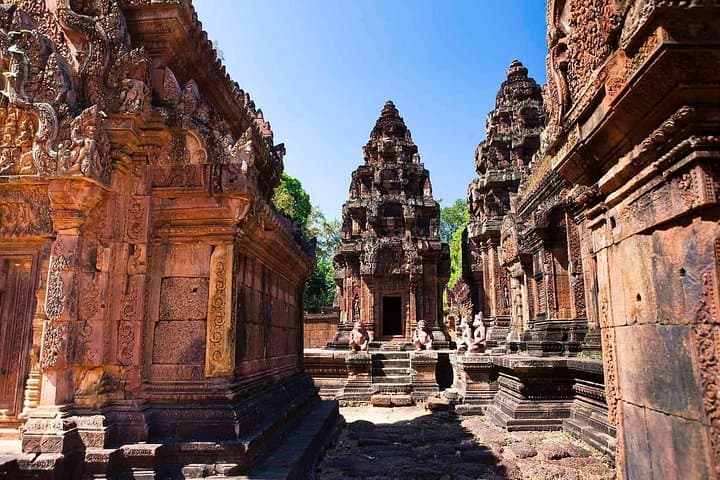
These temples were raised by the Khmer Empire between the 9th and 13th centuries from quarried sandstone and laterite; Angkor Wat itself began as a Hindu state temple and later became Buddhist. The geology is simple but telling: pink-hued Banteay Srei shows fine-grained sandstone carving, while the larger complexes rest on compacted laterite foundations that have resisted Cambodia’s seasonal floods.
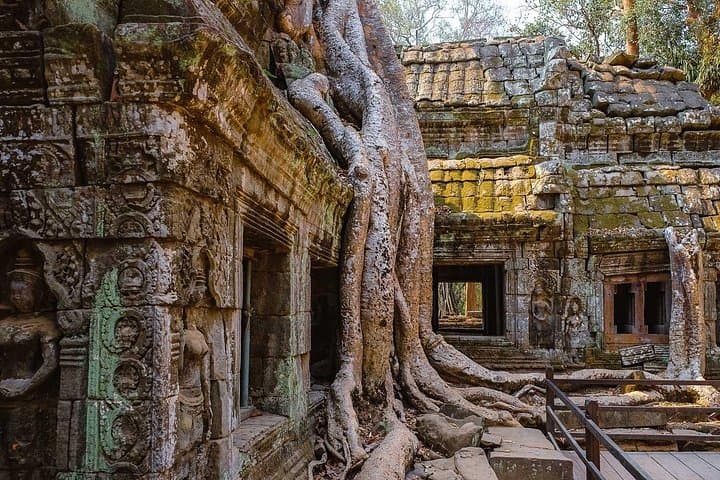
Ta Prohm’s strangler figs and silk-cotton trees still tug at masonry, giving the jungle an active role in the story. Bayon’s carved faces watch former city gates; Preah Khan and Neak Pean reveal different ceremonial geometries. Local guides connect these sites to Khmer kingship, cosmology, and the rhythms of the Tonle Sap floodplain.
Practically: expect lots of short walks, some steep temple stairs, and uneven stone underfoot. Sunrise requires a 4:30–5:00 a.m. start; afternoons get hot and humid with sudden showers during the monsoon. Dress respectfully (shoulders and knees covered), carry water, and budget for the Angkor Pass. A licensed guide and air-conditioned vehicle make long days manageable; bring a lightweight rain jacket and comfortable shoes. Pace your days to balance the spectacle—sunrise at Angkor Wat and sunset from Phnom Bakheng are rewarding bookends to two full days of temple exploration.
Yes—entry requires an Angkor Pass (1-, 3-, or 7-day options) purchased at the official ticket center near Siem Reap.
Pickup is typically around 4:30–5:00 a.m. to arrive at Angkor Wat before dawn lighting.
It’s generally family-friendly, but infants must sit on a lap and long temple walks may be tiring for young children.
This tour includes sightseeing tickets and hotel pickup/drop-off; check the operator for specifics on meals—lunch is usually arranged at a local restaurant.
Mekong Tourist operates guided outdoor trips and adventures with an emphasis on safety, stewardship, and memorable experiences.


Before dawn the reflecting pools hold the first light like a still breath, and the central tower of Angkor Wat stands as an outline against a cooling sky. On a two-day private tour you move through that silhouette—first along the Small Circuit at sunset, then back before sunrise to watch the sun climb behind bas-reliefs and lotus ponds.
Before dawn the reflecting pools hold the first light like a still breath, and the central tower of Angkor Wat stands as an outline against a cooling sky. On a two-day private tour you move through that silhouette—first along the Small Circuit at sunset, then back before sunrise to watch the sun climb behind bas-reliefs and lotus ponds.
These temples were raised by the Khmer Empire between the 9th and 13th centuries from quarried sandstone and laterite; Angkor Wat itself began as a Hindu state temple and later became Buddhist. The geology is simple but telling: pink-hued Banteay Srei shows fine-grained sandstone carving, while the larger complexes rest on compacted laterite foundations that have resisted Cambodia’s seasonal floods.
Ta Prohm’s strangler figs and silk-cotton trees still tug at masonry, giving the jungle an active role in the story. Bayon’s carved faces watch former city gates; Preah Khan and Neak Pean reveal different ceremonial geometries. Local guides connect these sites to Khmer kingship, cosmology, and the rhythms of the Tonle Sap floodplain.
Practically: expect lots of short walks, some steep temple stairs, and uneven stone underfoot. Sunrise requires a 4:30–5:00 a.m. start; afternoons get hot and humid with sudden showers during the monsoon. Dress respectfully (shoulders and knees covered), carry water, and budget for the Angkor Pass. A licensed guide and air-conditioned vehicle make long days manageable; bring a lightweight rain jacket and comfortable shoes. Pace your days to balance the spectacle—sunrise at Angkor Wat and sunset from Phnom Bakheng are rewarding bookends to two full days of temple exploration.