THE ADVENTURE COLLECTIVE® · Independent discovery and booking for outdoor travel

Catch sunrise at Angkor Wat, trace Bayon’s stone faces and Ta Prohm’s root-wrapped corridors, then trade crowds for the jungle ruins of Beng Mealea and the stilted life of Kampong Phluk on Tonle Sap. This private two-day loop pairs classic temples with local culture and manageable walking.
Catch sunrise at Angkor Wat, trace Bayon’s stone faces and Ta Prohm’s root-wrapped corridors, then trade crowds for the jungle ruins of Beng Mealea and the stilted life of Kampong Phluk on Tonle Sap. This private two-day loop pairs classic temples with local culture and manageable walking.
You wake before dawn, tuk-tuk idling into a ribbon of palm-silhouetted road, and the first light sharpens Angkor Wat’s galleries into black lace against a white sky.
Verified experiences and guided adventures in the surrounding area.
Operated by Toptrip Inspire Cambodia · Siem Reap, Siem Reap Province
You wake before dawn, tuk-tuk idling into a ribbon of palm-silhouetted road, and the first light sharpens Angkor Wat’s galleries into black lace against a white sky.
By 5 AM the causeway hums with shutters and whispered directions; the central tower rises like a stone compass. Day one threads the classical Angkor circuit — Angkor Wat at daybreak, the carved faces of Bayon, the terraced architecture of the Royal Square, and Ta Prohm’s roots wrestling the masonry. These temples are Khmer engineering written in sandstone and laterite: raised galleries, corbelled roofs, and bas-reliefs that chronicle gods, kings, and commerce.
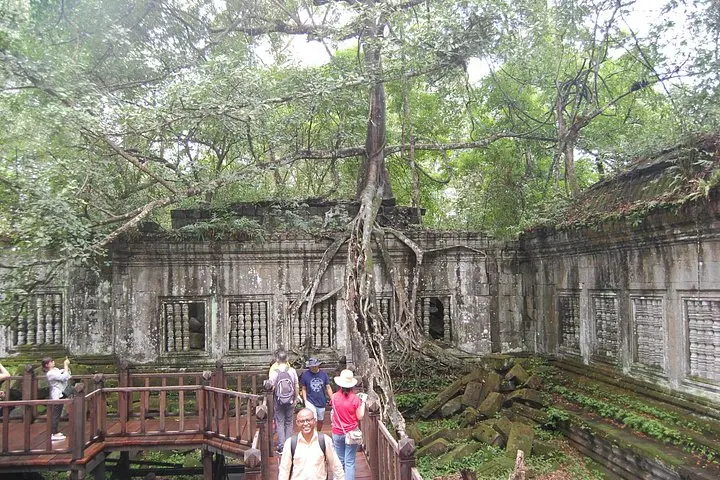
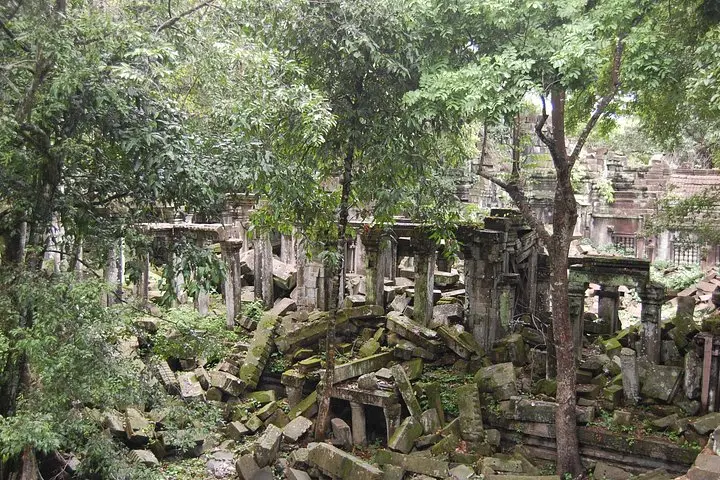
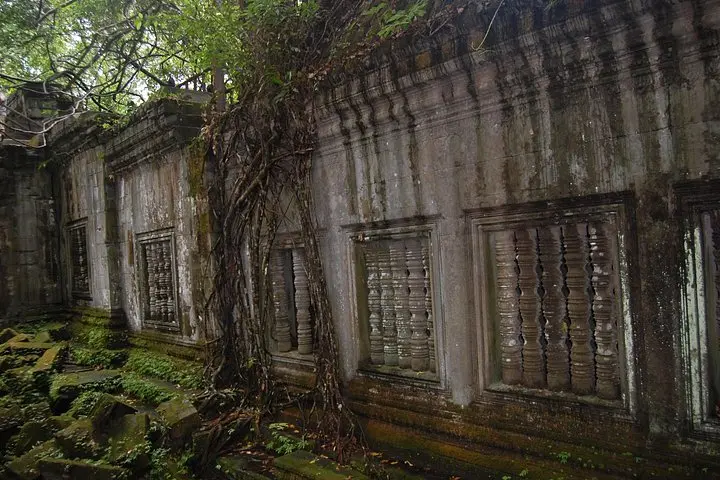
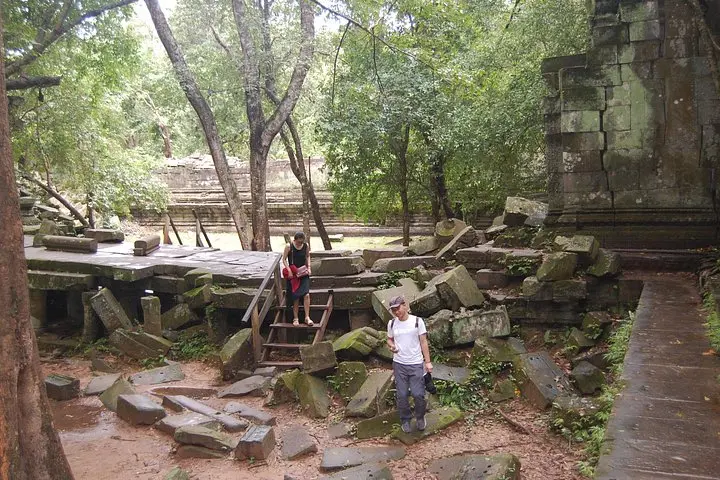
On day two the pace changes. Beng Mealea is raw—part collapsed, part reclaimed by vines—offering a tactile sense of how jungle and ruin negotiate space. Kampong Phluk pushes the experience onto Tonle Sap: stilted houses, floating markets in high water, and a village life synchronized to seasonal flood and ebb.
Practical guidance: start early to avoid heat and crowds, carry a refillable water bottle and sun protection, and wear shoes that grip on uneven stone and muddy jungle trails. Distances are modest but include a few hours of walking each day and 45–90 minute drives to outlying sites; expect minimal elevation change but many steps and uneven surfaces. Respect dress codes at temples (knees and shoulders covered), bring local currency for park passes and small purchases, and plan for sudden rain during the wet season. With a private guide and air-conditioned transfers, this two-day loop balances temple highlights with quieter cultural moments—historic stones, river lifeways, and the slow, insistent return of nature.
Yes—entrance to Angkor Archaeological Park requires a paid pass (available for 1, 3, or 7 days). Your tour can advise where to purchase it on arrival.
The itinerary is rated easy for most fitness levels, but Beng Mealea and some temple areas have uneven surfaces and steps; consider assisted mobility if needed.
Drives vary: Banteay Srei is about 50–60 minutes from Siem Reap, Beng Mealea ~40–60 minutes depending on roads, and Kampong Phluk is 20–40 minutes plus a short boat ride.
Conservative clothing that covers shoulders and knees is required; breathable fabrics and a sarong are practical in the heat.
Toptrip Inspire Cambodia operates guided outdoor trips and adventures with an emphasis on safety, stewardship, and memorable experiences.
You wake before dawn, tuk-tuk idling into a ribbon of palm-silhouetted road, and the first light sharpens Angkor Wat’s galleries into black lace against a white sky.
You wake before dawn, tuk-tuk idling into a ribbon of palm-silhouetted road, and the first light sharpens Angkor Wat’s galleries into black lace against a white sky.
By 5 AM the causeway hums with shutters and whispered directions; the central tower rises like a stone compass. Day one threads the classical Angkor circuit — Angkor Wat at daybreak, the carved faces of Bayon, the terraced architecture of the Royal Square, and Ta Prohm’s roots wrestling the masonry. These temples are Khmer engineering written in sandstone and laterite: raised galleries, corbelled roofs, and bas-reliefs that chronicle gods, kings, and commerce.
On day two the pace changes. Beng Mealea is raw—part collapsed, part reclaimed by vines—offering a tactile sense of how jungle and ruin negotiate space. Kampong Phluk pushes the experience onto Tonle Sap: stilted houses, floating markets in high water, and a village life synchronized to seasonal flood and ebb.
Practical guidance: start early to avoid heat and crowds, carry a refillable water bottle and sun protection, and wear shoes that grip on uneven stone and muddy jungle trails. Distances are modest but include a few hours of walking each day and 45–90 minute drives to outlying sites; expect minimal elevation change but many steps and uneven surfaces. Respect dress codes at temples (knees and shoulders covered), bring local currency for park passes and small purchases, and plan for sudden rain during the wet season. With a private guide and air-conditioned transfers, this two-day loop balances temple highlights with quieter cultural moments—historic stones, river lifeways, and the slow, insistent return of nature.