THE ADVENTURE COLLECTIVE® · Independent discovery and booking for outdoor travel

A compact overland expedition across Karakalpakstan that pairs stark desert geology with cultural stops: the Savitsky Museum, Chilpik tower and Muynak’s ship cemetery. Expect long drives, short hikes, and powerful, photogenic landscapes.
A compact overland expedition across Karakalpakstan that pairs stark desert geology with cultural stops: the Savitsky Museum, Chilpik tower and Muynak’s ship cemetery. Expect long drives, short hikes, and powerful, photogenic landscapes.
The day opens with the wind cutting across flat salt plains and the hum of two cars as they head west from Nukus toward the skeletal shorelines of the Aral Sea. Dust rises in the wake of the convoy; rusting hulls of fishing trawlers crest distant dunes like frozen whales. You feel the scale of human change here—vast, visible, and oddly quiet.
Verified experiences and guided adventures in the surrounding area.
Operated by Oxus Travel · Nukus, Karakalpakstan
The day opens with the wind cutting across flat salt plains and the hum of two cars as they head west from Nukus toward the skeletal shorelines of the Aral Sea. Dust rises in the wake of the convoy; rusting hulls of fishing trawlers crest distant dunes like frozen whales. You feel the scale of human change here—vast, visible, and oddly quiet.
This two-day route stitches together archaeology, Soviet-era industry and stark desert geology. Chilpik’s round Zoroastrian tower speaks to millennia of ritual at the region’s margins, while the Savitsky Museum in Nukus stores an unlikely trove of Russian avant-garde and local crafts. The Muynak ship cemetery tells the more recent, tragic story of the sea’s retreat; Ustyurt’s canyons carve limestone amphitheaters shaped by wind and time.
Expect long highway stretches and short, gritty stops—gravel access, soft sand, and occasional 4x4 sections. Total driving is roughly 1,000 km over two days; daytime highs can be extreme in summer and suddenly cold at night. Cultural touches are immediate: Karakalpak hospitality, roadside tea stops, and sparse shepherding camps.
Practical guidance: travel light but bring layered clothing for wind and temperature swings, at least 3 liters of water per day, and sturdy boots for walking around ship hulls and ruin terraces. Allow time for photo stops and museum visits—the Savitsky collection rewards at least 45–60 minutes. If you have mobility limits, request vehicle seating with extra legroom and clarify pickup/drop-off in Nukus, Khiva or Urgench. This trip is as much about witness and context as it is about sightseeing—prepare to leave with a sharper sense of how landscape and policy intersect.
About 1,000 km total over two days between Nukus, Muynak and the Ustyurt area, split between highway and short off-road sections.
Yes—operators can arrange pickup or drop-off in Nukus, Khiva or Urgench; confirm at booking to coordinate transfers.
Minimum age is 15 per the tour; older travelers should be comfortable with long vehicle hours and some unpaved walking areas.
Admissions vary by stop; the Savitsky Museum visit is included on the itinerary but check with the operator for specific ticket inclusions.
Oxus Travel operates guided outdoor trips and adventures with an emphasis on safety, stewardship, and memorable experiences.
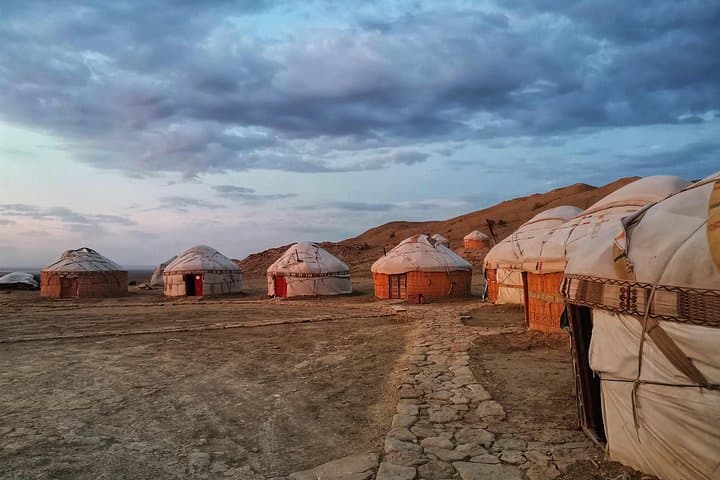


The day opens with the wind cutting across flat salt plains and the hum of two cars as they head west from Nukus toward the skeletal shorelines of the Aral Sea. Dust rises in the wake of the convoy; rusting hulls of fishing trawlers crest distant dunes like frozen whales. You feel the scale of human change here—vast, visible, and oddly quiet.
The day opens with the wind cutting across flat salt plains and the hum of two cars as they head west from Nukus toward the skeletal shorelines of the Aral Sea. Dust rises in the wake of the convoy; rusting hulls of fishing trawlers crest distant dunes like frozen whales. You feel the scale of human change here—vast, visible, and oddly quiet.
This two-day route stitches together archaeology, Soviet-era industry and stark desert geology. Chilpik’s round Zoroastrian tower speaks to millennia of ritual at the region’s margins, while the Savitsky Museum in Nukus stores an unlikely trove of Russian avant-garde and local crafts. The Muynak ship cemetery tells the more recent, tragic story of the sea’s retreat; Ustyurt’s canyons carve limestone amphitheaters shaped by wind and time.
Expect long highway stretches and short, gritty stops—gravel access, soft sand, and occasional 4x4 sections. Total driving is roughly 1,000 km over two days; daytime highs can be extreme in summer and suddenly cold at night. Cultural touches are immediate: Karakalpak hospitality, roadside tea stops, and sparse shepherding camps.
Practical guidance: travel light but bring layered clothing for wind and temperature swings, at least 3 liters of water per day, and sturdy boots for walking around ship hulls and ruin terraces. Allow time for photo stops and museum visits—the Savitsky collection rewards at least 45–60 minutes. If you have mobility limits, request vehicle seating with extra legroom and clarify pickup/drop-off in Nukus, Khiva or Urgench. This trip is as much about witness and context as it is about sightseeing—prepare to leave with a sharper sense of how landscape and policy intersect.