THE ADVENTURE COLLECTIVE® · Independent discovery and booking for outdoor travel

Two days that bridge ancient ritual and modern engineering: fly from Cairo to Aswan, explore Philae and a Nubian village, then train to Luxor to visit the Valley of the Kings and Karnak. This tightly scheduled tour is ideal for travelers who want concentrated history with efficient logistics.
Two days that bridge ancient ritual and modern engineering: fly from Cairo to Aswan, explore Philae and a Nubian village, then train to Luxor to visit the Valley of the Kings and Karnak. This tightly scheduled tour is ideal for travelers who want concentrated history with efficient logistics.
A low-slung plane slices the desert horizon and the Nile below brightens like a ribbon of glass. Arriving in Aswan, the air carries a different cadence: riverboats call to the river, and the stone of Philae seems to lean toward history.
Verified experiences and guided adventures in the surrounding area.
Operated by Special trips · Aswan, Aswan Governorate
A low-slung plane slices the desert horizon and the Nile below brightens like a ribbon of glass. Arriving in Aswan, the air carries a different cadence: riverboats call to the river, and the stone of Philae seems to lean toward history.
This compact two-day loop pairs modern engineering and ancient ritual. In Aswan visitors move from the High Dam—completed in the 1960s and reshaping the Nile’s flow—to Philae, the island temple complex dedicated to Isis, whose pylons and reliefs survived relocation in the 1970s. A short motorboat ride deposits travelers in a Nubian village where painted houses, local markets, and a slower pace offer cultural contrast.
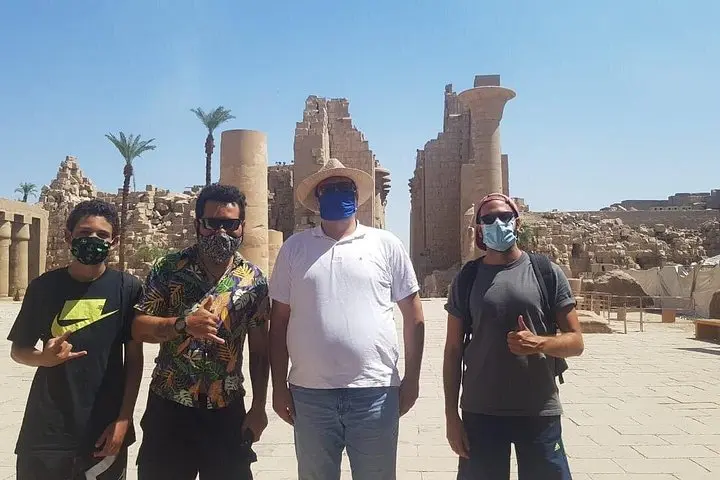
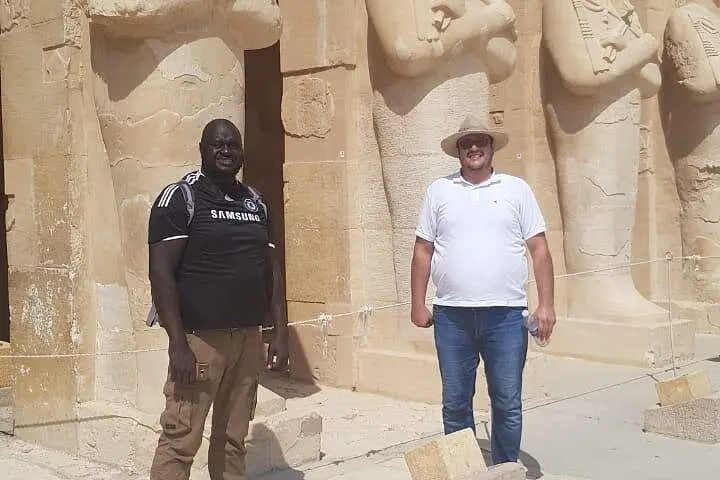
The second day travels by first-class train to Luxor, where the west bank opens onto the Valley of the Kings—rock-cut tombs that map pharaonic funerary practice—and the temple of Queen Hatshepsut, an architectural statement of royal identity. The Colossi of Memnon stand as weathered companions to the massive pylons and avenue of sphinxes at Karnak.
Practicalities are straightforward: domestic flights and transfers are included, and the itinerary packs several short walks on uneven stone and desert track. Expect heat, dusty surfaces, and tight spaces in tombs; comfortable walking shoes, sun protection, and a light daypack make the days smoother. Timing matters—mornings are best for long sites and photography, while the Nubian village and local lunches reveal cultural texture.
For travelers seeking fast-paced, historically dense exposure to Upper Egypt, this itinerary balances logistics and access: see high-impact monuments, taste local food, and sleep in Aswan before returning to Cairo.
Domestic flights between Cairo and Aswan and back from Luxor, plus entrance to the listed sites, are included in the package as described.
The itinerary is rated easy to moderate and can accommodate many ages, but walking in open sun and navigating stairs in tombs may be challenging—check mobility needs with the operator.
Yes; the provider notes the schedule is flexible and can be amended on request, sometimes for an additional cost for language or guide changes.
The standard policy allows refunds for cancellations 24 hours prior; specific refunds for weather-related changes (e.g., Abu Simbel) are addressed case by case per the operator’s terms.
Special trips operates guided outdoor trips and adventures with an emphasis on safety, stewardship, and memorable experiences.
A low-slung plane slices the desert horizon and the Nile below brightens like a ribbon of glass. Arriving in Aswan, the air carries a different cadence: riverboats call to the river, and the stone of Philae seems to lean toward history.
A low-slung plane slices the desert horizon and the Nile below brightens like a ribbon of glass. Arriving in Aswan, the air carries a different cadence: riverboats call to the river, and the stone of Philae seems to lean toward history.
This compact two-day loop pairs modern engineering and ancient ritual. In Aswan visitors move from the High Dam—completed in the 1960s and reshaping the Nile’s flow—to Philae, the island temple complex dedicated to Isis, whose pylons and reliefs survived relocation in the 1970s. A short motorboat ride deposits travelers in a Nubian village where painted houses, local markets, and a slower pace offer cultural contrast.
The second day travels by first-class train to Luxor, where the west bank opens onto the Valley of the Kings—rock-cut tombs that map pharaonic funerary practice—and the temple of Queen Hatshepsut, an architectural statement of royal identity. The Colossi of Memnon stand as weathered companions to the massive pylons and avenue of sphinxes at Karnak.
Practicalities are straightforward: domestic flights and transfers are included, and the itinerary packs several short walks on uneven stone and desert track. Expect heat, dusty surfaces, and tight spaces in tombs; comfortable walking shoes, sun protection, and a light daypack make the days smoother. Timing matters—mornings are best for long sites and photography, while the Nubian village and local lunches reveal cultural texture.
For travelers seeking fast-paced, historically dense exposure to Upper Egypt, this itinerary balances logistics and access: see high-impact monuments, taste local food, and sleep in Aswan before returning to Cairo.