THE ADVENTURE COLLECTIVE® · Independent discovery and booking for outdoor travel

Two days of classic High Atlas trekking from Marrakech: a ridge crossing to Tizi M'zzik, an overnight in a Berber gite, then a downhill through olive groves to Ouirgane. Expect mixed terrain, cultural encounters, and a moderate two-day challenge.
Two days of classic High Atlas trekking from Marrakech: a ridge crossing to Tizi M'zzik, an overnight in a Berber gite, then a downhill through olive groves to Ouirgane. Expect mixed terrain, cultural encounters, and a moderate two-day challenge.
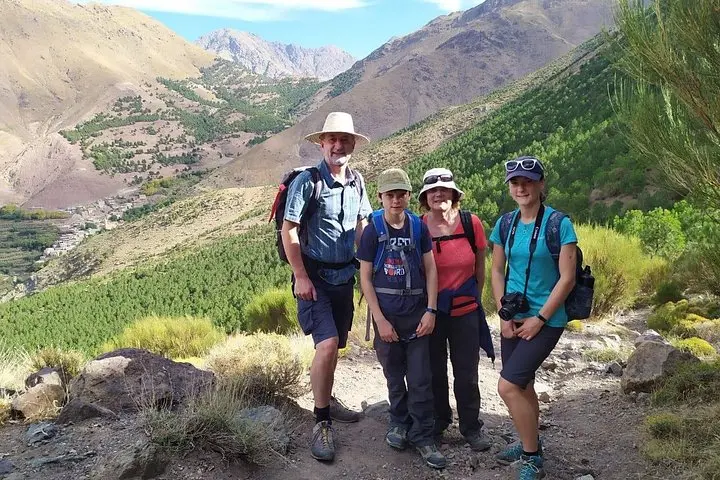
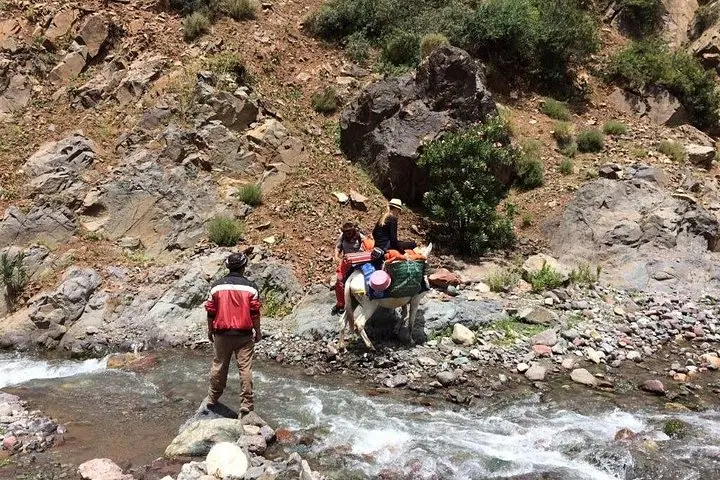
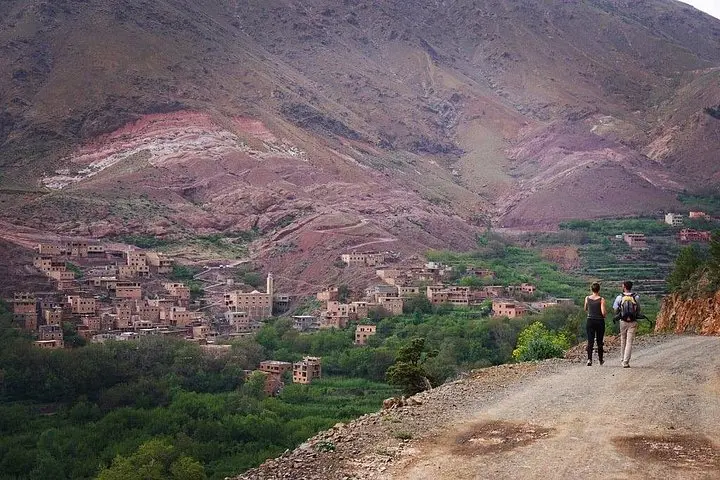
You leave Marrakech before dawn, the city’s heat shrinking behind low foothills as the road climbs into the High Atlas. Mules scent the track, guides sort packs, and the trail angles up toward Tizi M'zzik (2,540 m). On the ridge the wind seems to push you forward; below, the Azzaden Valley folds open in terraces and olive groves.
Verified experiences and guided adventures in the surrounding area.
Operated by Marrakech Tours · Marrakech, Marrakech-Safi
You leave Marrakech before dawn, the city’s heat shrinking behind low foothills as the road climbs into the High Atlas. Mules scent the track, guides sort packs, and the trail angles up toward Tizi M'zzik (2,540 m). On the ridge the wind seems to push you forward; below, the Azzaden Valley folds open in terraces and olive groves.
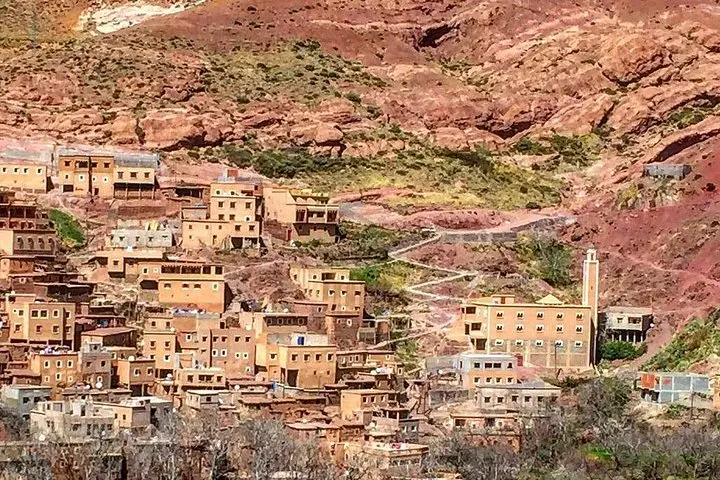
The High Atlas is carved from ancient uplift and erosion: schist and limestone ridgelines cut into deep valleys where Berber communities have farmed and grazed for centuries. The trek follows shepherd paths and stone-paved mule tracks used for transhumance; stays in a local gite place you in the rhythm of rural life — communal tagines, mint tea, and shared sleep on simple mattresses.
Day one is a steady ascent (about five hours) across rocky path and scree to the pass, then a long downhill into Tizi Oussem for the night. Day two drops through a nature reserve that protects the Barbary sheep, crossing olive groves and small villages before arriving in Ouirgane and returning to Marrakech by vehicle.
Practical guide: expect roughly 5 hours walking each day with mixed terrain — rocky ups, packed dirt tracks, and short steep sections. Bring sturdy boots, layered clothing for fast-changing mountain weather, and at least 2–3 liters of water per day. Respect local customs — ask before photographing people — and carry small change for local vendors. The trek is ideal for hikers with moderate fitness who want cultural contact as much as scenery.
No technical high-altitude experience is required, but you should be comfortable with 5-hour hikes and some elevation gain; the highest point is about 2,540 m.
You stay in a simple Berber guest house (gîte) with basic bedding and shared facilities; meals are home-cooked tagines prepared by your cook.
Yes — mules carry baggage and food; you need only a daypack with essentials for the walking portions.
Trails include steady ascents, loose scree on the pass, and long downhill sections; expect uneven terrain but no technical climbing.
Marrakech Tours operates guided outdoor trips and adventures with an emphasis on safety, stewardship, and memorable experiences.
You leave Marrakech before dawn, the city’s heat shrinking behind low foothills as the road climbs into the High Atlas. Mules scent the track, guides sort packs, and the trail angles up toward Tizi M'zzik (2,540 m). On the ridge the wind seems to push you forward; below, the Azzaden Valley folds open in terraces and olive groves.
You leave Marrakech before dawn, the city’s heat shrinking behind low foothills as the road climbs into the High Atlas. Mules scent the track, guides sort packs, and the trail angles up toward Tizi M'zzik (2,540 m). On the ridge the wind seems to push you forward; below, the Azzaden Valley folds open in terraces and olive groves.
The High Atlas is carved from ancient uplift and erosion: schist and limestone ridgelines cut into deep valleys where Berber communities have farmed and grazed for centuries. The trek follows shepherd paths and stone-paved mule tracks used for transhumance; stays in a local gite place you in the rhythm of rural life — communal tagines, mint tea, and shared sleep on simple mattresses.
Day one is a steady ascent (about five hours) across rocky path and scree to the pass, then a long downhill into Tizi Oussem for the night. Day two drops through a nature reserve that protects the Barbary sheep, crossing olive groves and small villages before arriving in Ouirgane and returning to Marrakech by vehicle.
Practical guide: expect roughly 5 hours walking each day with mixed terrain — rocky ups, packed dirt tracks, and short steep sections. Bring sturdy boots, layered clothing for fast-changing mountain weather, and at least 2–3 liters of water per day. Respect local customs — ask before photographing people — and carry small change for local vendors. The trek is ideal for hikers with moderate fitness who want cultural contact as much as scenery.