THE ADVENTURE COLLECTIVE® · Independent discovery and booking for outdoor travel

Drive inland from Casablanca to the imperial gates of Meknes, wander Roman mosaics at Volubilis, and spend a full day exploring Fez’s vast, UNESCO-listed medina. This compact two-day loop packs history, craft workshops, panoramic viewpoints and authentic souk encounters into an accessible itinerary.
Drive inland from Casablanca to the imperial gates of Meknes, wander Roman mosaics at Volubilis, and spend a full day exploring Fez’s vast, UNESCO-listed medina. This compact two-day loop packs history, craft workshops, panoramic viewpoints and authentic souk encounters into an accessible itinerary.
You step out of Casablanca’s low-slung modernity and the highway pulls you inland, past olive-scattered hills toward the high-walled gates of imperial Morocco. On day one the road loosens into ochre fields and you arrive in Meknes—its Bab Mansour gate frames the sky, tile and stone asking you to slow down and look. A short drive north brings you to Volubilis, where Roman mosaics lie open to the elements and the landscape rolls in low terraces of olive groves.
Verified experiences and guided adventures in the surrounding area.
Operated by Morocco Medinas Tours · Fez, Fès-Meknès
You step out of Casablanca’s low-slung modernity and the highway pulls you inland, past olive-scattered hills toward the high-walled gates of imperial Morocco. On day one the road loosens into ochre fields and you arrive in Meknes—its Bab Mansour gate frames the sky, tile and stone asking you to slow down and look. A short drive north brings you to Volubilis, where Roman mosaics lie open to the elements and the landscape rolls in low terraces of olive groves.
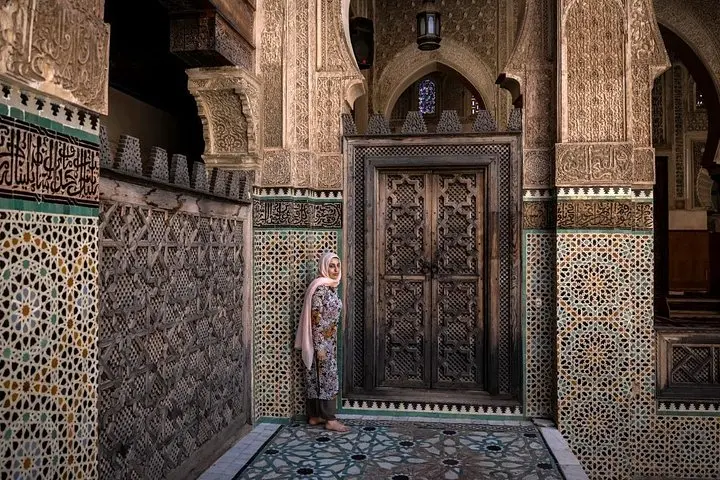
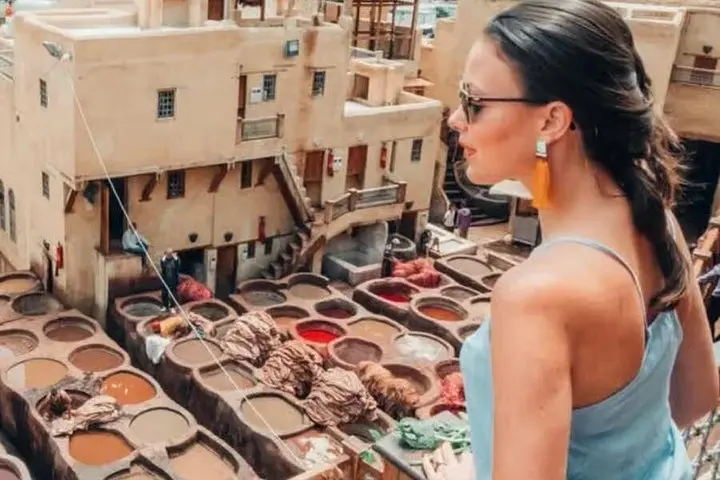
By evening you reach Fez, a city whose streets refuse engines and demand walking shoes. The medina of Fez el-Bali is UNESCO-listed: narrow, stepped alleys, wooden workshops, and the courtyard-facing madrasas of Bou Inania and Al-Attarine. Al-Qarawiyyin University—founded in the 9th century—anchors the city’s long intellectual history; the Nejjarine Museum and Chouara Tannery offer tactile glimpses into craft traditions.
Expect mostly paved and cobbled surfaces, repeated short climbs and roughly 3–6 km of walking while exploring the medina; Volubilis covers about 1–2 km of archaeological paths. Plan mornings for outdoor sites to avoid midday heat and carry small bills of Moroccan dirham for market purchases. Practicalities: modest dress helps at religious sites, bargaining is normal in souks, and a local guide makes narrow lanes and layered history click into place.
This two-day loop balances driving segments of roughly 2.5–3 hours between major stops with concentrated walking-led exploration—ideal for travelers who want dense cultural immersion without long backpacking days.
Pickup options are available; confirm your pickup point during booking—most departures organize central Casablanca collection.
Admissions to key sites in Fez (as listed) are included on the second day; Volubilis visits are part of the itinerary—check your booking confirmation for specifics.
The itinerary notes wheelchair-accessible transport, but the medina and Volubilis include uneven surfaces and steps; accessibility within those sites may be limited.
Guides commonly speak English, French and Arabic; confirm language preference when booking for a private guide.
Morocco Medinas Tours operates guided outdoor trips and adventures with an emphasis on safety, stewardship, and memorable experiences.
You step out of Casablanca’s low-slung modernity and the highway pulls you inland, past olive-scattered hills toward the high-walled gates of imperial Morocco. On day one the road loosens into ochre fields and you arrive in Meknes—its Bab Mansour gate frames the sky, tile and stone asking you to slow down and look. A short drive north brings you to Volubilis, where Roman mosaics lie open to the elements and the landscape rolls in low terraces of olive groves.
You step out of Casablanca’s low-slung modernity and the highway pulls you inland, past olive-scattered hills toward the high-walled gates of imperial Morocco. On day one the road loosens into ochre fields and you arrive in Meknes—its Bab Mansour gate frames the sky, tile and stone asking you to slow down and look. A short drive north brings you to Volubilis, where Roman mosaics lie open to the elements and the landscape rolls in low terraces of olive groves.
By evening you reach Fez, a city whose streets refuse engines and demand walking shoes. The medina of Fez el-Bali is UNESCO-listed: narrow, stepped alleys, wooden workshops, and the courtyard-facing madrasas of Bou Inania and Al-Attarine. Al-Qarawiyyin University—founded in the 9th century—anchors the city’s long intellectual history; the Nejjarine Museum and Chouara Tannery offer tactile glimpses into craft traditions.
Expect mostly paved and cobbled surfaces, repeated short climbs and roughly 3–6 km of walking while exploring the medina; Volubilis covers about 1–2 km of archaeological paths. Plan mornings for outdoor sites to avoid midday heat and carry small bills of Moroccan dirham for market purchases. Practicalities: modest dress helps at religious sites, bargaining is normal in souks, and a local guide makes narrow lanes and layered history click into place.
This two-day loop balances driving segments of roughly 2.5–3 hours between major stops with concentrated walking-led exploration—ideal for travelers who want dense cultural immersion without long backpacking days.