THE ADVENTURE COLLECTIVE® · Independent discovery and booking for outdoor travel

Ride short camel stretches across Elsen Tasarkhai’s compact dunes, sleep in a traditional ger, and walk the stone walls of Erdene Zuu near historic Karakorum. This two‑day loop pairs easy outdoor activity with deep cultural context in central Mongolia.
Ride short camel stretches across Elsen Tasarkhai’s compact dunes, sleep in a traditional ger, and walk the stone walls of Erdene Zuu near historic Karakorum. This two‑day loop pairs easy outdoor activity with deep cultural context in central Mongolia.
Wind and sand announce arrival at Elsen Tasarkhai: a sweep of compact dunes and grassland where camels move like slow metronomes and early light paints the ger camp in raw ochres. On Day 1 you cross rolling steppe into Hugnu Khan National Park, climb low dunes, ride a camel for short stretches and watch the horizon open toward distant ridgelines.
Verified experiences and guided adventures in the surrounding area.
Operated by Danista Nomads Tour · Kharkhorin, Övörkhangai
Wind and sand announce arrival at Elsen Tasarkhai: a sweep of compact dunes and grassland where camels move like slow metronomes and early light paints the ger camp in raw ochres. On Day 1 you cross rolling steppe into Hugnu Khan National Park, climb low dunes, ride a camel for short stretches and watch the horizon open toward distant ridgelines.
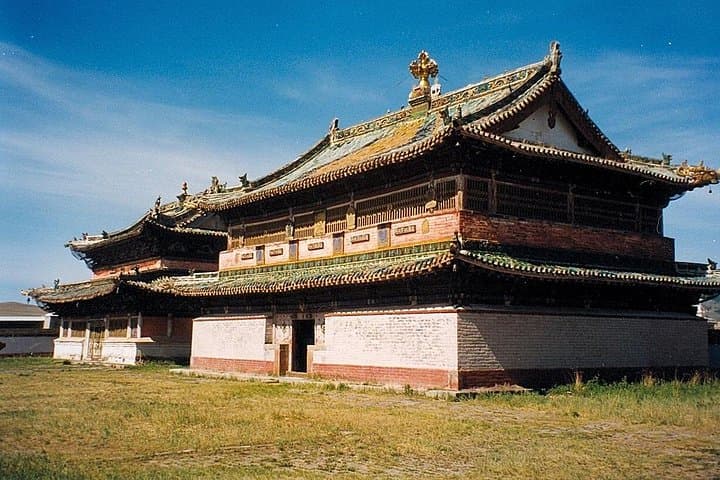
This region sits above the ruins of Karakorum, the 13th‑century capital of the Mongol Empire. Erdene Zuu Monastery, built later with stones from the old city, traces Mongolia’s shift from a nomadic empire to a Buddhist cultural center. Geologically the landscape is a transition zone: wind‑sculpted sand beside grassland formed by glacial and fluvial deposits from ancient river systems.
Culture is immediate: gers, throat singing at dinner, and the hospitality of ger hostels run by local families. Expect simple comforts, a communal meal, and guides who link oral history to visible ruins.
Practical guidance: pack layers for strong daytime sun and cold nights, carry at least 2 liters of water, and bring sturdy footwear for dune slopes and uneven monastery paths. Photographs are easy but ask before photographing people. Day 2 walks the Kharkhorin townsite and Erdene Zuu, with time to explore ruins and a return drive to Ulaanbaatar.
Physically the trip is accessible for most travelers but includes bumpy drives and short hikes; plan for basic amenities in ger accommodation. Respect the fragile steppe—stay on tracks in the dunes and minimize campfire impact.
Yes—many families participate; children should be comfortable with camel rides, simple ger accommodation, and long vehicle transfers.
The itinerary includes lunch and dinner on Day 1 and breakfast and lunch on Day 2; check dietary needs at booking time.
You must carry a valid passport for border and domestic travel; visa requirements depend on your nationality—confirm before departure.
Ger camps have basic amenities and limited or no Wi‑Fi; Ulaanbaatar offers full services before and after the trip.
Danista Nomads Tour operates guided outdoor trips and adventures with an emphasis on safety, stewardship, and memorable experiences.
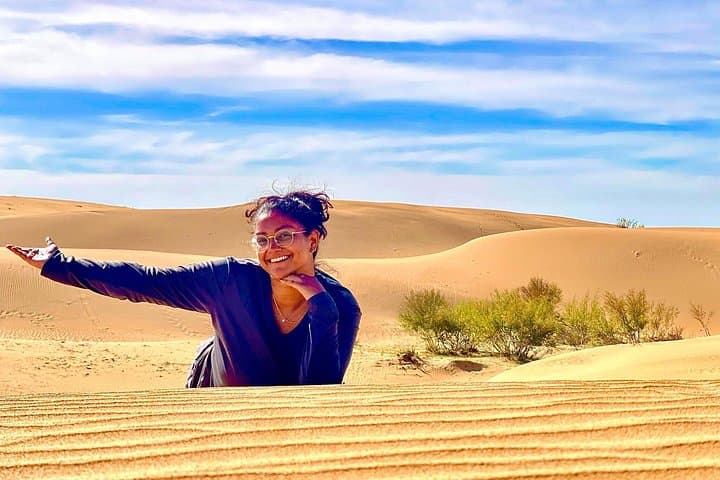


Wind and sand announce arrival at Elsen Tasarkhai: a sweep of compact dunes and grassland where camels move like slow metronomes and early light paints the ger camp in raw ochres. On Day 1 you cross rolling steppe into Hugnu Khan National Park, climb low dunes, ride a camel for short stretches and watch the horizon open toward distant ridgelines.
Wind and sand announce arrival at Elsen Tasarkhai: a sweep of compact dunes and grassland where camels move like slow metronomes and early light paints the ger camp in raw ochres. On Day 1 you cross rolling steppe into Hugnu Khan National Park, climb low dunes, ride a camel for short stretches and watch the horizon open toward distant ridgelines.
This region sits above the ruins of Karakorum, the 13th‑century capital of the Mongol Empire. Erdene Zuu Monastery, built later with stones from the old city, traces Mongolia’s shift from a nomadic empire to a Buddhist cultural center. Geologically the landscape is a transition zone: wind‑sculpted sand beside grassland formed by glacial and fluvial deposits from ancient river systems.
Culture is immediate: gers, throat singing at dinner, and the hospitality of ger hostels run by local families. Expect simple comforts, a communal meal, and guides who link oral history to visible ruins.
Practical guidance: pack layers for strong daytime sun and cold nights, carry at least 2 liters of water, and bring sturdy footwear for dune slopes and uneven monastery paths. Photographs are easy but ask before photographing people. Day 2 walks the Kharkhorin townsite and Erdene Zuu, with time to explore ruins and a return drive to Ulaanbaatar.
Physically the trip is accessible for most travelers but includes bumpy drives and short hikes; plan for basic amenities in ger accommodation. Respect the fragile steppe—stay on tracks in the dunes and minimize campfire impact.