THE ADVENTURE COLLECTIVE® · Independent discovery and booking for outdoor travel

Watch steam rise from limestone chimneys at Lake Abbe and float on the glassy salt flats of Lake Assal on this two-day 4x4 adventure from Djibouti City. Expect desert drives, early sunrises, and hands-on salt-flat exploration.
Watch steam rise from limestone chimneys at Lake Abbe and float on the glassy salt flats of Lake Assal on this two-day 4x4 adventure from Djibouti City. Expect desert drives, early sunrises, and hands-on salt-flat exploration.
At first light the limestone chimneys at Lake Abbe throw strange shadows across the salt plain, their hollows breathing steam into the chill. Your 4x4 grinds up onto the plateau and the desert opens—raw, quiet, and quick to demand respect.
Verified experiences and guided adventures in the surrounding area.
Operated by Arhotours · Djibouti City, Djibouti
At first light the limestone chimneys at Lake Abbe throw strange shadows across the salt plain, their hollows breathing steam into the chill. Your 4x4 grinds up onto the plateau and the desert opens—raw, quiet, and quick to demand respect.
The tour threads together two of Djibouti’s most arresting landscapes: Lake Abbe’s geothermal chimneys, formed by mineral-laden springs rising through old lakebeds, and Lake Assal, a hyper-saline depression sitting roughly 153 m below sea level where salt has been harvested for centuries. Along the way you’ll pass Afar villages, camel herds, and the deep cut of the Dimbiya canyon — a reminder that this is a tectonic borderland where the Earth still moves.
Culturally the route is simple but resonant: nomadic livelihoods, historic salt trade routes, and modern stories such as the Borrel memorial near Assal. Geologically, expect black lava fields, salt crusts sharp enough to bite through shoes, and geothermal vents that steam at sunrise.
Practically, the trip is vehicle-led with short walks on uneven or crystalline salt surfaces. Early starts are essential for photography and to avoid midday heat; bring fresh water if you plan to bathe at Assal (it’s undrinkable). Closed-toe shoes protect against salt cuts, sun protection is non-negotiable, and a camera with a polarizer will make the stark contrasts sing. Guides handle logistics, permits, and campsite setup, leaving you to watch flamingos wheel and the desert wind sculpt the chimneys into ever-changing silhouettes.
You can float in Assal due to its extreme salinity, but avoid swallowing the water; bring fresh water to rinse off afterward.
The tour is vehicle-based with short walks; it’s suitable for children and most fitness levels, but not ideal for those requiring extensive mobility assistance.
Travel uses 4x4 vehicles over unpaved, sometimes corrugated desert tracks; expect bumps and long drives between sites.
Service is intermittent near the lakes; basic campsite facilities are used—plan for limited connectivity and bring necessary supplies.
Arhotours operates guided outdoor trips and adventures with an emphasis on safety, stewardship, and memorable experiences.
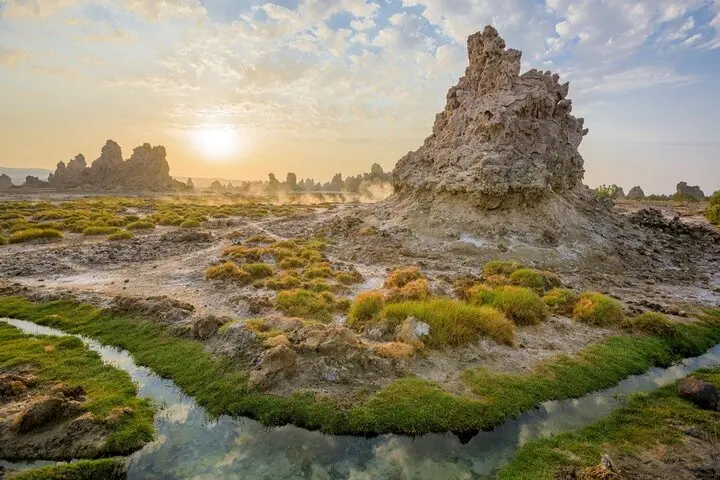
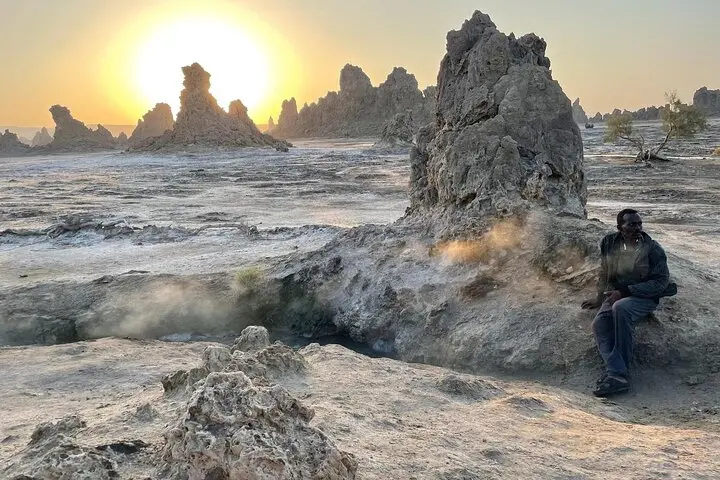
At first light the limestone chimneys at Lake Abbe throw strange shadows across the salt plain, their hollows breathing steam into the chill. Your 4x4 grinds up onto the plateau and the desert opens—raw, quiet, and quick to demand respect.
At first light the limestone chimneys at Lake Abbe throw strange shadows across the salt plain, their hollows breathing steam into the chill. Your 4x4 grinds up onto the plateau and the desert opens—raw, quiet, and quick to demand respect.
The tour threads together two of Djibouti’s most arresting landscapes: Lake Abbe’s geothermal chimneys, formed by mineral-laden springs rising through old lakebeds, and Lake Assal, a hyper-saline depression sitting roughly 153 m below sea level where salt has been harvested for centuries. Along the way you’ll pass Afar villages, camel herds, and the deep cut of the Dimbiya canyon — a reminder that this is a tectonic borderland where the Earth still moves.
Culturally the route is simple but resonant: nomadic livelihoods, historic salt trade routes, and modern stories such as the Borrel memorial near Assal. Geologically, expect black lava fields, salt crusts sharp enough to bite through shoes, and geothermal vents that steam at sunrise.
Practically, the trip is vehicle-led with short walks on uneven or crystalline salt surfaces. Early starts are essential for photography and to avoid midday heat; bring fresh water if you plan to bathe at Assal (it’s undrinkable). Closed-toe shoes protect against salt cuts, sun protection is non-negotiable, and a camera with a polarizer will make the stark contrasts sing. Guides handle logistics, permits, and campsite setup, leaving you to watch flamingos wheel and the desert wind sculpt the chimneys into ever-changing silhouettes.