THE ADVENTURE COLLECTIVE® · Independent discovery and booking for outdoor travel

A two-day High Atlas trek that moves from walnut groves to high mountain passes, ending at waterfalls and Berber village hospitality. Expect steady climbs to 2,500 m, mule-supported baggage, and nights in a family house.
A two-day High Atlas trek that moves from walnut groves to high mountain passes, ending at waterfalls and Berber village hospitality. Expect steady climbs to 2,500 m, mule-supported baggage, and nights in a family house.
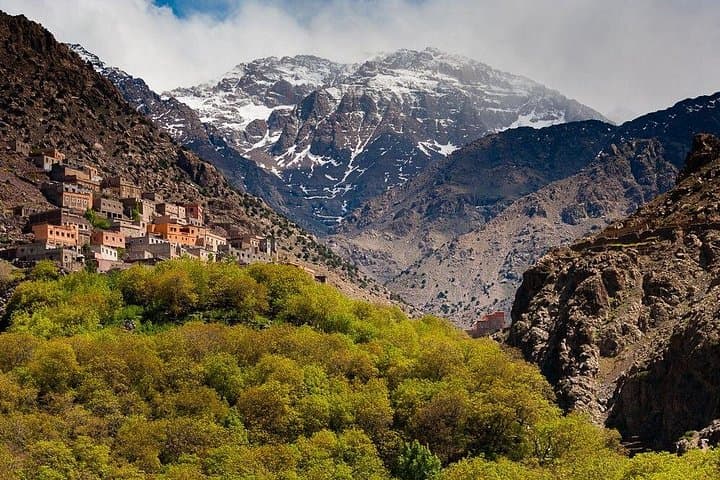
You step off the minivan with dust still clinging to your shoes and the High Atlas already lifting above you—walnut groves giving way to red slopes and juniper-clad ridges.
Verified experiences and guided adventures in the surrounding area.
Operated by Marrakech experiences · Marrakech, Marrakech-Safi
You step off the minivan with dust still clinging to your shoes and the High Atlas already lifting above you—walnut groves giving way to red slopes and juniper-clad ridges.
The first day pushes from Aguersioual (≈1,650 m) up through Mattat to the Oudite Pass (2,219 m), across a plateau, then down into the Azzadene valley to spend the night in a Berber house in Tizi Oussem (≈1,850 m). On day two you climb toward the waterfalls of Ighouliden and over Tizi n’Mzik (≈2,500 m) before descending through apple and cherry orchards into Imlil and back to Marrakech.
Geology here is raw: folded volcanic and metamorphic rock split by seasonal streams that swell and shrink with the weather, carving steep gullies and small waterfalls. Culturally, the trail threads through Amazigh (Berber) hamlets where flat-stone houses and a communal hammam remain part of daily life; local guides often point out terraces where ancestors managed scarce water and orchards.
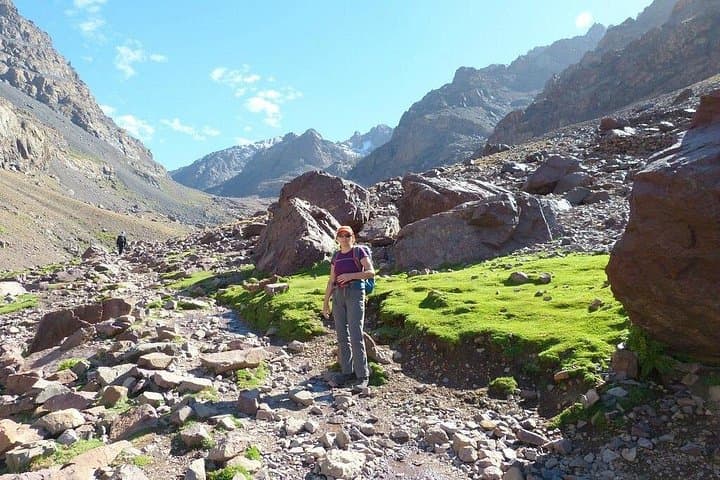
Expect mixed terrain—packed dirt tracks, scree near the passes, and rocky mule paths—with typical daily ascents of 600–800 m and roughly 10–15 km of walking per day depending on route choices. Mules carry luggage; you’ll hike with a daypack.
Practical guidance: start early to avoid mid-day sun, drink regularly (water is limited), and layer for sharp temperature swings between valley mornings and exposed passes. No technical gear or permits are required; a local guide and accommodation in a family house are included, making this a practical two-day introduction to High Atlas trekking.
No technical experience is needed, but you should be comfortable with sustained uphill hiking and basic altitude effects since passes reach ~2,500 m.
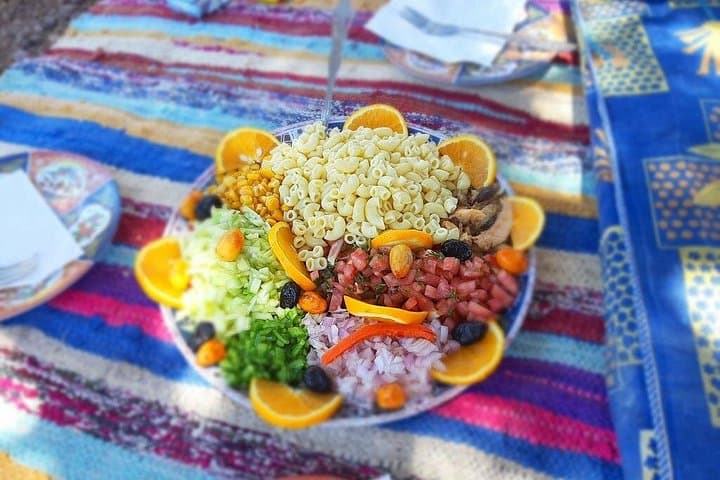
Yes—overnight is in a local Berber house with shared rooms and simple amenities; dinner is a home-cooked tajine and breakfast before the trek.
Yes; the itinerary includes a local mountain guide and mules to carry baggage and food.
It runs most of the year, but winter can bring snow at higher passes—check conditions and gear for cold weather.
Marrakech experiences operates guided outdoor trips and adventures with an emphasis on safety, stewardship, and memorable experiences.

You step off the minivan with dust still clinging to your shoes and the High Atlas already lifting above you—walnut groves giving way to red slopes and juniper-clad ridges.
You step off the minivan with dust still clinging to your shoes and the High Atlas already lifting above you—walnut groves giving way to red slopes and juniper-clad ridges.
The first day pushes from Aguersioual (≈1,650 m) up through Mattat to the Oudite Pass (2,219 m), across a plateau, then down into the Azzadene valley to spend the night in a Berber house in Tizi Oussem (≈1,850 m). On day two you climb toward the waterfalls of Ighouliden and over Tizi n’Mzik (≈2,500 m) before descending through apple and cherry orchards into Imlil and back to Marrakech.
Geology here is raw: folded volcanic and metamorphic rock split by seasonal streams that swell and shrink with the weather, carving steep gullies and small waterfalls. Culturally, the trail threads through Amazigh (Berber) hamlets where flat-stone houses and a communal hammam remain part of daily life; local guides often point out terraces where ancestors managed scarce water and orchards.
Expect mixed terrain—packed dirt tracks, scree near the passes, and rocky mule paths—with typical daily ascents of 600–800 m and roughly 10–15 km of walking per day depending on route choices. Mules carry luggage; you’ll hike with a daypack.
Practical guidance: start early to avoid mid-day sun, drink regularly (water is limited), and layer for sharp temperature swings between valley mornings and exposed passes. No technical gear or permits are required; a local guide and accommodation in a family house are included, making this a practical two-day introduction to High Atlas trekking.