THE ADVENTURE COLLECTIVE® · Independent discovery and booking for outdoor travel

A private two-day itinerary from Safaga Port that delivers Luxor’s essentials: Karnak and Luxor Temples, Hatshepsut’s terraces, the Valley of the Kings and the Colossi of Memnon, with one night in a 4-star B&B. Comfortable pacing and a local guide make this an efficient way to absorb Thebes’ archaeology.
A private two-day itinerary from Safaga Port that delivers Luxor’s essentials: Karnak and Luxor Temples, Hatshepsut’s terraces, the Valley of the Kings and the Colossi of Memnon, with one night in a 4-star B&B. Comfortable pacing and a local guide make this an efficient way to absorb Thebes’ archaeology.
You step off the ship at Safaga, the Red Sea heat still at your back, and climb into an air-conditioned vehicle that carries you westward across scrubby desert toward the Nile. As the horizon flattens and the river appears, Luxor's temple pylons rise like stone promises; the Nile seems to dare you to slow down and listen.
Verified experiences and guided adventures in the surrounding area.
Operated by TripTip Egypt · Luxor, Luxor Governorate
You step off the ship at Safaga, the Red Sea heat still at your back, and climb into an air-conditioned vehicle that carries you westward across scrubby desert toward the Nile. As the horizon flattens and the river appears, Luxor's temple pylons rise like stone promises; the Nile seems to dare you to slow down and listen.
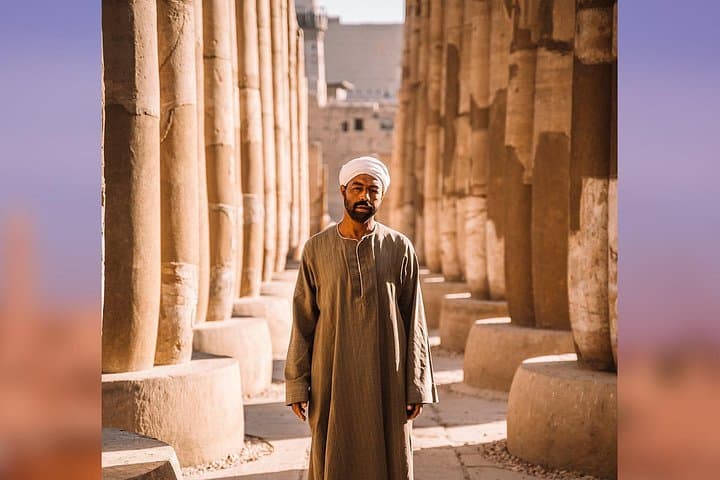
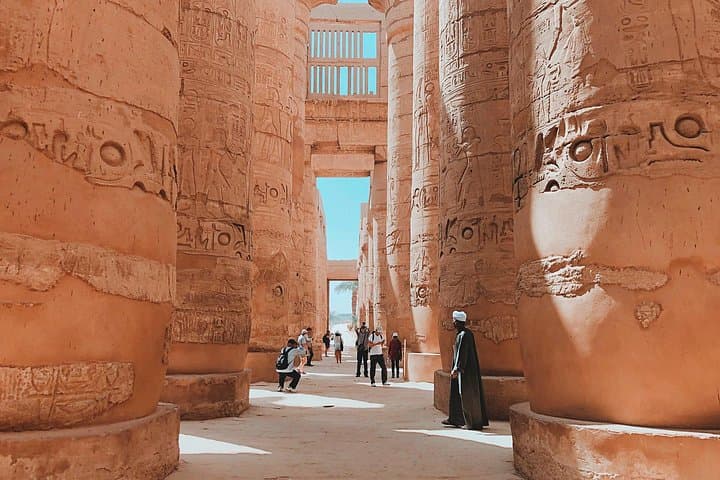
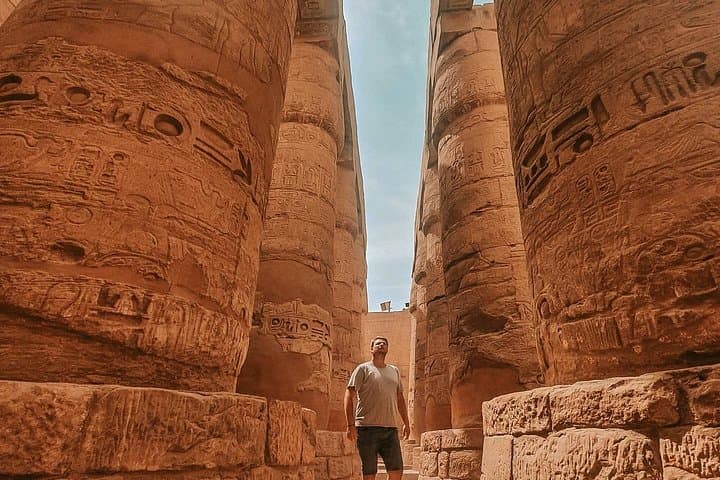
Once the political heart of ancient Thebes, Luxor concentrates millennia of pharaonic power into a few compact miles. Karnak's avenue of columns—built on baked alluvial clay and sandstone—was extended by generations of kings. The Temple of Luxor staged the Opet festival, linking ruler and god. Across the river, royal tombs are cut into the limestone bluff of the Valley of the Kings; Hatshepsut's mortuary temple climbs its terraces like a carved cliff-side stage, while the Colossi of Memnon still guard a landscape shaped by riverine sediment and wind.
Culturally, modern Luxor is a working city: boatmen, market sellers, and museum curators keep the past in daily conversation. Expect small-group commentary tailored to your interests, plus one night in a 4-star B&B on the itinerary.
Practical edge: spread your sightseeing over two days to avoid fatigue—temple floors are uneven, and many sites have steps. Bring sun protection and refillable water, plan for early starts to beat midday heat, and budget small local cash for tips and optional tomb surcharges. With a private guide and port pickup, the logistics are handled so you can focus on the sightlines, the carved reliefs, and the slow, insistent flow of the Nile that ties the whole story together.
The tour itinerary lists admissions as included for the main sites visited; your guide will confirm any optional tombs that require extra on-site tickets.
Most travelers to Egypt need a valid passport and may require a visa—check Egyptian entry requirements for your nationality before travel.
Yes; the package includes one night at a 4-star hotel on a bed-and-breakfast basis as listed in the inclusions.
Drive time is roughly 2 to 3 hours depending on traffic and stops; the tour uses private A/C transfers to make the route comfortable.
TripTip Egypt operates guided outdoor trips and adventures with an emphasis on safety, stewardship, and memorable experiences.
You step off the ship at Safaga, the Red Sea heat still at your back, and climb into an air-conditioned vehicle that carries you westward across scrubby desert toward the Nile. As the horizon flattens and the river appears, Luxor's temple pylons rise like stone promises; the Nile seems to dare you to slow down and listen.
You step off the ship at Safaga, the Red Sea heat still at your back, and climb into an air-conditioned vehicle that carries you westward across scrubby desert toward the Nile. As the horizon flattens and the river appears, Luxor's temple pylons rise like stone promises; the Nile seems to dare you to slow down and listen.
Once the political heart of ancient Thebes, Luxor concentrates millennia of pharaonic power into a few compact miles. Karnak's avenue of columns—built on baked alluvial clay and sandstone—was extended by generations of kings. The Temple of Luxor staged the Opet festival, linking ruler and god. Across the river, royal tombs are cut into the limestone bluff of the Valley of the Kings; Hatshepsut's mortuary temple climbs its terraces like a carved cliff-side stage, while the Colossi of Memnon still guard a landscape shaped by riverine sediment and wind.
Culturally, modern Luxor is a working city: boatmen, market sellers, and museum curators keep the past in daily conversation. Expect small-group commentary tailored to your interests, plus one night in a 4-star B&B on the itinerary.
Practical edge: spread your sightseeing over two days to avoid fatigue—temple floors are uneven, and many sites have steps. Bring sun protection and refillable water, plan for early starts to beat midday heat, and budget small local cash for tips and optional tomb surcharges. With a private guide and port pickup, the logistics are handled so you can focus on the sightlines, the carved reliefs, and the slow, insistent flow of the Nile that ties the whole story together.