THE ADVENTURE COLLECTIVE® · Independent discovery and booking for outdoor travel

Spend two days crossing the High Atlas to Erg Lihoudi: sunset camel rides, an overnight in a nomadic tent, and visits to Ait Benhaddou and Telouet. Practical, private, and paced for photographers and first-time desert travelers.
Spend two days crossing the High Atlas to Erg Lihoudi: sunset camel rides, an overnight in a nomadic tent, and visits to Ait Benhaddou and Telouet. Practical, private, and paced for photographers and first-time desert travelers.
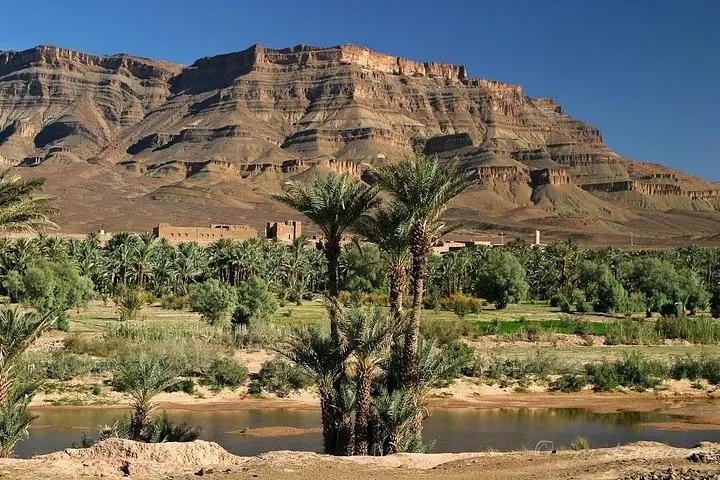
Dust rises as the 4x4 peels away from Marrakech at dawn, the High Atlas folding into the windshield like a map being smoothed flat. By midmorning the road climbs Tizi-n-Tichka (2,260 m), where wind and stone trade notes until the route drops into sun-baked canyons and the palms of the Draa Valley signal the desert’s approach.
Verified experiences and guided adventures in the surrounding area.
Operated by Caravane Du Grand Erg · Marrakech, Marrakech-Safi
Dust rises as the 4x4 peels away from Marrakech at dawn, the High Atlas folding into the windshield like a map being smoothed flat. By midmorning the road climbs Tizi-n-Tichka (2,260 m), where wind and stone trade notes until the route drops into sun-baked canyons and the palms of the Draa Valley signal the desert’s approach.
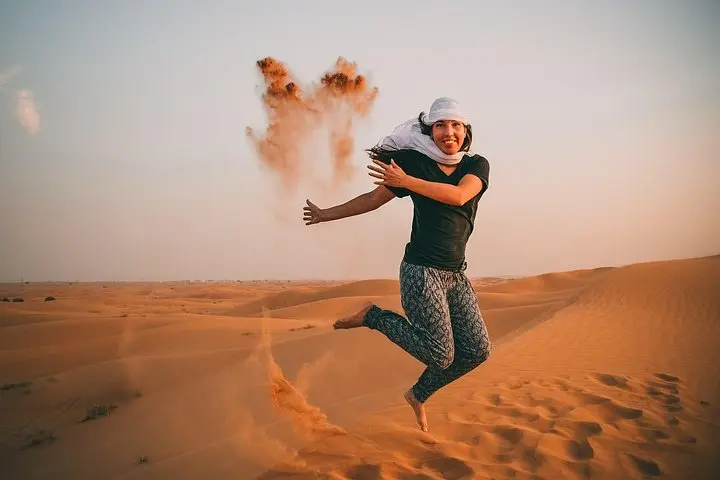
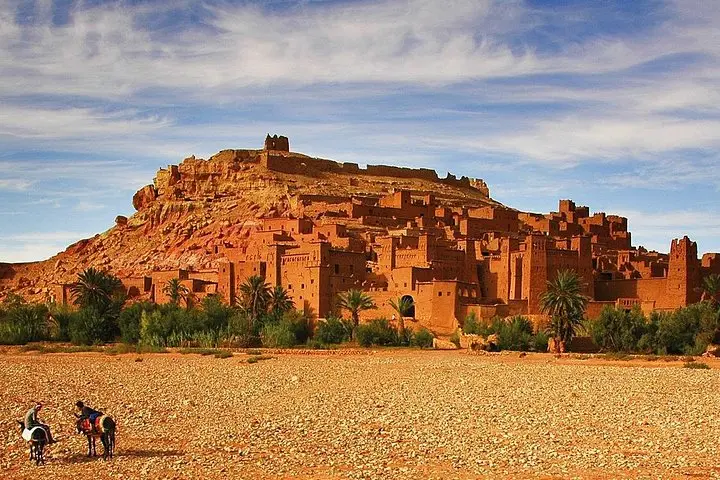
This two-day loop threads history and geology: ancient caravan routes through the Ounila Valley, Ait Benhaddou’s fortified granary of sun-dried clay, and kasbahs that once controlled trans-Saharan trade. Erg Lihoudi’s dunes are younger deposits of Saharan sand pushed north by seasonal winds; their slopes change shape overnight, daring visitors to map them by memory.
Culturally, the itinerary passes Berber villages and modern towns like Zagora and Ouarzazate—film sets and kasbahs share space with date palms and irrigation channels carved from old riverbeds.
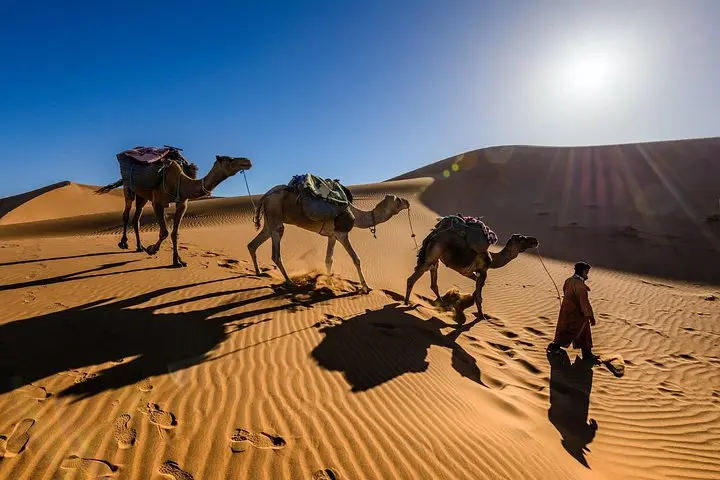
Practically, the trip balances long road sections with short walks and a guided camel trek at sunset; expect hours in a private van, one night in a traditional nomadic camp (private tent), simple camp amenities, and a sunrise climb on sand. Wear layered clothing for cold desert nights, bring a wide-brim hat and 2–3 liters of water, and plan for limited connectivity. Photography runs from the ridge at sunrise to the ochre walls of Ait Benhaddou at noon.
The route returns over the High Atlas to Marrakech by late afternoon on day two—two days of driving, walking dunes, and absorbing a desert that will have shifted slightly by the time you leave.
Tents are traditional-style with basic bedding and communal facilities; private deluxe tents may offer more comfort—confirm at booking.
Camel rides are short and slow paced; most travelers find them comfortable though mounting/unmounting requires basic mobility.
Signal is intermittent in remote stretches; camps may have limited electricity (solar or generator) for basic charging—bring a power bank.
Dinner and breakfast are included and vegetarian options are available if requested at booking—inform the operator ahead of time.
Caravane Du Grand Erg operates guided outdoor trips and adventures with an emphasis on safety, stewardship, and memorable experiences.
Dust rises as the 4x4 peels away from Marrakech at dawn, the High Atlas folding into the windshield like a map being smoothed flat. By midmorning the road climbs Tizi-n-Tichka (2,260 m), where wind and stone trade notes until the route drops into sun-baked canyons and the palms of the Draa Valley signal the desert’s approach.
Dust rises as the 4x4 peels away from Marrakech at dawn, the High Atlas folding into the windshield like a map being smoothed flat. By midmorning the road climbs Tizi-n-Tichka (2,260 m), where wind and stone trade notes until the route drops into sun-baked canyons and the palms of the Draa Valley signal the desert’s approach.
This two-day loop threads history and geology: ancient caravan routes through the Ounila Valley, Ait Benhaddou’s fortified granary of sun-dried clay, and kasbahs that once controlled trans-Saharan trade. Erg Lihoudi’s dunes are younger deposits of Saharan sand pushed north by seasonal winds; their slopes change shape overnight, daring visitors to map them by memory.
Culturally, the itinerary passes Berber villages and modern towns like Zagora and Ouarzazate—film sets and kasbahs share space with date palms and irrigation channels carved from old riverbeds.
Practically, the trip balances long road sections with short walks and a guided camel trek at sunset; expect hours in a private van, one night in a traditional nomadic camp (private tent), simple camp amenities, and a sunrise climb on sand. Wear layered clothing for cold desert nights, bring a wide-brim hat and 2–3 liters of water, and plan for limited connectivity. Photography runs from the ridge at sunrise to the ochre walls of Ait Benhaddou at noon.
The route returns over the High Atlas to Marrakech by late afternoon on day two—two days of driving, walking dunes, and absorbing a desert that will have shifted slightly by the time you leave.