
Two-Day Merzouga Desert Tour from Fes: Camel Trekking & Berber Camp at Erg Chebbi
Swap Fes’s labyrinthine medina for a two-day escape to Erg Chebbi: long drives through Atlas foothills, a late-afternoon camel trek, and an overnight in a Berber desert camp. Expect star-filled skies, communal tagine, and wind-sculpted dunes.
An Adventure In Merzouga.
Swap Fes’s labyrinthine medina for a two-day escape to Erg Chebbi: long drives through Atlas foothills, a late-afternoon camel trek, and an overnight in a Berber desert camp. Expect star-filled skies, communal tagine, and wind-sculpted dunes.
Read the full experience
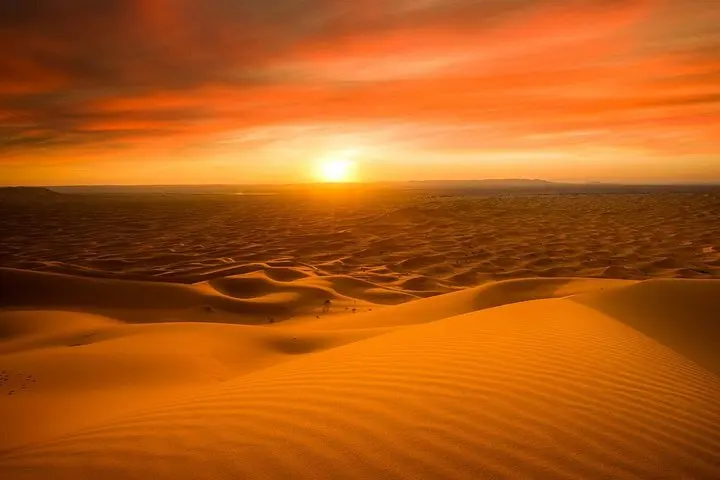
Dawn breaks on the road from Fes and the Atlas Mountains slip away into ochre plains; by late afternoon the profile of Erg Chebbi rises—long, rippling dunes that catch the light like folded metal. On this two-day route you trade medina alleys for desert silence: a day of road travel through Ziz Valley and cedar forests, an evening camel trek across sand, and a night in a traditional Berber tent beneath a sky that pushes stars close enough to touch.
Dawn breaks on the road from Fes and the Atlas Mountains slip away into ochre plains; by late afternoon the profile of Erg Chebbi rises—long, rippling dunes that catch the light like folded metal. On this two-day route you trade medina alleys for desert silence: a day of road travel through Ziz Valley and cedar forests, an evening camel trek across sand, and a night in a traditional Berber tent beneath a sky that pushes stars close enough to touch.
The landscape is recent by geological standards—wind-sculpted sand from ancient riverbeds and eroding plateaus. Culturally, the tour threads historic caravan routes and Berber hospitality; many local camps are family-run and meals center on communal tagine and mint tea. The route includes stops at Ifrane and Azrou where cedar groves host Barbary macaques, and Erfoud with its fossil-rich ground that records prehistoric seas.
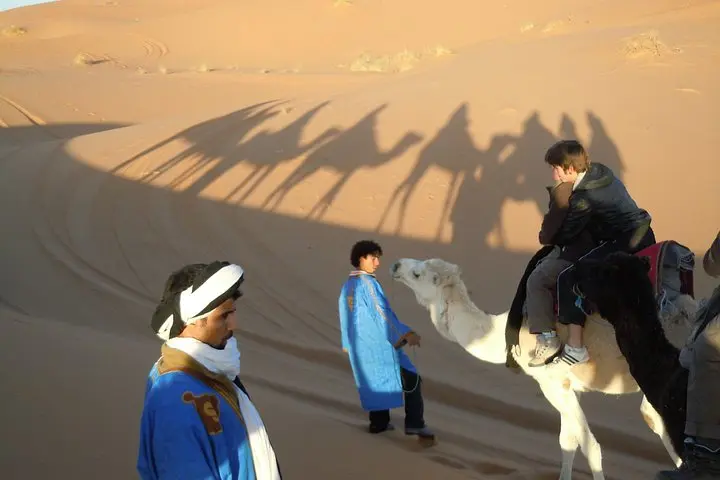
Practical notes: expect long transfers—roughly 7–8 hours total driving each direction—so plan for motion comfort and daylight photography windows. Camel treks are slow and steady; riders should be ready for a sandy seat and brief mounting assistance. Nights on the dune are cold even after hot days, so pack insulating layers and a warm sleeping bag if you prefer. Hydrate in advance—water is limited after leaving towns—and time your camel ride for late afternoon to catch sunset colors and avoid midday heat.
This trip combines cultural stops with simple desert camping and is best for travelers who want an accessible Saharan experience without technical demands.
Frequently asked questions
Most treks last 1–2 hours and move at a slow pace; riders do not need prior experience but should be able to mount with some assistance.
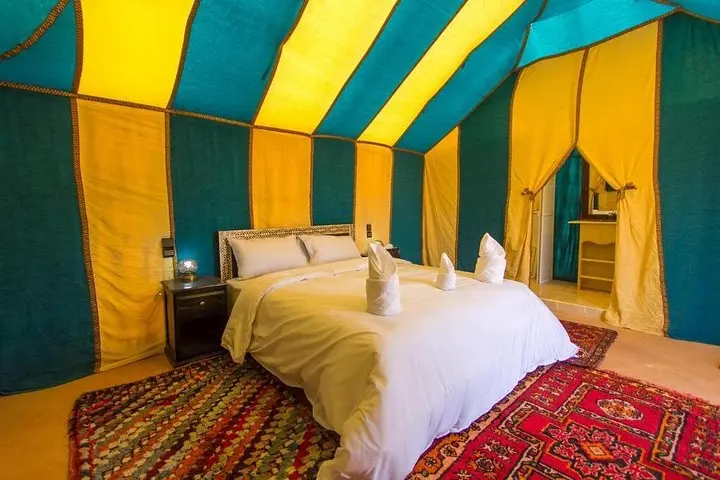
Standard family-run camps usually provide a Berber-style tent, mattresses, blankets, dinner and breakfast; facilities are basic and comfort levels vary by operator.
Children can join but supervision is recommended; camel riding and sand terrain make the trip less suitable for travelers with serious mobility issues.
Carry cash for small purchases, tips, and local services—ATMs are limited in desert towns and not all vendors accept cards.
About This Experience
In Morocco Holidays operates guided outdoor trips and adventures with an emphasis on safety, stewardship, and memorable experiences.
Adventure tips
Recommended gear
- Sun hat and sunglasses: Wide sun protection is critical on exposed dunes and during long road transfers.
- Warm midlayer and sleeping bag: Nights are cold on the dunes—bring an insulating layer or rated sleeping bag.
- Sturdy closed-toe shoes: Useful for short walks in rocky areas, towns, and getting on/off camels.
- Headlamp or flashlight: Hands-free light is useful at night in a camp where power can be limited.
Photos of the experience
Related adventures & guides
Read the full experience
Dawn breaks on the road from Fes and the Atlas Mountains slip away into ochre plains; by late afternoon the profile of Erg Chebbi rises—long, rippling dunes that catch the light like folded metal. On this two-day route you trade medina alleys for desert silence: a day of road travel through Ziz Valley and cedar forests, an evening camel trek across sand, and a night in a traditional Berber tent beneath a sky that pushes stars close enough to touch.
Dawn breaks on the road from Fes and the Atlas Mountains slip away into ochre plains; by late afternoon the profile of Erg Chebbi rises—long, rippling dunes that catch the light like folded metal. On this two-day route you trade medina alleys for desert silence: a day of road travel through Ziz Valley and cedar forests, an evening camel trek across sand, and a night in a traditional Berber tent beneath a sky that pushes stars close enough to touch.
The landscape is recent by geological standards—wind-sculpted sand from ancient riverbeds and eroding plateaus. Culturally, the tour threads historic caravan routes and Berber hospitality; many local camps are family-run and meals center on communal tagine and mint tea. The route includes stops at Ifrane and Azrou where cedar groves host Barbary macaques, and Erfoud with its fossil-rich ground that records prehistoric seas.
Practical notes: expect long transfers—roughly 7–8 hours total driving each direction—so plan for motion comfort and daylight photography windows. Camel treks are slow and steady; riders should be ready for a sandy seat and brief mounting assistance. Nights on the dune are cold even after hot days, so pack insulating layers and a warm sleeping bag if you prefer. Hydrate in advance—water is limited after leaving towns—and time your camel ride for late afternoon to catch sunset colors and avoid midday heat.
This trip combines cultural stops with simple desert camping and is best for travelers who want an accessible Saharan experience without technical demands.
Make a day of it nearby.
Verified experiences and guided adventures in the surrounding area.