THE ADVENTURE COLLECTIVE® · Independent discovery and booking for outdoor travel

Highland ridges, community lodges and Gelada baboons: this two-day eco-trek from Lalibela covers 40 km at 2,630–3,600 m with authentic village stays. Read on for what to expect and how to prepare.
Highland ridges, community lodges and Gelada baboons: this two-day eco-trek from Lalibela covers 40 km at 2,630–3,600 m with authentic village stays. Read on for what to expect and how to prepare.
A pale dawn breaks over Lalibela and you climb away from town into highland air that tastes like cold tea and stone. The first morning’s path loses the town’s dust and gains afro-alpine grasses; by midmorning the world opens to ridgelines and a patchwork of fields tended by villagers who move like clockwork around stone houses. The trek follows narrow tracks, passes Hagenia abyssinica groves and occasional Gelada troops that regard you with curious stares.
Verified experiences and guided adventures in the surrounding area.
Operated by The Local Side of Ethiopia · Lalibela, Amhara Region
A pale dawn breaks over Lalibela and you climb away from town into highland air that tastes like cold tea and stone. The first morning’s path loses the town’s dust and gains afro-alpine grasses; by midmorning the world opens to ridgelines and a patchwork of fields tended by villagers who move like clockwork around stone houses. The trek follows narrow tracks, passes Hagenia abyssinica groves and occasional Gelada troops that regard you with curious stares.
Geology here is highland plateau carved by erosion and volcanic flows; the Abune Yosef massif rises between 2,630 and 3,600 meters, offering broad panoramas back toward Lalibela’s rock-hewn churches. Culturally the route threads through Orthodox Christian villages where coffee, injera and communal meals punctuate the day. This is community-based tourism — lodges are family-run, meals are shared, and the itinerary is paced to honor local rhythms.
Practically, expect about 40 km of walking over two days (roughly 16–17 hours moving time), with sustained climbs up to 6–7% grade and a high point near 3,600 m. Trails vary from packed soil to rocky farm tracks; donkeys often carry packs. Acclimatize before you go, carry layered clothing for cold mornings and strong sun, and plan for limited services outside Lalibela. Guides handle logistics, including a community lodge overnight on Day 1 and transport back to a hotel in Lalibela on Day 2. The reward is direct contact with highland life, sweeping alpine views, and close encounters with a unique ecosystem — all delivered at a steady, accessible pace.
The route is graded easy but altitude makes it more demanding; expect slower pace, and plan for rest stops and hydration.
Overnight is in a community-run lodge/house in Ade Medhanealem village with basic private rooms and shared facilities.
Yes — Gelada baboons are commonly seen along the ridge and you may spot highland birds and small mammals in afro-alpine habitat.
No formal permit is typically required; guides and a porter/donkey handle logistics, but bring your own footwear and personal kit.
The Local Side of Ethiopia operates guided outdoor trips and adventures with an emphasis on safety, stewardship, and memorable experiences.
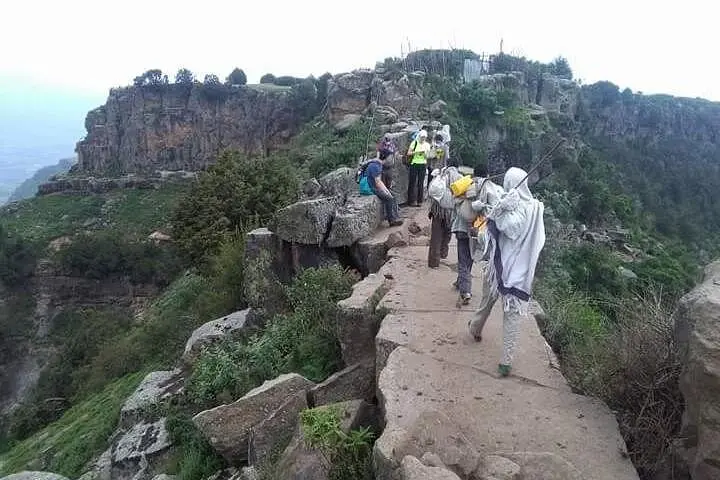

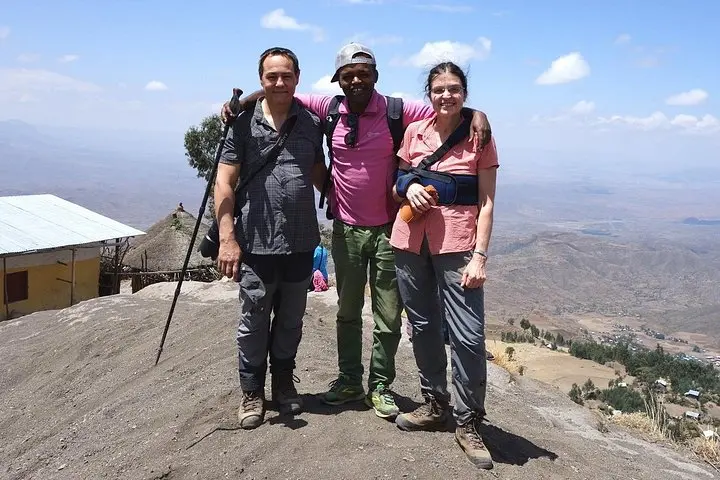
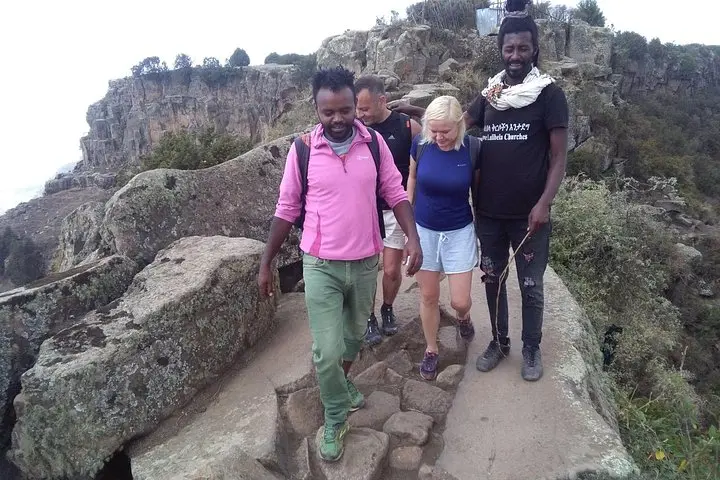
A pale dawn breaks over Lalibela and you climb away from town into highland air that tastes like cold tea and stone. The first morning’s path loses the town’s dust and gains afro-alpine grasses; by midmorning the world opens to ridgelines and a patchwork of fields tended by villagers who move like clockwork around stone houses. The trek follows narrow tracks, passes Hagenia abyssinica groves and occasional Gelada troops that regard you with curious stares.
A pale dawn breaks over Lalibela and you climb away from town into highland air that tastes like cold tea and stone. The first morning’s path loses the town’s dust and gains afro-alpine grasses; by midmorning the world opens to ridgelines and a patchwork of fields tended by villagers who move like clockwork around stone houses. The trek follows narrow tracks, passes Hagenia abyssinica groves and occasional Gelada troops that regard you with curious stares.
Geology here is highland plateau carved by erosion and volcanic flows; the Abune Yosef massif rises between 2,630 and 3,600 meters, offering broad panoramas back toward Lalibela’s rock-hewn churches. Culturally the route threads through Orthodox Christian villages where coffee, injera and communal meals punctuate the day. This is community-based tourism — lodges are family-run, meals are shared, and the itinerary is paced to honor local rhythms.
Practically, expect about 40 km of walking over two days (roughly 16–17 hours moving time), with sustained climbs up to 6–7% grade and a high point near 3,600 m. Trails vary from packed soil to rocky farm tracks; donkeys often carry packs. Acclimatize before you go, carry layered clothing for cold mornings and strong sun, and plan for limited services outside Lalibela. Guides handle logistics, including a community lodge overnight on Day 1 and transport back to a hotel in Lalibela on Day 2. The reward is direct contact with highland life, sweeping alpine views, and close encounters with a unique ecosystem — all delivered at a steady, accessible pace.