THE ADVENTURE COLLECTIVE® · Independent discovery and booking for outdoor travel

Turn a long transfer into an active mini‑expedition: private taxi from Phnom Penh to Siem Reap with roadside stops and a guided Angkor temple day, including sunrise. Comfortable transport, flexible itinerary, and deep history en route.
Turn a long transfer into an active mini‑expedition: private taxi from Phnom Penh to Siem Reap with roadside stops and a guided Angkor temple day, including sunrise. Comfortable transport, flexible itinerary, and deep history en route.
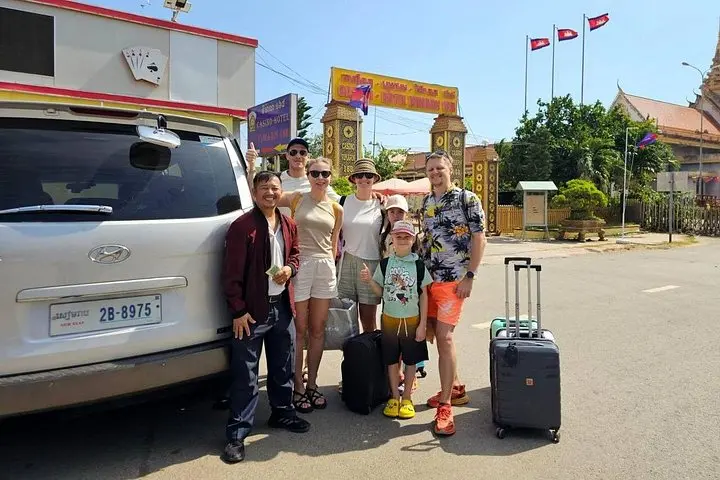
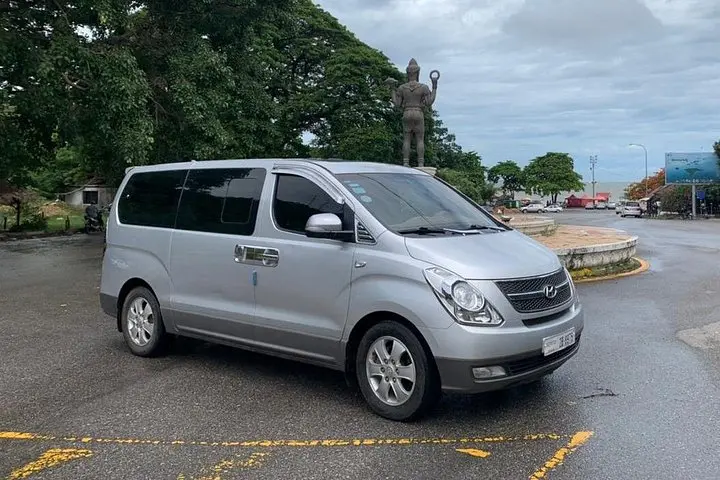
Before dawn the road feels alive — an air-conditioned taxi hums through rice paddies, headlights cutting swaths across low mist as the driver threads toward Siem Reap. Stops are deliberate: a quiet countryside shrine, a roadside market selling fried insects, and the stone ribs of a 12th‑century bridge that still carries the weight of history.
Verified experiences and guided adventures in the surrounding area.
Operated by Private Taxi Cambodia E C T · Siem Reap, Siem Reap Province
Before dawn the road feels alive — an air-conditioned taxi hums through rice paddies, headlights cutting swaths across low mist as the driver threads toward Siem Reap. Stops are deliberate: a quiet countryside shrine, a roadside market selling fried insects, and the stone ribs of a 12th‑century bridge that still carries the weight of history.
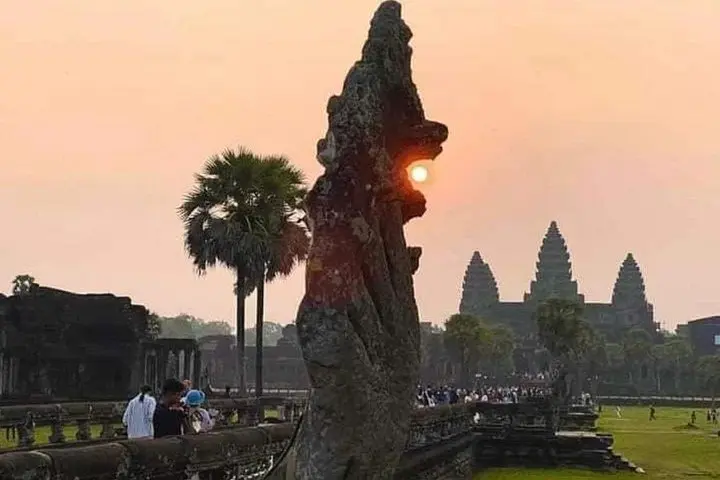
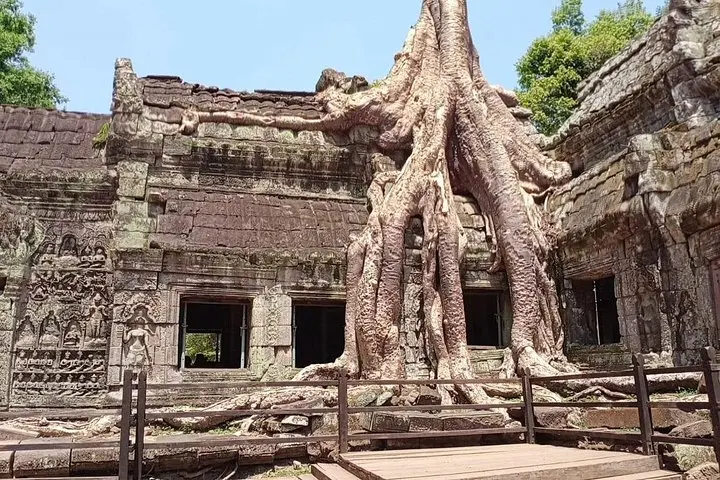
The route follows National Road 6 across central Cambodia, tracing the landscape of the Khmer Empire. Angkor Wat and Angkor Thom speak to a civilization that moved and cut sandstone blocks by the hundreds; Bayon’s smiling faces and Ta Prohm’s strangled trees reveal both imperial ambition and the region’s tropical reclamation. Local culture along the way is direct and tactile — boat life on the Tonlé Sap, village pagodas, and market stalls that supply the cities.
Practically, the experience is a blend of long-haul comfort and active walking. Expect ~315 km and roughly 5–6 hours of driving each way, with multiple short stops. Day two begins before sunrise for the temple circuit; you’ll spend several hours on uneven paths and stone steps. Bring a temple pass (sold at the Angkor ticket center), comfortable shoes, sun protection and modest clothing for religious sites. Hydrate on the road; the vehicle carries water and luggage space is plentiful. The itinerary is flexible — tell your driver if you want more time at a ruin or to skip a stop.
This two-day private transfer converts transit time into meaningful exploration: a practical choice for travelers who value history and prefer to arrive at Angkor ready to walk, not just to have arrived.
The drive is approximately 315 km and typically takes 5–6 hours each way depending on traffic and stops.
You can buy the pass at the Angkor ticket center on arrival; if you want to avoid queues on sunrise days, arrive early to purchase it before the temple entrance opens.
Yes — the private taxi and guide are flexible; tell your driver if you prefer fewer stops or more time at a specific temple or village.
There are roadside restrooms and small restaurants at planned stops like the Spider Market and lunch break; bring cash and expect basic facilities.
Private Taxi Cambodia E C T operates guided outdoor trips and adventures with an emphasis on safety, stewardship, and memorable experiences.
Before dawn the road feels alive — an air-conditioned taxi hums through rice paddies, headlights cutting swaths across low mist as the driver threads toward Siem Reap. Stops are deliberate: a quiet countryside shrine, a roadside market selling fried insects, and the stone ribs of a 12th‑century bridge that still carries the weight of history.
Before dawn the road feels alive — an air-conditioned taxi hums through rice paddies, headlights cutting swaths across low mist as the driver threads toward Siem Reap. Stops are deliberate: a quiet countryside shrine, a roadside market selling fried insects, and the stone ribs of a 12th‑century bridge that still carries the weight of history.
The route follows National Road 6 across central Cambodia, tracing the landscape of the Khmer Empire. Angkor Wat and Angkor Thom speak to a civilization that moved and cut sandstone blocks by the hundreds; Bayon’s smiling faces and Ta Prohm’s strangled trees reveal both imperial ambition and the region’s tropical reclamation. Local culture along the way is direct and tactile — boat life on the Tonlé Sap, village pagodas, and market stalls that supply the cities.
Practically, the experience is a blend of long-haul comfort and active walking. Expect ~315 km and roughly 5–6 hours of driving each way, with multiple short stops. Day two begins before sunrise for the temple circuit; you’ll spend several hours on uneven paths and stone steps. Bring a temple pass (sold at the Angkor ticket center), comfortable shoes, sun protection and modest clothing for religious sites. Hydrate on the road; the vehicle carries water and luggage space is plentiful. The itinerary is flexible — tell your driver if you want more time at a ruin or to skip a stop.
This two-day private transfer converts transit time into meaningful exploration: a practical choice for travelers who value history and prefer to arrive at Angkor ready to walk, not just to have arrived.