THE ADVENTURE COLLECTIVE® · Independent discovery and booking for outdoor travel

In two days this private tour pairs panoramic views of the Brazilian side of Iguazu Falls with a guided look at the massive Itaipu hydroelectric plant and the cultural highlights of Foz do Iguaçu. Expect stair-stepped viewpoints, humid spray, and easy logistics handled by a private guide.
In two days this private tour pairs panoramic views of the Brazilian side of Iguazu Falls with a guided look at the massive Itaipu hydroelectric plant and the cultural highlights of Foz do Iguaçu. Expect stair-stepped viewpoints, humid spray, and easy logistics handled by a private guide.
You step off the air-conditioned van into a humid sweep of spray and basalt—mist from the Iguaçu River daring you to get closer. On the Brazilian side the footbridges thread a 2 km circuit of stairs and viewpoints that frame nearly 80% of the falls, each cataract throwing white sheets of water into the gorge below. The roar is constant; the air tastes of wet stone and green growth.
Verified experiences and guided adventures in the surrounding area.
Operated by Neumann Operadora de Receptivo · Foz do Iguaçu, Paraná
You step off the air-conditioned van into a humid sweep of spray and basalt—mist from the Iguaçu River daring you to get closer. On the Brazilian side the footbridges thread a 2 km circuit of stairs and viewpoints that frame nearly 80% of the falls, each cataract throwing white sheets of water into the gorge below. The roar is constant; the air tastes of wet stone and green growth.
These falls sit where the Paraná Plateau’s volcanic basalt fractures created a dramatic edge, carving channels that became one of the world’s largest waterfall systems. The region’s human story shifts quickly from indigenous Guarani paths to 20th-century industrial ambition: Itaipu Binacional, the colossal hydroelectric complex built in the 1970s–80s, reshaped the river and the economies of two nations.
Day two trades spray for scale—guided panoramic stops at Itaipu show dam walls, spillways and the diverted riverbed, while Foz do Iguaçu’s cultural stops (mosque, Buddhist temple, cathedral) reveal a border city of mixed faiths and immigrant communities.
Practical guidance: expect stairs, packed walkways and sections that get wet—good trail shoes, a lightweight rain shell and a refillable water bottle make the days easier. Start the falls circuit in the morning for softer light and fewer crowds; reserve time for border-view vistas at Marco das Três Fronteiras near sunset. Bring local currency for small vendors, but most organized tickets are included with a private guide handling logistics. Respect park rules, keep distance from coatis, and follow your guide’s safety briefings for the clearest, safest view of one of South America’s great wild places.
The tour lists Brazilian Side Falls and Itaipu panoramic tickets among the inclusions, but confirm at booking which specific admissions are covered for your date.
Yes—private transportation and pickup from your accommodation are included; your pickup point is requested at booking.
Infants and small children are accommodated and the tour notes stroller accessibility, though expect stairs on the falls circuit.
Full refund if you cancel at least 24 hours before the scheduled departure; trips may be canceled for bad weather according to the provider’s policy.
Neumann Operadora de Receptivo operates guided outdoor trips and adventures with an emphasis on safety, stewardship, and memorable experiences.
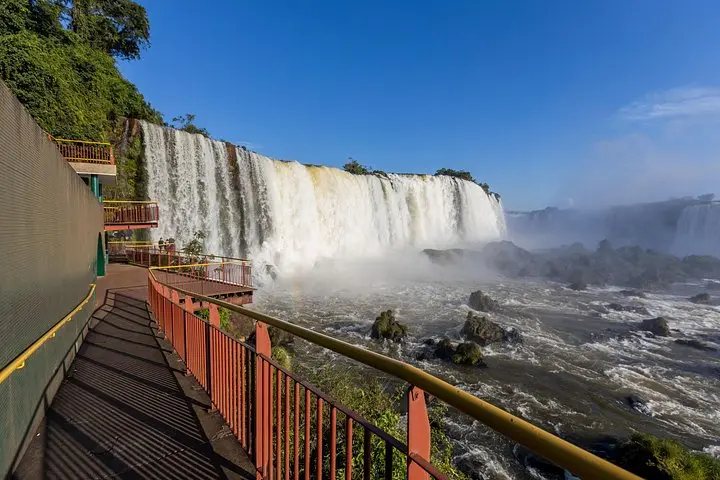
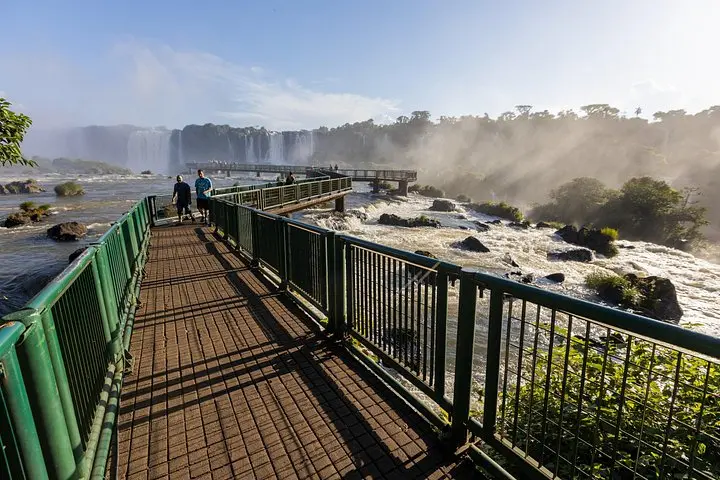

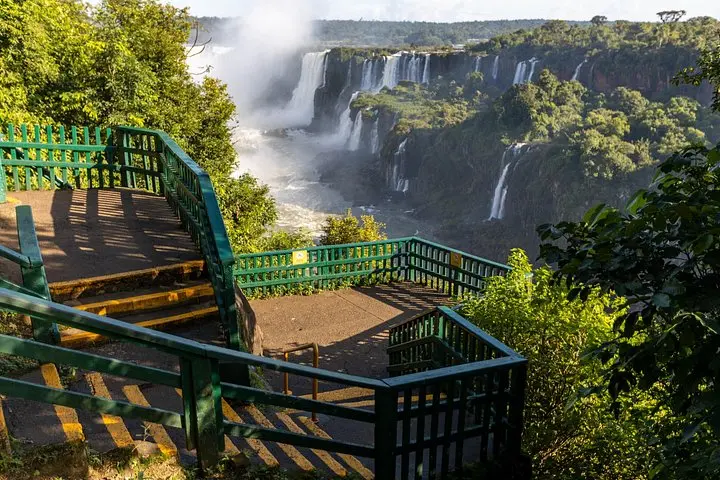
You step off the air-conditioned van into a humid sweep of spray and basalt—mist from the Iguaçu River daring you to get closer. On the Brazilian side the footbridges thread a 2 km circuit of stairs and viewpoints that frame nearly 80% of the falls, each cataract throwing white sheets of water into the gorge below. The roar is constant; the air tastes of wet stone and green growth.
You step off the air-conditioned van into a humid sweep of spray and basalt—mist from the Iguaçu River daring you to get closer. On the Brazilian side the footbridges thread a 2 km circuit of stairs and viewpoints that frame nearly 80% of the falls, each cataract throwing white sheets of water into the gorge below. The roar is constant; the air tastes of wet stone and green growth.
These falls sit where the Paraná Plateau’s volcanic basalt fractures created a dramatic edge, carving channels that became one of the world’s largest waterfall systems. The region’s human story shifts quickly from indigenous Guarani paths to 20th-century industrial ambition: Itaipu Binacional, the colossal hydroelectric complex built in the 1970s–80s, reshaped the river and the economies of two nations.
Day two trades spray for scale—guided panoramic stops at Itaipu show dam walls, spillways and the diverted riverbed, while Foz do Iguaçu’s cultural stops (mosque, Buddhist temple, cathedral) reveal a border city of mixed faiths and immigrant communities.
Practical guidance: expect stairs, packed walkways and sections that get wet—good trail shoes, a lightweight rain shell and a refillable water bottle make the days easier. Start the falls circuit in the morning for softer light and fewer crowds; reserve time for border-view vistas at Marco das Três Fronteiras near sunset. Bring local currency for small vendors, but most organized tickets are included with a private guide handling logistics. Respect park rules, keep distance from coatis, and follow your guide’s safety briefings for the clearest, safest view of one of South America’s great wild places.