THE ADVENTURE COLLECTIVE® · Independent discovery and booking for outdoor travel

Witness Angkor Wat at sunrise and trace Khmer stonework from the great temples of Angkor Thom to the pink sandstone detail of Banteay Srei. This two-day private tour balances iconic views with quieter temple corners away from the main crowds.
Witness Angkor Wat at sunrise and trace Khmer stonework from the great temples of Angkor Thom to the pink sandstone detail of Banteay Srei. This two-day private tour balances iconic views with quieter temple corners away from the main crowds.
The hour before dawn at Angkor Wat rearranges the senses: cool air, the silhouette of five towers rising from mirrored water, and a band of photographers waiting as the sky shifts. You’ll stand on the temple causeway as the first light sharpens bas-reliefs and the moat’s glass dares the reflection to keep up.
Verified experiences and guided adventures in the surrounding area.
Operated by Angkor Wat Travel Tour · Siem Reap, Siem Reap Province
The hour before dawn at Angkor Wat rearranges the senses: cool air, the silhouette of five towers rising from mirrored water, and a band of photographers waiting as the sky shifts. You’ll stand on the temple causeway as the first light sharpens bas-reliefs and the moat’s glass dares the reflection to keep up.
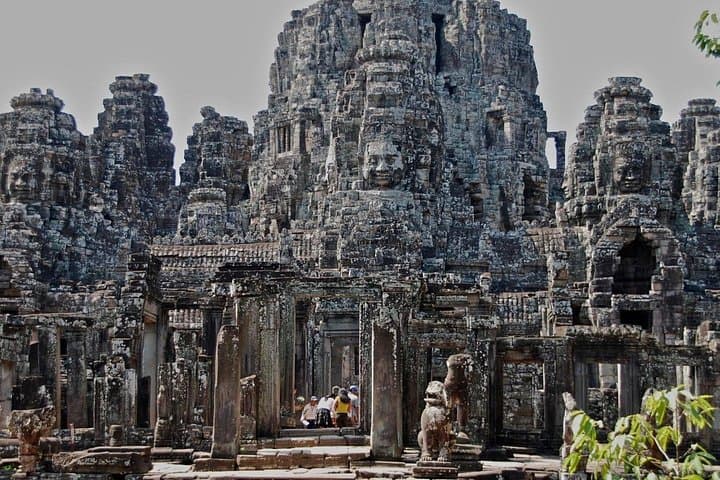
This private two-day itinerary pairs the monumental core of Angkor—Angkor Wat, Angkor Thom, Bayon and Ta Prohm—with the finer-grained artistry of Banteay Srei and quieter island temples like Neak Pean. Angkor’s sandstone was quarried and sculpted during the Khmer Empire (9th–13th centuries); later palaces and libraries layered on Jayavarman VII’s 12th-century vision, while roots and jungle slowly reclaimed corners of the site. The geology—soft sandstone over laterite—explains why some carvings remain crisp while other blocks flake under monsoon cycles.
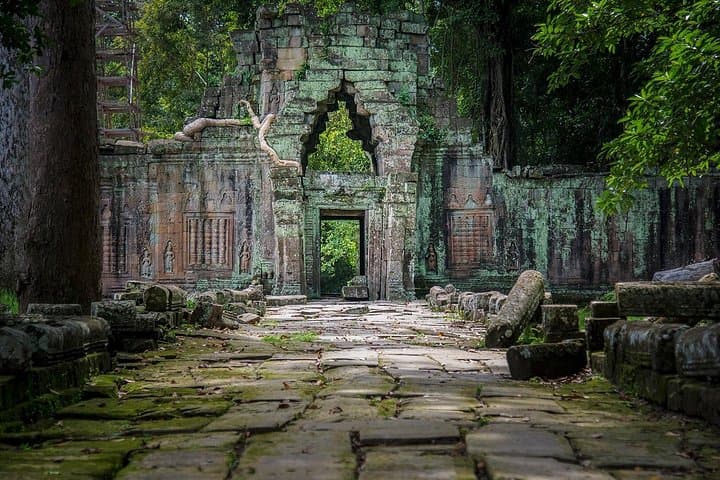
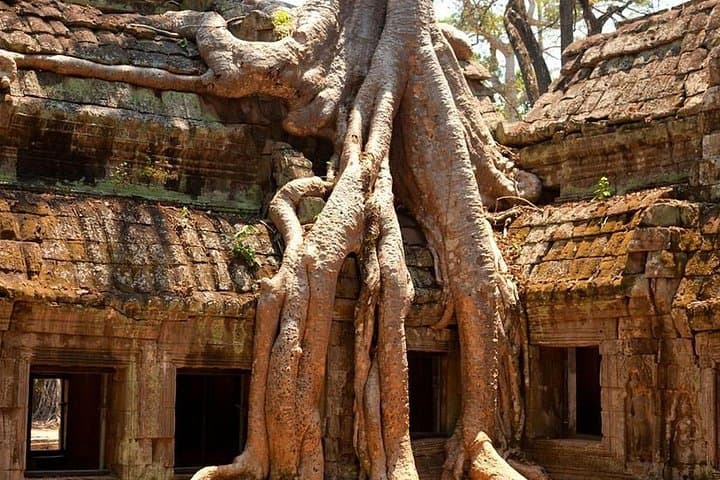
Expect long walks on uneven stone, stairs with variable tread depth, and shaded gallery corridors where carvings keep secrets. Guides will move you to avoid crowds: Phnom Bakheng offers sunrise views, Ta Prohm presents tree roots that appear to be holding both ruin and story, and Banteay Srei rewards those willing to drive 35–40 km northeast for pink-hued sandstone detail.
Practical edge: bring water, sun protection and low-profile shoes with grip; plan early starts to beat heat and crowds; respect conservation signage—many carvings are fragile. With basic mobility and moderate stamina you can cover the main highlights in two days and leave with a clearer sense of how history, climate and people continue to shape Angkor’s stone and silence.
No; entrance fees for the Angkor Archaeological Park are not included—purchase a 1-, 3- or 7-day pass at the official ticket center before the tour.
Yes—this is a private tour so guides can shorten walks, prioritize ground-level galleries and limit steep climbs when requested at booking.
Your guide times visits for early starts, midday quieter sites, and routes through lesser-used temples like Banteay Kdei and Neak Pean to minimize peak crowds.
Cold towels and bottled water are listed as inclusions; meals are typically not included unless specified—confirm with the operator at booking.
Angkor Wat Travel Tour operates guided outdoor trips and adventures with an emphasis on safety, stewardship, and memorable experiences.
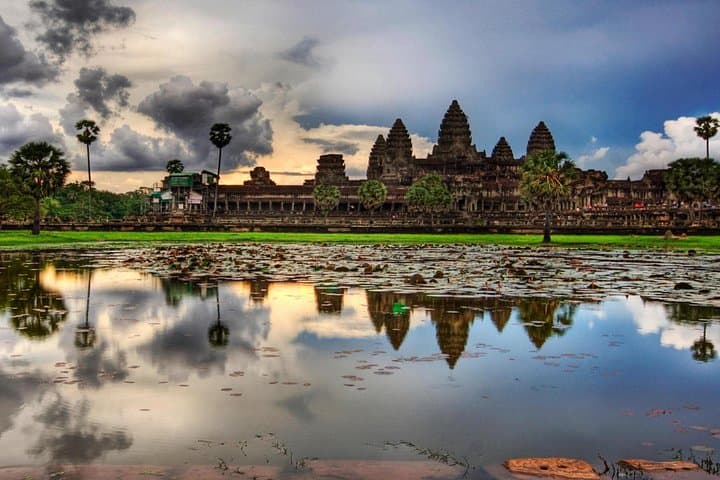
The hour before dawn at Angkor Wat rearranges the senses: cool air, the silhouette of five towers rising from mirrored water, and a band of photographers waiting as the sky shifts. You’ll stand on the temple causeway as the first light sharpens bas-reliefs and the moat’s glass dares the reflection to keep up.
The hour before dawn at Angkor Wat rearranges the senses: cool air, the silhouette of five towers rising from mirrored water, and a band of photographers waiting as the sky shifts. You’ll stand on the temple causeway as the first light sharpens bas-reliefs and the moat’s glass dares the reflection to keep up.
This private two-day itinerary pairs the monumental core of Angkor—Angkor Wat, Angkor Thom, Bayon and Ta Prohm—with the finer-grained artistry of Banteay Srei and quieter island temples like Neak Pean. Angkor’s sandstone was quarried and sculpted during the Khmer Empire (9th–13th centuries); later palaces and libraries layered on Jayavarman VII’s 12th-century vision, while roots and jungle slowly reclaimed corners of the site. The geology—soft sandstone over laterite—explains why some carvings remain crisp while other blocks flake under monsoon cycles.
Expect long walks on uneven stone, stairs with variable tread depth, and shaded gallery corridors where carvings keep secrets. Guides will move you to avoid crowds: Phnom Bakheng offers sunrise views, Ta Prohm presents tree roots that appear to be holding both ruin and story, and Banteay Srei rewards those willing to drive 35–40 km northeast for pink-hued sandstone detail.
Practical edge: bring water, sun protection and low-profile shoes with grip; plan early starts to beat heat and crowds; respect conservation signage—many carvings are fragile. With basic mobility and moderate stamina you can cover the main highlights in two days and leave with a clearer sense of how history, climate and people continue to shape Angkor’s stone and silence.