THE ADVENTURE COLLECTIVE® · Independent discovery and booking for outdoor travel

Two packed days travel from Cairo to the Giza Plateau and Alexandria, combining the Great Pyramid and Sphinx with Roman-era catacombs, the Library precinct, and Qaitbay Citadel. Expect long walking segments on uneven stone, full-day transfers, and expert guides who stitch together layers of Egyptian history.
Two packed days travel from Cairo to the Giza Plateau and Alexandria, combining the Great Pyramid and Sphinx with Roman-era catacombs, the Library precinct, and Qaitbay Citadel. Expect long walking segments on uneven stone, full-day transfers, and expert guides who stitch together layers of Egyptian history.
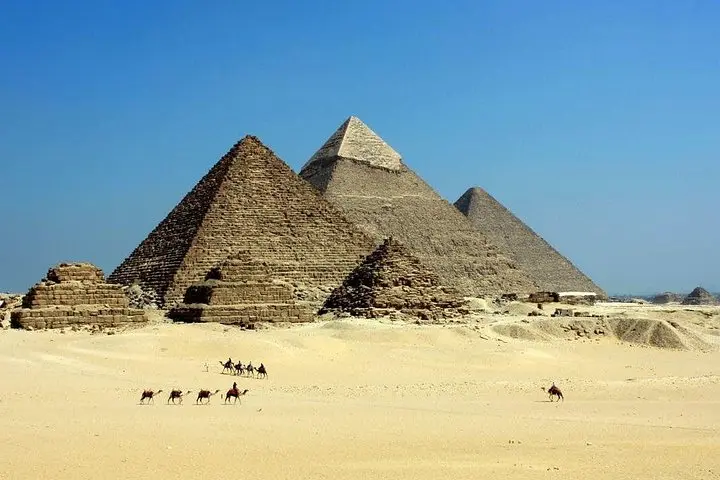
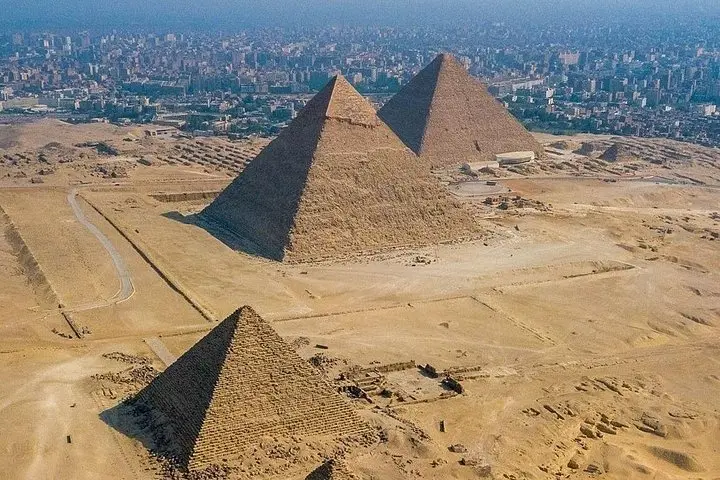
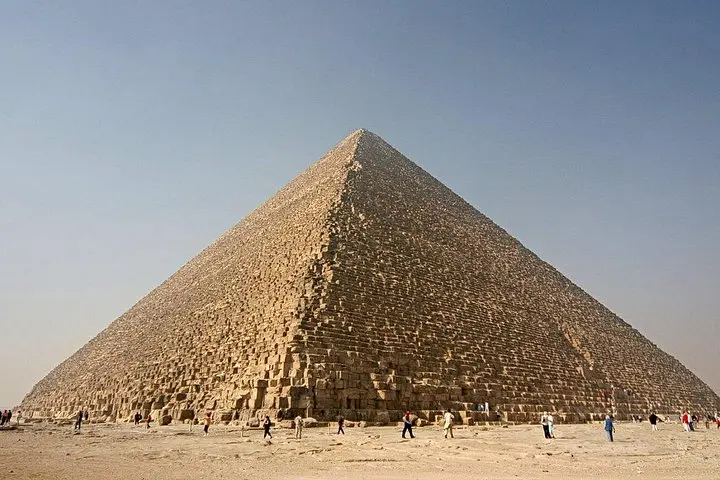
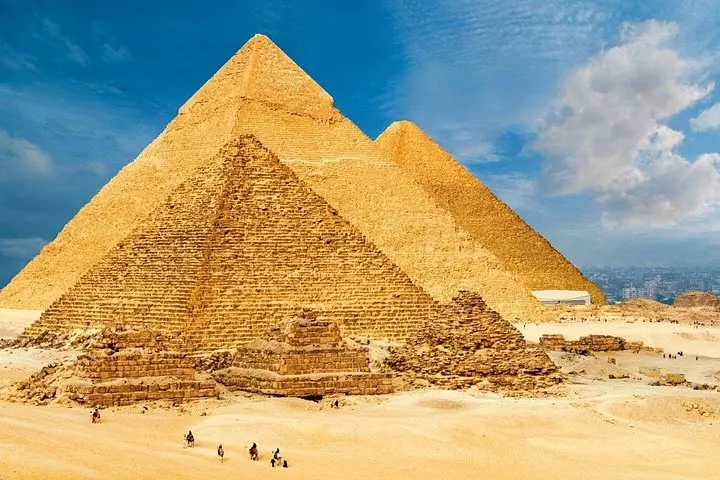
You step out of an air-conditioned van into the baking light that hits the edge of the Western Desert; the Great Pyramid rises, geometric and patient, its stones holding four and a half millennia of weather and human hands.
Verified experiences and guided adventures in the surrounding area.
Operated by Emo Tours Swiss · Cairo, Giza
You step out of an air-conditioned van into the baking light that hits the edge of the Western Desert; the Great Pyramid rises, geometric and patient, its stones holding four and a half millennia of weather and human hands.
On day one the Giza plateau demands measured footsteps — sand giving underfoot, camels waiting, the Sphinx watching the approach — while guides thread history through monuments: Fourth Dynasty workmanship, workers’ quarters, and the scale that rewrote what a civilization could build. On day two the Mediterranean air changes the script. Alexandria’s harbor draws gulls and history together: the carved rock of the Kom El Shoqafa catacombs, the rebuilt memory of the Library’s learning legacy, and the 15th-century Citadel of Qaitbay anchoring the coastline.
Geology here is blunt: wind-polished limestone and imported blocks creating durable geometry. Culturally, the tour collapses epochs — Pharaonic tomb design, Hellenistic scholarship, and later Islamic architecture — into two days of concentrated context. Local guides add texture: where to photograph light on the Sphinx, how tides shape the harbor, and why the Bibliotheca Alexandrina marks continuity rather than simple restoration.
Practical guidance: expect uneven stone surfaces, stairs inside catacombs, and full days with hotel pickup and lunch included. Bring sun protection, comfortable walking shoes with grip, and a light daypack for water and your camera. Aim for early departures to avoid peak sun; keep valuables close in busy market areas. The route is low-technical but high-on-sensory: human history daring you to keep pace.
Entry fees are included as noted in the tour inclusions; your guide will handle ticketing for paid sites mentioned in the itinerary.
The modern library is generally open, but the historic Library area or related sites can have closures; note that the itinerary mentions the Alexandria Library exterior photos only on Fridays.
Pickup is provided from hotels in Cairo or Giza as specified at booking — confirm your pickup point in advance with the operator.
The tour notes it is not recommended for pregnant travelers or those with significant spinal or cardiovascular issues due to long days and some uneven terrain.
Emo Tours Swiss operates guided outdoor trips and adventures with an emphasis on safety, stewardship, and memorable experiences.
You step out of an air-conditioned van into the baking light that hits the edge of the Western Desert; the Great Pyramid rises, geometric and patient, its stones holding four and a half millennia of weather and human hands.
You step out of an air-conditioned van into the baking light that hits the edge of the Western Desert; the Great Pyramid rises, geometric and patient, its stones holding four and a half millennia of weather and human hands.
On day one the Giza plateau demands measured footsteps — sand giving underfoot, camels waiting, the Sphinx watching the approach — while guides thread history through monuments: Fourth Dynasty workmanship, workers’ quarters, and the scale that rewrote what a civilization could build. On day two the Mediterranean air changes the script. Alexandria’s harbor draws gulls and history together: the carved rock of the Kom El Shoqafa catacombs, the rebuilt memory of the Library’s learning legacy, and the 15th-century Citadel of Qaitbay anchoring the coastline.
Geology here is blunt: wind-polished limestone and imported blocks creating durable geometry. Culturally, the tour collapses epochs — Pharaonic tomb design, Hellenistic scholarship, and later Islamic architecture — into two days of concentrated context. Local guides add texture: where to photograph light on the Sphinx, how tides shape the harbor, and why the Bibliotheca Alexandrina marks continuity rather than simple restoration.
Practical guidance: expect uneven stone surfaces, stairs inside catacombs, and full days with hotel pickup and lunch included. Bring sun protection, comfortable walking shoes with grip, and a light daypack for water and your camera. Aim for early departures to avoid peak sun; keep valuables close in busy market areas. The route is low-technical but high-on-sensory: human history daring you to keep pace.