THE ADVENTURE COLLECTIVE® · Independent discovery and booking for outdoor travel

Two days of walking through rice terraces, riverside villages and colonial relics in the Muong Hoa valley. This trek pairs moderate trails with intimate cultural encounters among H’mong and Dzay communities.
Two days of walking through rice terraces, riverside villages and colonial relics in the Muong Hoa valley. This trek pairs moderate trails with intimate cultural encounters among H’mong and Dzay communities.
Morning mist peels off the ridgelines as you step out of Sapa town and head down into the Muong Hoa valley. Terraced rice paddies fan out like carved steps; the trail threads between stone walls and narrow footpaths. The Muong Hoa river cuts a silver line through the valley, daring you to follow its braided channels toward villages where laughter and loom-work echo from wooden houses.
Verified experiences and guided adventures in the surrounding area.
Operated by Vietnam Creative Travel · Sapa, Lao Cai
Morning mist peels off the ridgelines as you step out of Sapa town and head down into the Muong Hoa valley. Terraced rice paddies fan out like carved steps; the trail threads between stone walls and narrow footpaths. The Muong Hoa river cuts a silver line through the valley, daring you to follow its braided channels toward villages where laughter and loom-work echo from wooden houses.
This two-day trek threads cultural history and colonial traces: the Black H’mong of Y Linh Ho and Lao Chai, the Dzay at Ta Van, and the French-era hydroelectric relics at Cat Cat. Geologically, you walk on the weathered slopes of the Tonkinese Alps—granite and shale carved into terraces by centuries of cultivation. Fansipan watches from the distance, an ever-present high point though not summited on this route.
Expect compact days on mixed terrain—packed-earth paths, stone steps, and slick terraces after rain. Day one covers roughly 8–10 km with steady descents and short steep climbs between villages; day two adds 6–8 km with a riverside picnic and a final ascent to the bus pickup. Culture is close: family lunches at local houses, markets, and textile demonstrations give direct insight into hill-tribe life.
Practical guidance: start early to avoid midday heat or afternoon storms, carry cash (small bills), and wear grippy footwear—some sections are steep and muddy. Bring a lightweight rain shell, refillable water, basic snacks, and respect local customs—ask before photographing people. Accommodation is a hotel in Sapa on night one; transport to Lao Cai station is included at trip end. This route is ideal for hikers comfortable with moderate terrain who want close cultural contact alongside classic northern Vietnam scenery.
Walks are moderate: unmarked rural paths, stone steps, and short steep sections—expect 6–10 km per day with some elevation change.
One night in a hotel in Sapa center with private bathroom; day two finishes with transfer to Lao Cai train station and no second-night accommodation included.
Breakfast, two lunches and two dinners are included; lunch in villages is typically a family-style meal with local dishes.
No special permit is required for these village trails; follow guide instructions and respect private land as you move through cultivated terraces.
Vietnam Creative Travel operates guided outdoor trips and adventures with an emphasis on safety, stewardship, and memorable experiences.

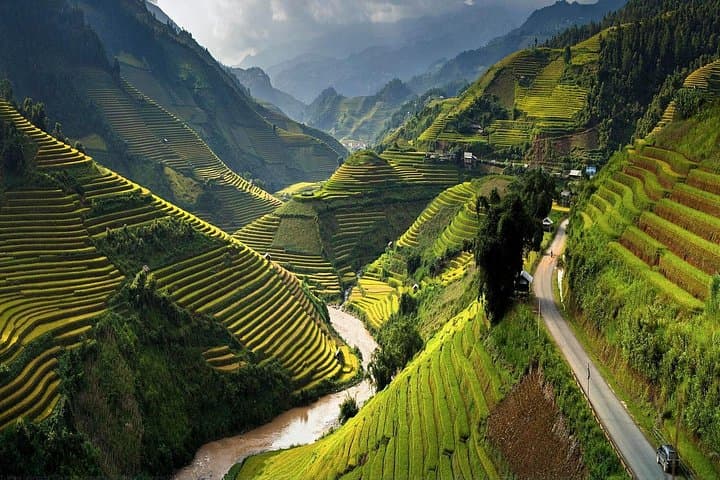
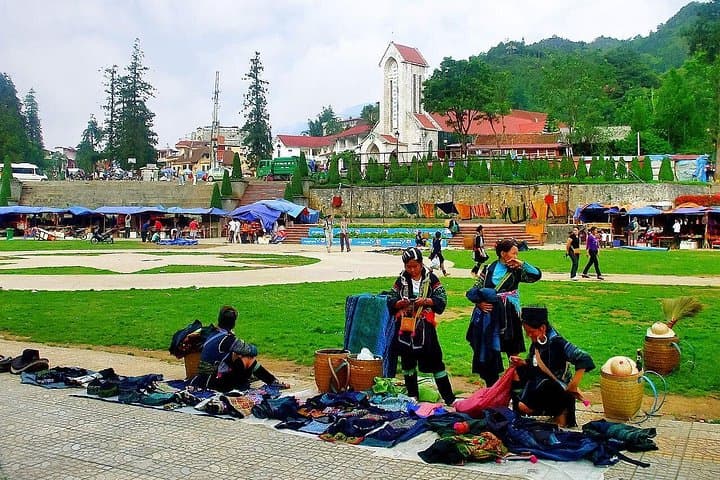
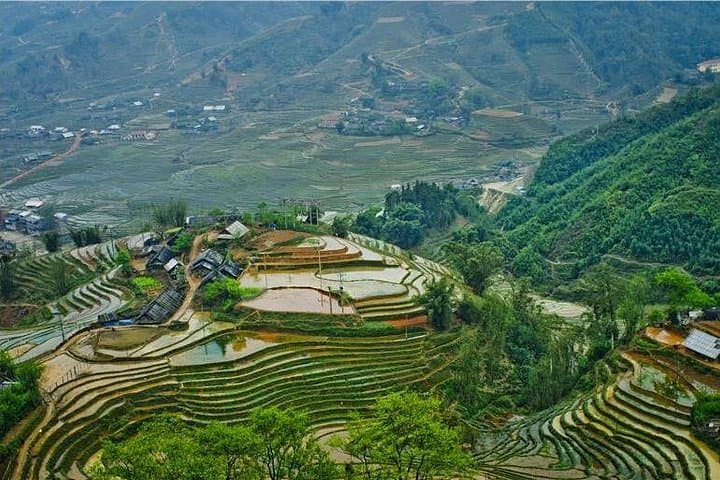
Morning mist peels off the ridgelines as you step out of Sapa town and head down into the Muong Hoa valley. Terraced rice paddies fan out like carved steps; the trail threads between stone walls and narrow footpaths. The Muong Hoa river cuts a silver line through the valley, daring you to follow its braided channels toward villages where laughter and loom-work echo from wooden houses.
Morning mist peels off the ridgelines as you step out of Sapa town and head down into the Muong Hoa valley. Terraced rice paddies fan out like carved steps; the trail threads between stone walls and narrow footpaths. The Muong Hoa river cuts a silver line through the valley, daring you to follow its braided channels toward villages where laughter and loom-work echo from wooden houses.
This two-day trek threads cultural history and colonial traces: the Black H’mong of Y Linh Ho and Lao Chai, the Dzay at Ta Van, and the French-era hydroelectric relics at Cat Cat. Geologically, you walk on the weathered slopes of the Tonkinese Alps—granite and shale carved into terraces by centuries of cultivation. Fansipan watches from the distance, an ever-present high point though not summited on this route.
Expect compact days on mixed terrain—packed-earth paths, stone steps, and slick terraces after rain. Day one covers roughly 8–10 km with steady descents and short steep climbs between villages; day two adds 6–8 km with a riverside picnic and a final ascent to the bus pickup. Culture is close: family lunches at local houses, markets, and textile demonstrations give direct insight into hill-tribe life.
Practical guidance: start early to avoid midday heat or afternoon storms, carry cash (small bills), and wear grippy footwear—some sections are steep and muddy. Bring a lightweight rain shell, refillable water, basic snacks, and respect local customs—ask before photographing people. Accommodation is a hotel in Sapa on night one; transport to Lao Cai station is included at trip end. This route is ideal for hikers comfortable with moderate terrain who want close cultural contact alongside classic northern Vietnam scenery.