THE ADVENTURE COLLECTIVE® · Independent discovery and booking for outdoor travel

Swap Athens’ city bustle for two days of layered history: the oracle at Delphi and the cliffside monasteries of Meteora. This private, two-day drive offers concentrated visits, short hikes and strong cultural context with a local English-speaking driver.
Swap Athens’ city bustle for two days of layered history: the oracle at Delphi and the cliffside monasteries of Meteora. This private, two-day drive offers concentrated visits, short hikes and strong cultural context with a local English-speaking driver.
You step out of Athens’ late-night glare and into a different Greece: olive-silvered hills give way to the shadowed face of Mount Parnassus as the road climbs toward Delphi. Morning light slants across marble ruins; the valley below opens like a map once read by priestesses. Two days compress centuries—classical ambition one moment, monastic austerity the next.
Verified experiences and guided adventures in the surrounding area.
Operated by Vip Tours Athens · Athens, Attica
You step out of Athens’ late-night glare and into a different Greece: olive-silvered hills give way to the shadowed face of Mount Parnassus as the road climbs toward Delphi. Morning light slants across marble ruins; the valley below opens like a map once read by priestesses. Two days compress centuries—classical ambition one moment, monastic austerity the next.
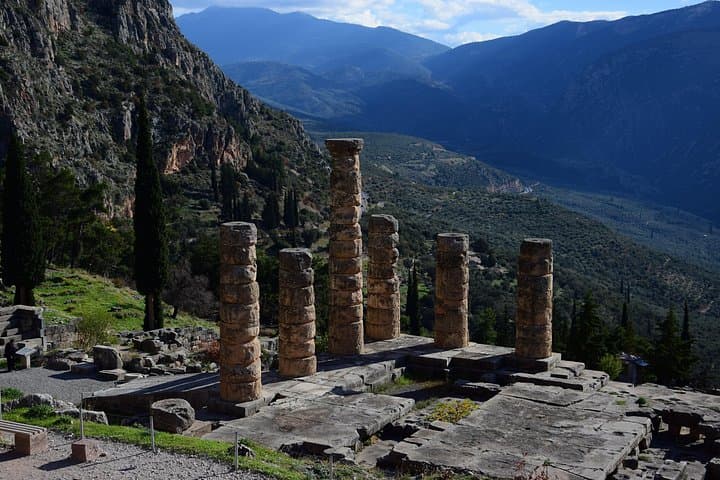
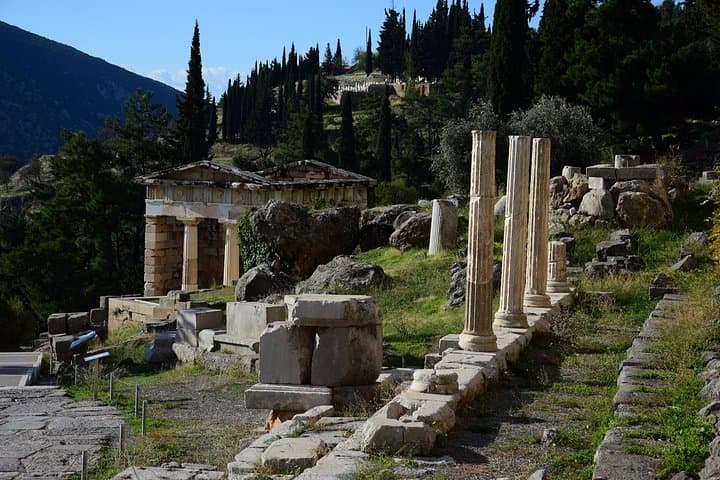
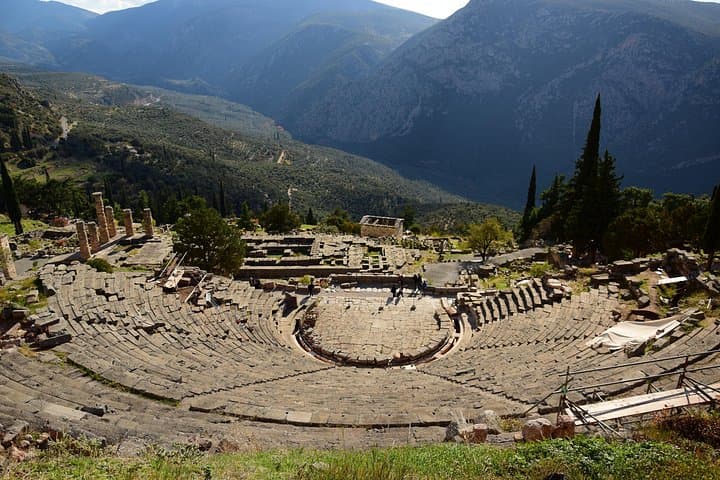
Delphi sits at roughly 700–720 m above sea level on the slopes of Parnassus. Walk among the Temple of Apollo, theater and stadium where rough stone terraces demand steady footing and occasional steps that add short elevation changes of a few dozen meters. The oracle’s voice shaped Greek civic life for centuries; the site’s museum holds bronzes and votive offerings that trace the city’s ritual economy.
Meteora’s sandstone pillars rose during the Paleogene, some columns reaching well over a hundred meters, their weathered faces etched by water and wind. Byzantine monks began hoisting themselves to these summits in the 14th century; today a handful of active monasteries cling to ledges, accessed by stairways cut into rock and short paved hairpins with steep drop-offs.
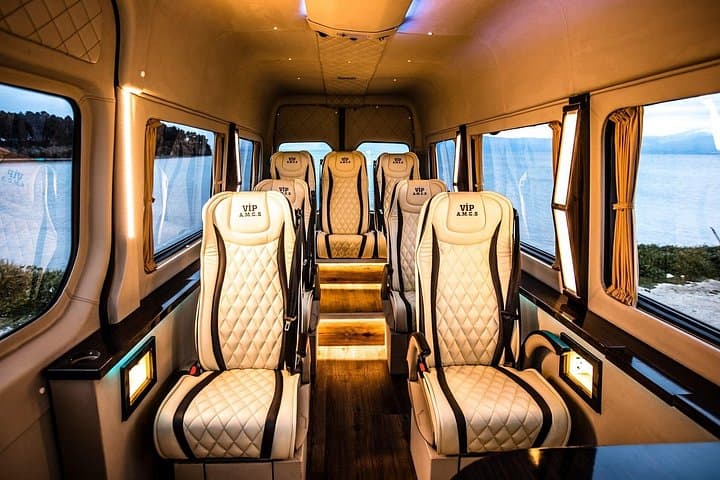
Practically: expect long stretches in a comfortable, air-conditioned vehicle and focused walking windows—plan for two to three hours on-site at Delphi and three to four hours at Meteora, including short hikes and stair climbing. Dress conservatively for monastery visits (shoulders and knees covered), bring layers for changing elevations, sturdy shoes for uneven surfaces, and water. Timing matters—arrive early for cooler light and fewer crowds; carry cash for small admission fees and local concessions.
Most monastery admissions and museum entry fees are not included—bring cash or card to pay modest local fees on-site.
Yes—transport is private and rated easy physically, but be prepared for stairs at both Delphi and Meteora which can be challenging for limited mobility.
Yes—itineraries typically include dedicated photo stops and short walks around key viewpoints; longer hikes are not part of the standard tour.
The driver is English-speaking and offers commentary; professional archaeological or monastery guides may be available at extra cost where required.
Vip Tours Athens operates guided outdoor trips and adventures with an emphasis on safety, stewardship, and memorable experiences.
You step out of Athens’ late-night glare and into a different Greece: olive-silvered hills give way to the shadowed face of Mount Parnassus as the road climbs toward Delphi. Morning light slants across marble ruins; the valley below opens like a map once read by priestesses. Two days compress centuries—classical ambition one moment, monastic austerity the next.
You step out of Athens’ late-night glare and into a different Greece: olive-silvered hills give way to the shadowed face of Mount Parnassus as the road climbs toward Delphi. Morning light slants across marble ruins; the valley below opens like a map once read by priestesses. Two days compress centuries—classical ambition one moment, monastic austerity the next.
Delphi sits at roughly 700–720 m above sea level on the slopes of Parnassus. Walk among the Temple of Apollo, theater and stadium where rough stone terraces demand steady footing and occasional steps that add short elevation changes of a few dozen meters. The oracle’s voice shaped Greek civic life for centuries; the site’s museum holds bronzes and votive offerings that trace the city’s ritual economy.
Meteora’s sandstone pillars rose during the Paleogene, some columns reaching well over a hundred meters, their weathered faces etched by water and wind. Byzantine monks began hoisting themselves to these summits in the 14th century; today a handful of active monasteries cling to ledges, accessed by stairways cut into rock and short paved hairpins with steep drop-offs.
Practically: expect long stretches in a comfortable, air-conditioned vehicle and focused walking windows—plan for two to three hours on-site at Delphi and three to four hours at Meteora, including short hikes and stair climbing. Dress conservatively for monastery visits (shoulders and knees covered), bring layers for changing elevations, sturdy shoes for uneven surfaces, and water. Timing matters—arrive early for cooler light and fewer crowds; carry cash for small admission fees and local concessions.