THE ADVENTURE COLLECTIVE® · Independent discovery and booking for outdoor travel

Leave the blue alleys of Chefchaouen for two days in the Rif: cedar forests, a rural gîte in Afeska, and the red-rock arc of God’s Bridge at Akchour. This practical two-day trek blends dramatic geology with hands-on mountain hospitality.
Leave the blue alleys of Chefchaouen for two days in the Rif: cedar forests, a rural gîte in Afeska, and the red-rock arc of God’s Bridge at Akchour. This practical two-day trek blends dramatic geology with hands-on mountain hospitality.
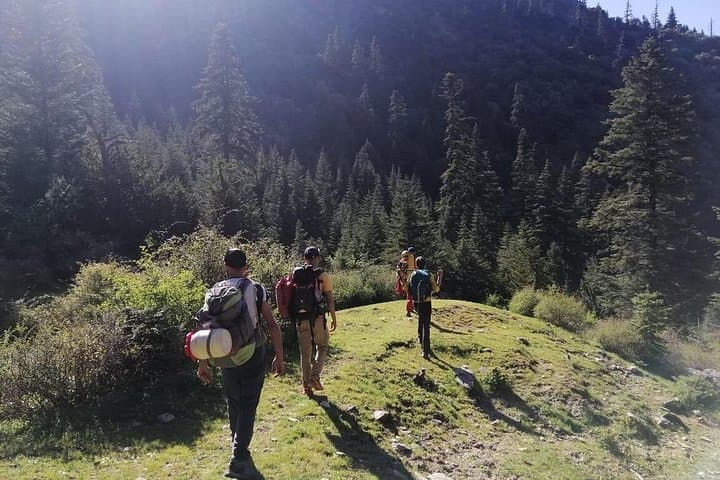
On the first light of day the medina of Chefchaouen loosens its grip: blue-painted alleys shrink behind you as a single track climbs toward the Rif’s higher ridges. The air shifts from town spice to resin and cedar; each inhalation tastes of pine and distant sea. Hikers set off from the city’s stone plazas and follow the upper valley of Tissouka toward Afeska, a rural village tucked in Talassemtane National Park, where a simple gîte and a pot of medicinal mint tea await.
Verified experiences and guided adventures in the surrounding area.
Operated by Chefchaouen Adventures · Chefchaouen, Tanger-Tetouan-Al Hoceima
On the first light of day the medina of Chefchaouen loosens its grip: blue-painted alleys shrink behind you as a single track climbs toward the Rif’s higher ridges. The air shifts from town spice to resin and cedar; each inhalation tastes of pine and distant sea. Hikers set off from the city’s stone plazas and follow the upper valley of Tissouka toward Afeska, a rural village tucked in Talassemtane National Park, where a simple gîte and a pot of medicinal mint tea await.
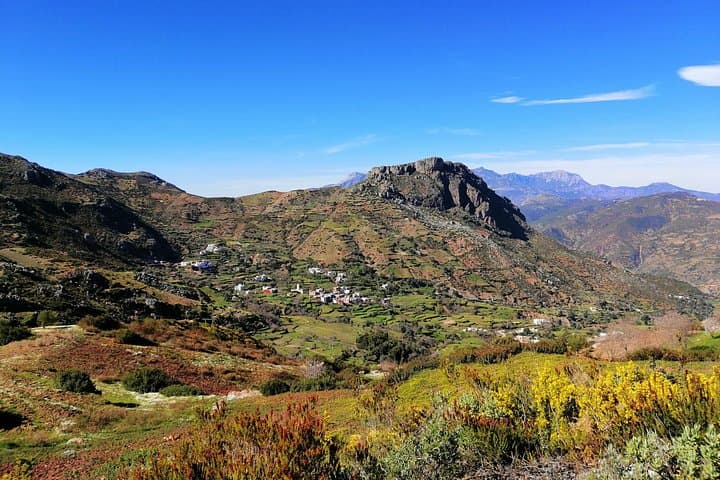
The Rif Mountains are young, folded ranges carved by the same tectonic forces that raised the Atlas to the south. The trail threads through cedars, junipers and endemic oak, running along rocky terraces that reveal red-hued strata and the limestone arches that make Akchour famous. Geology here is tactile: layered cliffs that peel in bands, sinkholes, and the natural arch known locally as God's Bridge — a red rock formation that glows at sunset and frames the river like an ancient doorway.
This stretch of northern Morocco has long been a crossroads. Berber villages cling to slopes, their terraces and small orchards reflecting centuries of mountain agriculture; Andalusian influences show in local building details and the octagonal minaret styles found in nearby towns. Shepherds still move goats along these trails, and you'll likely pass families collecting aromatic herbs — the same plants that will be brewed for you at the gîte.
Wildlife makes cameo appearances: keep an eye out for Barbary macaques among the branches and raptors circling the ridgelines. Rivers dare you to follow their courses; the water cuts deep, creating pools and cascades that are cool, clear and irresistible for tired feet.
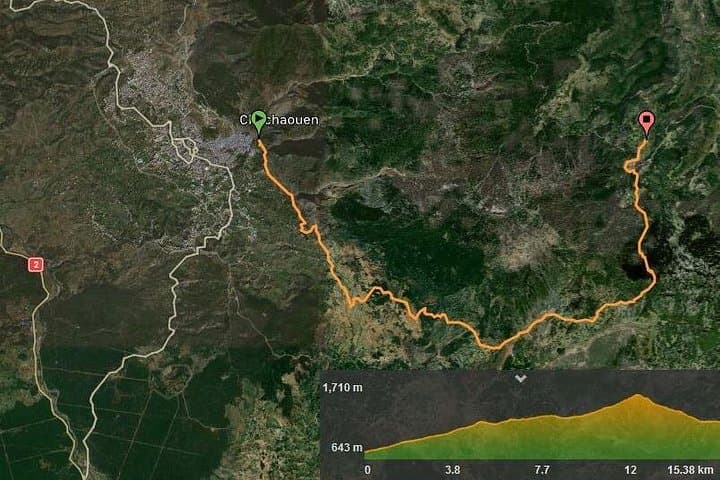
Practical notes: the trek runs over two days with roughly 7 hours of walking on day one and a shorter return on day two. Expect uneven, rocky terrain and intermittent steep pitches; overall daily distance is typically 12–18 km depending on detours, with estimated elevation gain up to ~700 m on the first day. Overnight is in a rural house in Afeska on a half-board basis; travel back to Chefchaouen is by taxi.
Pack layered clothing for cool mornings and warmer afternoons, sturdy hiking shoes with good tread, and at least 2–3 liters of water per day. Acclimate to narrow singletrack and loose rocks by taking measured steps on descents. Mobile signal is spotty; bring a paper map or download offline navigation. The best light for God's Bridge is at sunset when the red stone warms — plan your second-day timing accordingly.
This trek rewards straightforward pacing and attention to local rhythms: a hard day’s climb, the restorative hush of cedar forest, then the bright spectacle of the bridge and river valleys beyond.
You should have a moderate fitness level—expect several hours of continuous walking on steep and rocky trails; prior day hikes of similar length are recommended.
Yes, the rural gîte in Afeska is simple but comfortable, offering a warm dinner and breakfast (half-board included).
Older children who are used to full-day hikes can join, but this tour is not recommended for infants or those with limited mobility.
Reception is intermittent in the mountains; download offline maps and inform your guide of any emergency needs in advance.
Local guides typically speak English, French, and Arabic/Berber—confirm language needs when booking.
The trip includes a taxi transfer from Akchour back to Chefchaouen; schedule is arranged by the operator based on group timing.
Chefchaouen Adventures operates guided outdoor trips and adventures with an emphasis on safety, stewardship, and memorable experiences.

On the first light of day the medina of Chefchaouen loosens its grip: blue-painted alleys shrink behind you as a single track climbs toward the Rif’s higher ridges. The air shifts from town spice to resin and cedar; each inhalation tastes of pine and distant sea. Hikers set off from the city’s stone plazas and follow the upper valley of Tissouka toward Afeska, a rural village tucked in Talassemtane National Park, where a simple gîte and a pot of medicinal mint tea await.
On the first light of day the medina of Chefchaouen loosens its grip: blue-painted alleys shrink behind you as a single track climbs toward the Rif’s higher ridges. The air shifts from town spice to resin and cedar; each inhalation tastes of pine and distant sea. Hikers set off from the city’s stone plazas and follow the upper valley of Tissouka toward Afeska, a rural village tucked in Talassemtane National Park, where a simple gîte and a pot of medicinal mint tea await.
The Rif Mountains are young, folded ranges carved by the same tectonic forces that raised the Atlas to the south. The trail threads through cedars, junipers and endemic oak, running along rocky terraces that reveal red-hued strata and the limestone arches that make Akchour famous. Geology here is tactile: layered cliffs that peel in bands, sinkholes, and the natural arch known locally as God's Bridge — a red rock formation that glows at sunset and frames the river like an ancient doorway.
This stretch of northern Morocco has long been a crossroads. Berber villages cling to slopes, their terraces and small orchards reflecting centuries of mountain agriculture; Andalusian influences show in local building details and the octagonal minaret styles found in nearby towns. Shepherds still move goats along these trails, and you'll likely pass families collecting aromatic herbs — the same plants that will be brewed for you at the gîte.
Wildlife makes cameo appearances: keep an eye out for Barbary macaques among the branches and raptors circling the ridgelines. Rivers dare you to follow their courses; the water cuts deep, creating pools and cascades that are cool, clear and irresistible for tired feet.
Practical notes: the trek runs over two days with roughly 7 hours of walking on day one and a shorter return on day two. Expect uneven, rocky terrain and intermittent steep pitches; overall daily distance is typically 12–18 km depending on detours, with estimated elevation gain up to ~700 m on the first day. Overnight is in a rural house in Afeska on a half-board basis; travel back to Chefchaouen is by taxi.
Pack layered clothing for cool mornings and warmer afternoons, sturdy hiking shoes with good tread, and at least 2–3 liters of water per day. Acclimate to narrow singletrack and loose rocks by taking measured steps on descents. Mobile signal is spotty; bring a paper map or download offline navigation. The best light for God's Bridge is at sunset when the red stone warms — plan your second-day timing accordingly.
This trek rewards straightforward pacing and attention to local rhythms: a hard day’s climb, the restorative hush of cedar forest, then the bright spectacle of the bridge and river valleys beyond.