THE ADVENTURE COLLECTIVE® · Independent discovery and booking for outdoor travel

Two days that pair Petra’s carved canyons with the wind-sculpted dunes of Wadi Rum. Hike among Nabatean ruins, sleep under desert stars, then explore the red desert by 4x4 and camel.
Two days that pair Petra’s carved canyons with the wind-sculpted dunes of Wadi Rum. Hike among Nabatean ruins, sleep under desert stars, then explore the red desert by 4x4 and camel.
A predawn pick-up in Aqaba puts the road under you and a long, red streak of desert on the horizon.
Verified experiences and guided adventures in the surrounding area.
Operated by GO Aqaba Travel & Tourism · Wadi Rum, Ma'an Governorate
A predawn pick-up in Aqaba puts the road under you and a long, red streak of desert on the horizon.
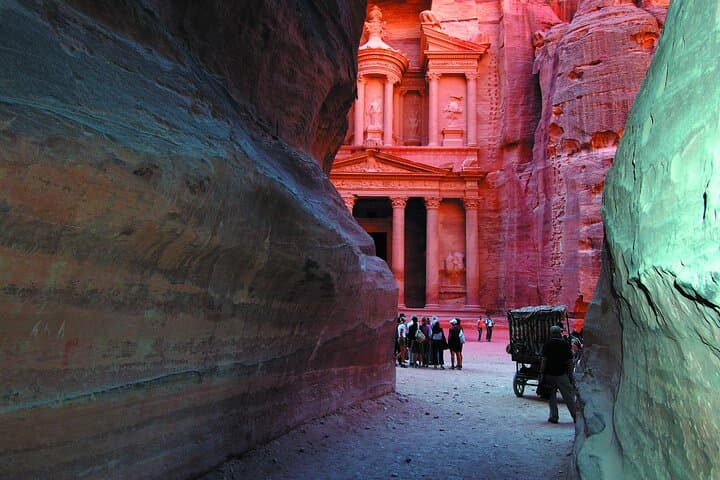
By midmorning the Siq narrows and the Treasury first appears — the carved face of Petra emerging from rose-hued rock after a roughly 1.2 km walk through the canyon. Petrified cliffs hold the echoes of Nabatean trade routes; tomb facades and water channels map a city that once managed desert scarcity with masterful engineering.
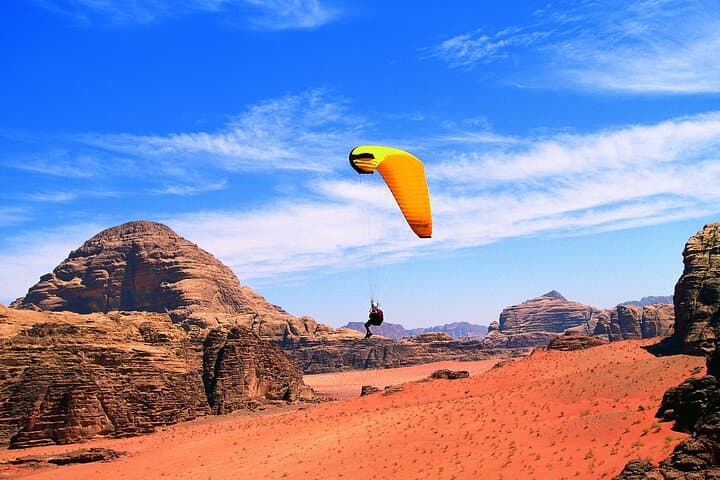
After a guided 2–3 hour circuit through Petra’s main sites, the route bends south to Wadi Rum, where sandstone and granite towers rise from a flat sea of sand. The landscape has a cinematic scale — Lawrence of Arabia moved through these valleys, and the desert still holds the layered scars of wind and water that carved arches and alcoves over millennia.
Evening at a Bedouin camp focuses on hospitality: a zarb dinner cooked underground, tea served around low tables, and simple shelters under a wide sky. A sunrise camel ride and a roughly two-hour 4x4 tour on day two put you into narrower canyons and onto open dunes; expect short hikes from your vehicle and occasional steep rock steps.
Practical notes: wear sturdy, broken-in walking shoes for uneven stone, carry 2–3 liters of water and sun protection, and keep a small amount of local currency for tips and souvenirs. Roads between Aqaba, Petra and Wadi Rum are paved but include stretches of desert driving; motion sensitivity can matter on bumpy jeep tracks. The trip balances archaeological walking with desert tempo — active days, slow nights, and vivid, open landscapes.
Expect roughly 2 hours by private vehicle from Aqaba to Petra and another 1.5–2 hours from Petra down to Wadi Rum depending on traffic and stops.
This tour includes guided time in Petra as described; check your booking confirmation for specifics on entrance fees and inclusions.
The itinerary notes accommodation at a desert camp like Rahayeb Desert Camp; camps are typically small and may host multiple groups—confirm if you need a private tent.
Short camel rides and the jeep tour are family-friendly but not recommended for infants on laps during bumpy sections; follow operator guidance for child seats and safety.
GO Aqaba Travel & Tourism operates guided outdoor trips and adventures with an emphasis on safety, stewardship, and memorable experiences.


A predawn pick-up in Aqaba puts the road under you and a long, red streak of desert on the horizon.
A predawn pick-up in Aqaba puts the road under you and a long, red streak of desert on the horizon.
By midmorning the Siq narrows and the Treasury first appears — the carved face of Petra emerging from rose-hued rock after a roughly 1.2 km walk through the canyon. Petrified cliffs hold the echoes of Nabatean trade routes; tomb facades and water channels map a city that once managed desert scarcity with masterful engineering.
After a guided 2–3 hour circuit through Petra’s main sites, the route bends south to Wadi Rum, where sandstone and granite towers rise from a flat sea of sand. The landscape has a cinematic scale — Lawrence of Arabia moved through these valleys, and the desert still holds the layered scars of wind and water that carved arches and alcoves over millennia.
Evening at a Bedouin camp focuses on hospitality: a zarb dinner cooked underground, tea served around low tables, and simple shelters under a wide sky. A sunrise camel ride and a roughly two-hour 4x4 tour on day two put you into narrower canyons and onto open dunes; expect short hikes from your vehicle and occasional steep rock steps.
Practical notes: wear sturdy, broken-in walking shoes for uneven stone, carry 2–3 liters of water and sun protection, and keep a small amount of local currency for tips and souvenirs. Roads between Aqaba, Petra and Wadi Rum are paved but include stretches of desert driving; motion sensitivity can matter on bumpy jeep tracks. The trip balances archaeological walking with desert tempo — active days, slow nights, and vivid, open landscapes.