THE ADVENTURE COLLECTIVE® · Independent discovery and booking for outdoor travel

A compact two-day loop from Marrakech to the Zagora dunes, Aït Ben Haddou and the Draa Valley. Expect sunrise and sunset camel rides, an overnight desert camp, and a scenic crossing of the Tizi n’Tichka pass.
A compact two-day loop from Marrakech to the Zagora dunes, Aït Ben Haddou and the Draa Valley. Expect sunrise and sunset camel rides, an overnight desert camp, and a scenic crossing of the Tizi n’Tichka pass.
You leave Marrakech before dawn, the city’s stone alleys shrinking behind you as the road climbs into the High Atlas. Wind-bent argan trees blur past, then the landscape opens: ochre kasbahs, terraced farms and a sweep of sky that promises silence. By late morning the Tizi n’Tichka pass (2,260 m) gives you its cold, clear air; further south the land softens into palms and the slow, creaking rhythm of caravan country.
Verified experiences and guided adventures in the surrounding area.
Operated by Tours Village Voyage · Zagora, Drâa-Tafilalet
You leave Marrakech before dawn, the city’s stone alleys shrinking behind you as the road climbs into the High Atlas. Wind-bent argan trees blur past, then the landscape opens: ochre kasbahs, terraced farms and a sweep of sky that promises silence. By late morning the Tizi n’Tichka pass (2,260 m) gives you its cold, clear air; further south the land softens into palms and the slow, creaking rhythm of caravan country.
The tour threads history into every stop. Aït Ben Haddou’s mudbrick kasbahs trace centuries of caravan trade and recent film sets, while the Draa Valley’s palm groves mark an ancient irrigation culture that transforms aridity into orchards. Geologically, you move from high volcanic ridges to wind-sculpted sands—dunes here are modest compared with Erg Chebbi but intimate, their ridgelines shifting with evening winds.
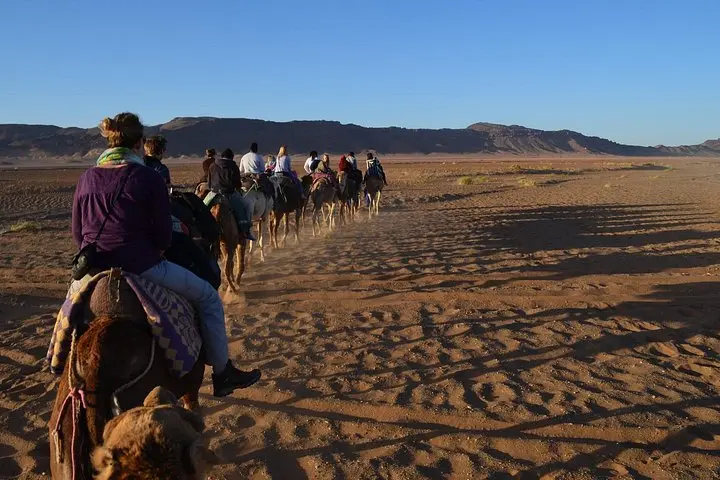
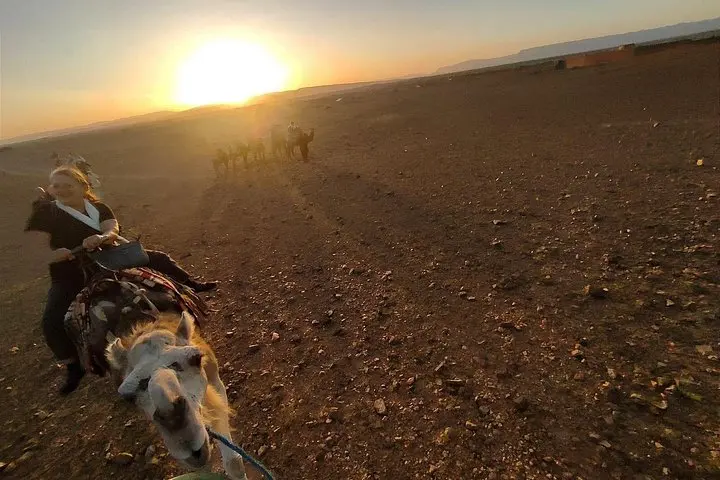
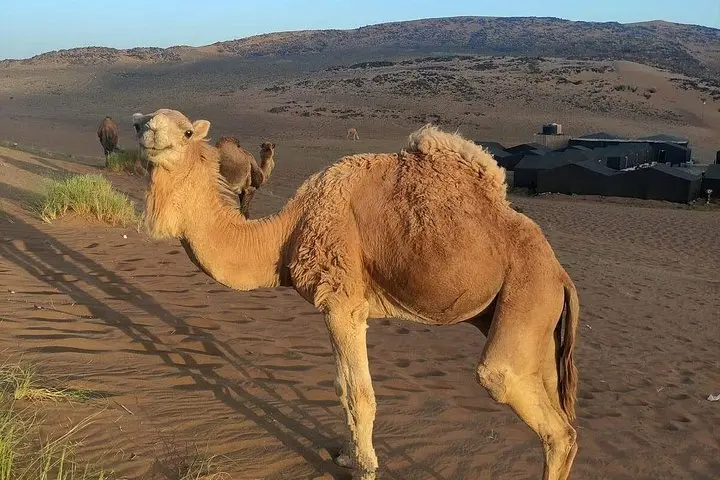
Expect a practical desert evening: a guided camel ride at sunset, dinner under stars, Berber drumming, and a simple overnight in a tented camp. Sunrise camel rides offer cool light for photos and quiet reflection. Travel time is significant—plan for long drives (several hours each day) over mountain passes and valley roads.
Bring layered clothing for hot days and cold nights, sun protection, and a reusable water bottle. Phones and cameras fare well but pack batteries and a small power bank; camps have limited charging. Respect local customs—modest dress in villages—and minimize water use. This two-day loop is ideal for travelers short on time who want a compact, hands-on Sahara experience without deep desert trekking.
Most departures pick up from hotels and riads in Marrakech and return there on the evening of day two.
Rides at sunset and sunrise are typically short guided treks—long enough for the views and photos but generally under 90 minutes each.
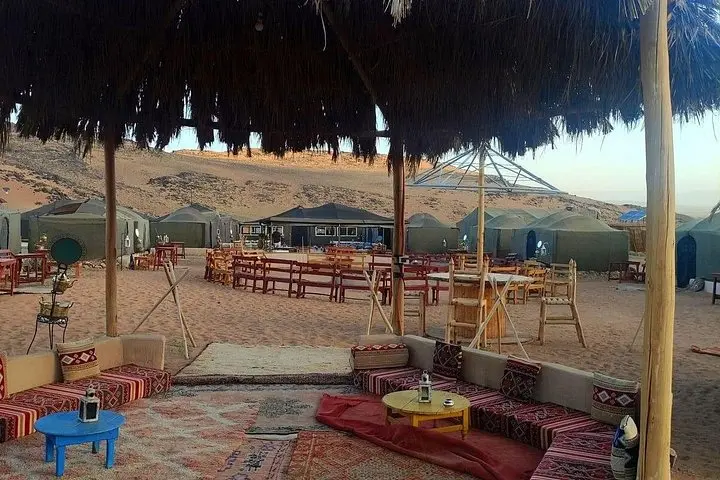
Camps range from standard shared tents to private luxury tents depending on the booking; facilities are basic but comfortable with local meals and bedding provided.
The tour is advertised as suitable for most fitness levels, but camel mounting and some uneven terrain at stops may be difficult for those with limited mobility; check with the operator about specific needs.
Tours Village Voyage operates guided outdoor trips and adventures with an emphasis on safety, stewardship, and memorable experiences.
You leave Marrakech before dawn, the city’s stone alleys shrinking behind you as the road climbs into the High Atlas. Wind-bent argan trees blur past, then the landscape opens: ochre kasbahs, terraced farms and a sweep of sky that promises silence. By late morning the Tizi n’Tichka pass (2,260 m) gives you its cold, clear air; further south the land softens into palms and the slow, creaking rhythm of caravan country.
You leave Marrakech before dawn, the city’s stone alleys shrinking behind you as the road climbs into the High Atlas. Wind-bent argan trees blur past, then the landscape opens: ochre kasbahs, terraced farms and a sweep of sky that promises silence. By late morning the Tizi n’Tichka pass (2,260 m) gives you its cold, clear air; further south the land softens into palms and the slow, creaking rhythm of caravan country.
The tour threads history into every stop. Aït Ben Haddou’s mudbrick kasbahs trace centuries of caravan trade and recent film sets, while the Draa Valley’s palm groves mark an ancient irrigation culture that transforms aridity into orchards. Geologically, you move from high volcanic ridges to wind-sculpted sands—dunes here are modest compared with Erg Chebbi but intimate, their ridgelines shifting with evening winds.
Expect a practical desert evening: a guided camel ride at sunset, dinner under stars, Berber drumming, and a simple overnight in a tented camp. Sunrise camel rides offer cool light for photos and quiet reflection. Travel time is significant—plan for long drives (several hours each day) over mountain passes and valley roads.
Bring layered clothing for hot days and cold nights, sun protection, and a reusable water bottle. Phones and cameras fare well but pack batteries and a small power bank; camps have limited charging. Respect local customs—modest dress in villages—and minimize water use. This two-day loop is ideal for travelers short on time who want a compact, hands-on Sahara experience without deep desert trekking.